PLA Navy's first female shipborne pilots pass graduation assessment, to join aircraft carrier fleet
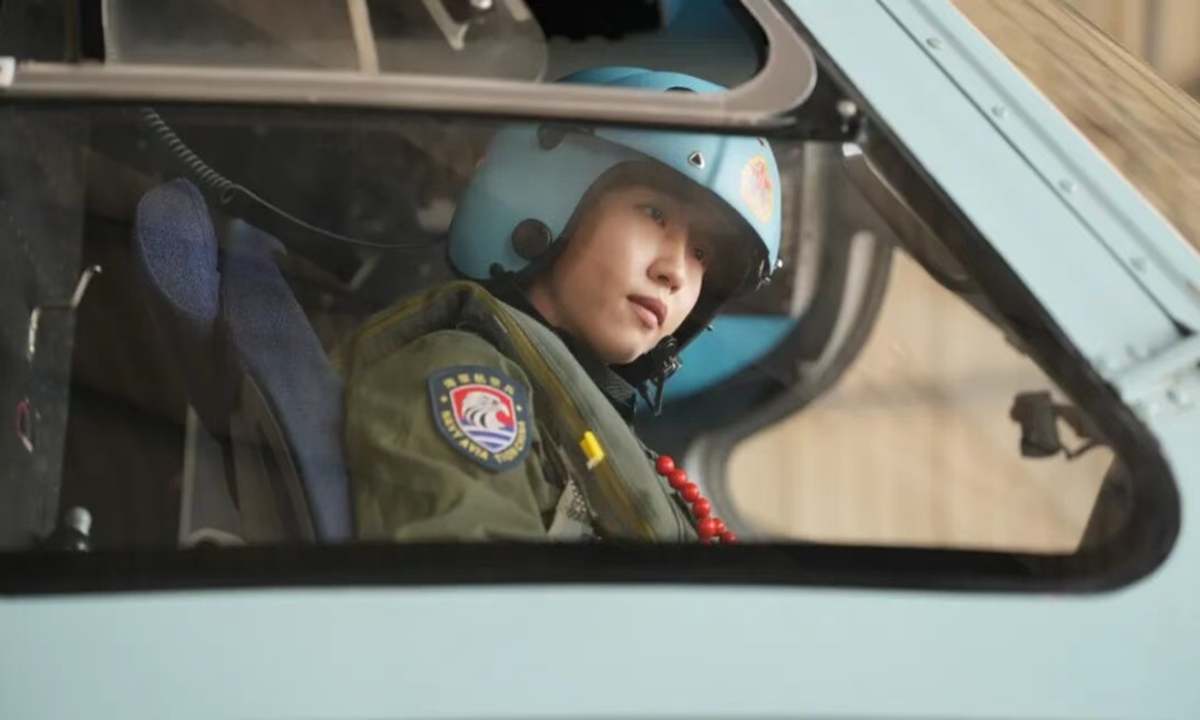
One of the Chinese People's Liberation Army Navy's first-batch female shipborne flight cadets operates a carrier-based helicopter. Photo: Screenshot from PLA Navy WeChat account
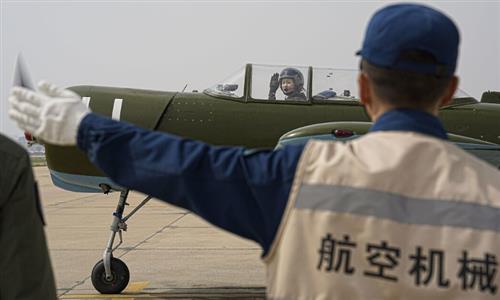
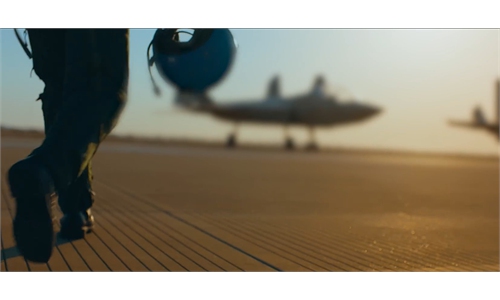
The Chinese People's Liberation Army (PLA) Navy's first batch of female shipborne pilot trainees have all passed their graduation assessments and reported to frontline units, marking a new addition to the PLA Navy's aviation talent pool and a breakthrough in shipborne pilot training, state media outlets reported on Saturday.
A military affairs expert noted that the first batch of female shipborne pilots now on duty fly helicopters, and that as the training system continues to mature, more female pilots, including female fixed-wing carrier fighter pilots, are expected in the future.
"Take off!" At around 9 am, following tower instructions, trainee pilot Han Meng lifted her aircraft smoothly into the air, completing hovering, takeoff acceleration, instrument flight and platform landing in succession, a smooth, precise sequence that carried her through the assessment, the PLA Navy reported.
These pilots had previously passed demanding assessments, including day and night landings, confined-area takeoffs and landings, and search and rescue. This graduation assessment focused on crew resource management and overall flight proficiency, testing their precision and mental resilience through every steady hover, instrument pass and every platform landing, the PLA Navy said.
Recruited in 2023 as fresh graduates of military and civilian universities, hey are the PLA Navy's first batch of female pilot trainees, all born after 2000 and trained by the Naval Aviation University. The first female shipborne pilot trainees underwent rigorous selection, live-aircraft screening, enlistment training, aviation theory study and aircraft type conversion, then completed the full flight training syllabus and passing their graduation assessments, according to the Xinhua News Agency.
In recent years, as Chinese naval aviation has shifted from shore-based to shipborne operations, recruitment scope, selection methods and training models for shipborne pilot trainees have been continuously expanded and optimized. The Naval Aviation University has moved difficult subjects once taught only in combat units into the academy phase, greatly shortening the growth cycle for flight personnel and accelerating combat capability generation, Xinhua said.
"Passing the graduation assessment is not the end, but a new starting point," Han was quoted by the PLA Navy WeChat account as saying. After joining frontline posts, they will keep pushing forward, study hard and train rigorously, ready at any time to be tested by real missions.
According to Xinhua, the trainees will deploy aboard aircraft carriers and other large and medium-sized surface vessels for diversified missions.
Wang Yunfei, a Chinese military affairs expert, told the Global Times on Sunday that they are the first group of female shipborne pilots in the history of the Chinese Navy, marking a historic breakthrough in shipborne flight personnel development and filling a long-standing gap in female naval pilot roles.
With the three-carrier system taking shape, demand for pilots keeps growing, Wang said. He noted that for a long time, shipborne flight posts in China were almost entirely held by male pilots. But modern naval warfare is no longer about raw physical strength; it is about precision control, electronic analysis and data interpretation.
Regardless of gender, shipborne pilots are the best of the best. The recruitment of female shipborne pilots will optimize the talent structure and expand the reserve, and the new talent mix can complement strengths, improve rotation, shift and long-voyage systems, and make carrier group combat duty more sustained and efficient, Wang said.
Globally, the expert said, training female shipborne pilots is already standard among leading naval powers. The experiences of the US, France and the UK all show that women are fully capable of high-intensity shipborne flight and are an important part of naval combat power.
Notably, footage from the PLA Navy report shows these shipborne pilots flying shipborne helicopters.
Wang explained that training shipborne helicopter pilots lays a foundation for training female fixed-wing pilots by providing extensive experience in shipborne takeoffs and landings, adaption to maritime conditions and personnel training.
Since female shipborne helicopter pilots are now formally on duty, as training models improve and systems mature, female fixed-wing carrier fighter pilots are also expected in the future, a trend of the times, Wang added.
In August, this first batch of female shipborne pilot trainees all passed their daytime shipborne landing qualification assessments and entered the night landing training and evaluation phase, drawing coverage from multiple media outlets.
Shipborne landing is a critical milestone in a shipborne pilot's development, often described as the "certificate" for entry into real naval aviation. Passing assessment marks a significant step in the PLA Navy's efforts to cultivate female shipborne aviation talent, according to CCTV News on August 14.
RELATED ARTICLES