Mexico's crackdown on alleged Chinese steel transshipment to US lacks evidence and reflects Washington's pressure: expert
By Published: Nov 12, 2026 11:49 PM

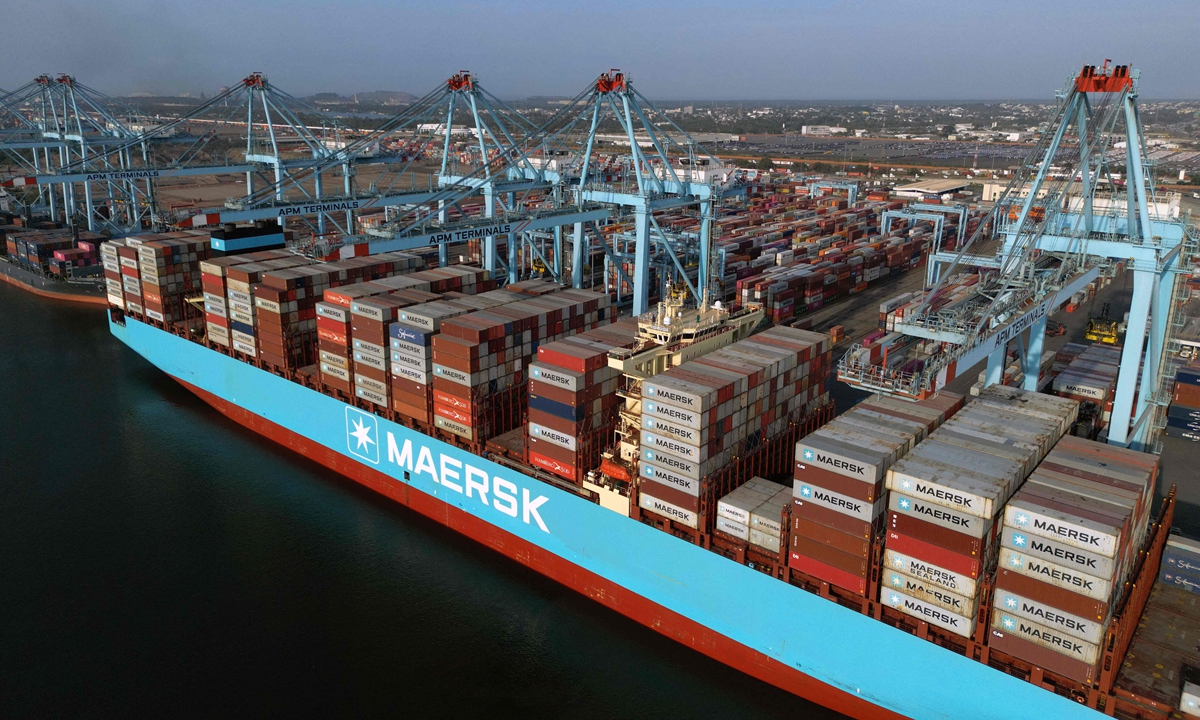
An aerial view shows containers stacked on a cargo ship at the Port of Lázaro Cárdenas in Michoacán, Mexico, on April 25, 2025. Photo: VCG
A Chinese expert warned on Thursday that tariffs imposed without evidence will only undermine Mexico's manufacturing competitiveness, and that establishing a relationship based on mutual respect and benefit is the only path toward sound China-Mexico trade ties.
The comments came after Reuters reported that Mexico is working to block steel from China and other countries from being "rerouted" through Mexico into the US under North America's trade pact, a Mexican official said on Wednesday (local time).
Luis Rosendo Gutierrez, Mexico's deputy economy minister for foreign trade, told journalists that the government has tightened traceability measures and the measures were preventing goods from reaching the US through misuse of Mexico's trade preferences.
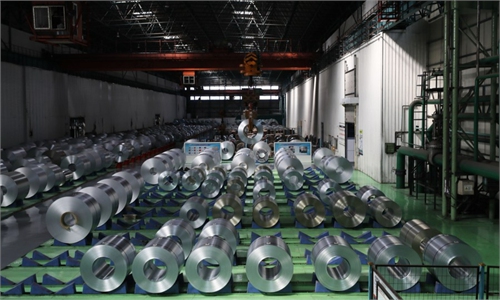
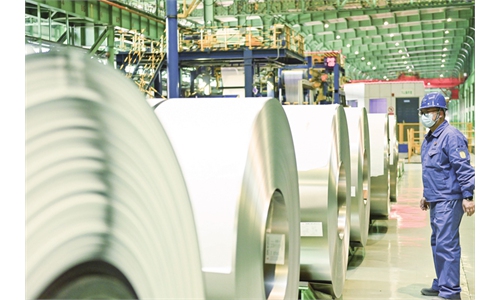
Gutierrez said that Mexico has canceled about 1,100 registrations for steel mills that authorities found did not exist, many of them in Asia, and that the move had helped cut steel imports from Vietnam by 80 percent over the past several months. Steel and aluminum imports from third countries - including China, South Korea and India - fell by about 30 percent, representing some 13 billion pesos ($698.54 million) in import value, the official said.
Steel has become a politically sensitive flashpoint in US-Mexico trade, with Washington determined to block Chinese goods and inputs from entering the US market via third countries.
The measures come as Mexico seeks relief from the US on steel, aluminum and vehicle tariffs, prioritizing it over a broader review of the US-Mexico-Canada trade pact.
Zhou Mi, a senior researcher at the Chinese Academy of International Trade and Economic Cooperation, told the Global Times on Thursday that the so-called "transshipment" claims against Chinese steel products lack evidence, and that Mexico's targeting of Chinese steel is in fact being carried out under US pressure.
The expert noted that Mexico should base any trade remedy measures on facts rather than act on another country's bidding, as blind protectionist measures will ultimately harm its own economic interests.
Transshipment refers to goods being routed through a third country before reaching their final destination, typically to evade tariffs.
The Reuters report cited analysts who argued that Mexico is not a hub for steel transshipment. Separately, a report last month by the Center for Strategic and International Studies, a Washington-based think tank, claimed that certain goods may undergo significant processing in Mexico before being exported to the US, rather than simply passing through.
Since 2025, Mexico has significantly ramped up trade protectionism against Chinese imports, launching multiple anti-dumping probes into Chinese products including float glass and PVC tarpaulins.
In response, China's Ministry of Commerce (MOFCOM) launched an investigation in September last year pursuant to China's Foreign Trade Law and its rules on foreign trade barrier investigations. In March this year, the ministry released the final conclusions of a probe into Mexico's restrictions against China and other non-free trade agreement partners, stating that these measures constituted trade and investment barriers.
The ministry is authorized to implement corresponding measures to resolutely safeguard the interests of Chinese industries, a ministry spokesperson said at the time.
China is Mexico's second-largest trading partner, and Mexico is China's second-largest trading partner in Latin America.
In the first nine months of 2026, bilateral trade continued to grow, rising 11.6 percent year-on-year to $92.05 billion, Chinese customs data showed.
Zhou urged Mexicoto uphold its independence and make its own trade decisions in accord with international trade matters, rather than letting other countries determine its economic course.
"Only by honoring its commitments to the international community while properly managing relations with all parties can Mexico achieve sustainable trade development and provide the necessary support for its national development," Zhou said.
In response to Mexico's ramped-up protectionist measures, the Chinese government has on multiple occasions urged Mexico to reverse its erroneous unilateral tariff hikes, and voiced grave concern over Mexico's potential so-called "economic security review" targeting Chinese investment.
China firmly opposes all forms of unilateralism and protectionism, and rejects the politicization, weaponization and instrumentalization of trade matters, a MOFCOM spokesperson said in March.
RELATED ARTICLES