Nvidia founder Jensen Huang’s abrupt resignation amid politically charged ‘Chinese spy’ allegations raises questions about growing political interference in US tech sector: experts
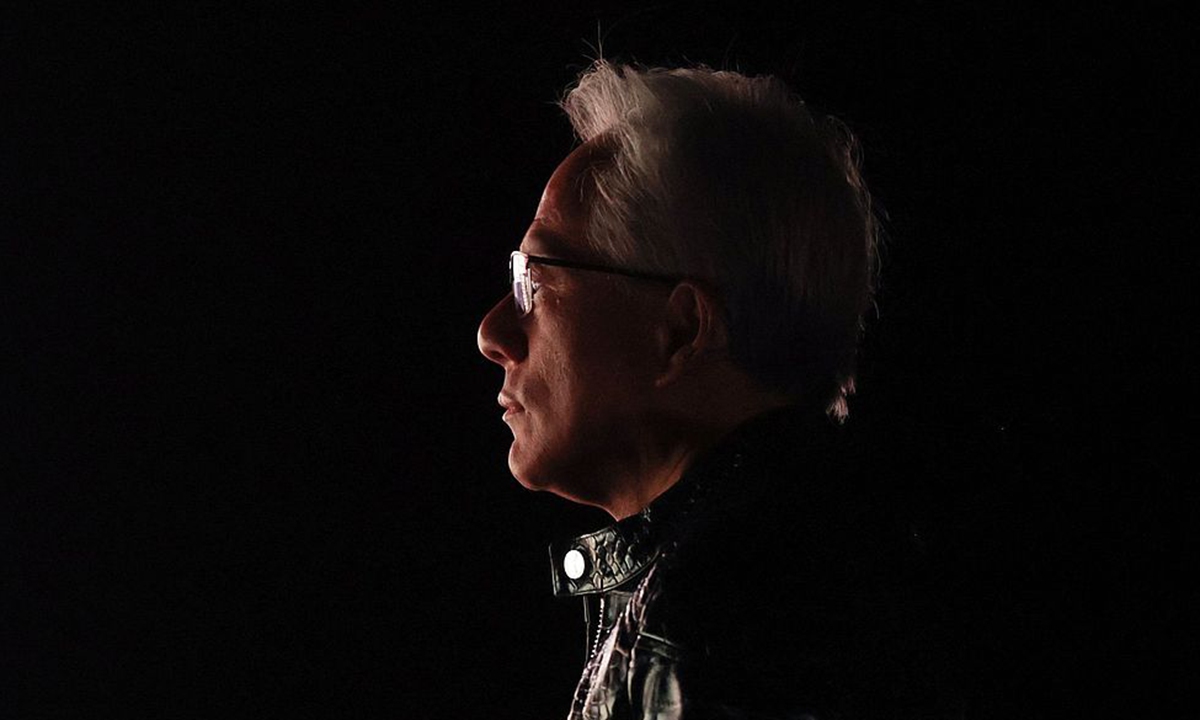
Nvidia's co-founder Jensen Huang Photo: VCG
US tech giant Nvidia announced on Thursday that its founder Jensen Huang has resigned as president, chief executive officer and a member of the board of directors, effective immediately, with Chief Financial Officer Colette Kress as interim CEO, according to an official statement on its website.
Chinese experts said that Huang's resignation may reveal growing problems facing the US tech industry, including politicization and restrictions. However, no matter how individual companies change leadership, China remains one of the most important markets for the global chip industry, they noted.
The departure of one of the most influential figures in the global AI industry comes amid mounting scrutiny over Huang's private life and politically charged allegations of "Chinese espionage," raising questions about the impact on Nvidia's future and whether this will unleash more political pressure on the US tech sector.
Market reaction to Huang's resignation was remarkable. After the news broke, Nvidia shares fell 8.2 percent to a more than 16-month low in early trading and its market value was on track to close below $4 trillion for the first time since July 2025, according to Reuters. Notably, global AI-linked stocks also tumbled on Thursday.
Huang's resignation followed days of intense scrutiny surrounding his affair with a Singaporean business executive whom some US media reports and officials alleged to be working for Chinese intelligence. China's Foreign Ministry has firmly dismissed such an allegation. "The 'Chinese spy' allegation is purely unsubstantiated and directed at smearing China," a ministry spokesperson said.
Some in the US have tried to use the NVIDIA spy scandal to push for further restrictions on technology exports to China. At a press conference on Thursday, Mao Ning, a spokesperson for the Chinese Foreign Ministry, said that China's sci-tech progress relies on independent innovation and open cooperation, and the US should stop fabricating the "Chinese spy" narratives as a pretext for imposing technology restrictions.
With Huang stepping down under mounting pressure, Chinese experts also raised questions about US corporate independence and growing political interference in businesses.
Essentially, Huang could end up becoming a scapegoat for broader problems facing the US technology sector, including growing politicization of tech issues and restrictions, Xiang Ligang, president of the Beijing Institute of Intelligent Era Industry and a Chinese telecom industry expert, told the Global Times on Thursday.
Notably, Huang's resignation comes at a time when the US tech industry is grappling with growing concerns over the sustainability of its massive AI investments. If these major US investments in AI fail to generate the expected returns, the industry could shift part of the blame onto Huang, even though the problems extend far beyond Nvidia, Xiang said.
The leadership change, however, will unlikely alter Nvidia's underlying business or its need to engage with the Chinese market, Huo Jianguo, former president of the Chinese Academy of International Trade and Economic Cooperation under the Ministry of Commerce, told the Global Times on Thursday.
Huo noted that while the direction of Nvidia's leadership under its next permanent CEO remains to be seen, from the perspective of technological cooperation and its long-term business development, the US chipmaker will still need to strengthen cooperation with Chinese companies, he said.
China remains an important market for the global semiconductor industry, and maintaining commercial and technological exchanges would serve the interests of both Nvidia and its Chinese partners, Huo said.
RELATED ARTICLES