ARTS / CULTURE & LEISURE
Night markets bring local and Southeast Asian flavors together
Nanning after dark
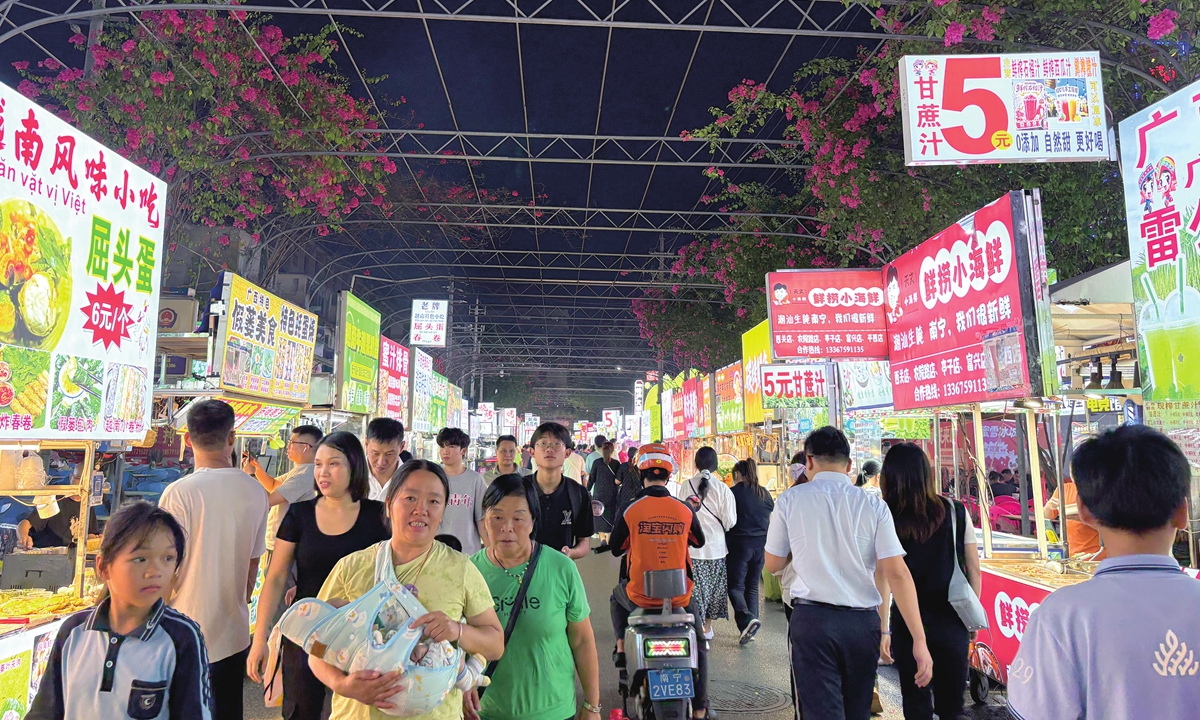
Visitors stroll through Pingxi Night Market in Nanning, South China's Guangxi Zhuang Autonomous Region. Photo: Li Hang/GT
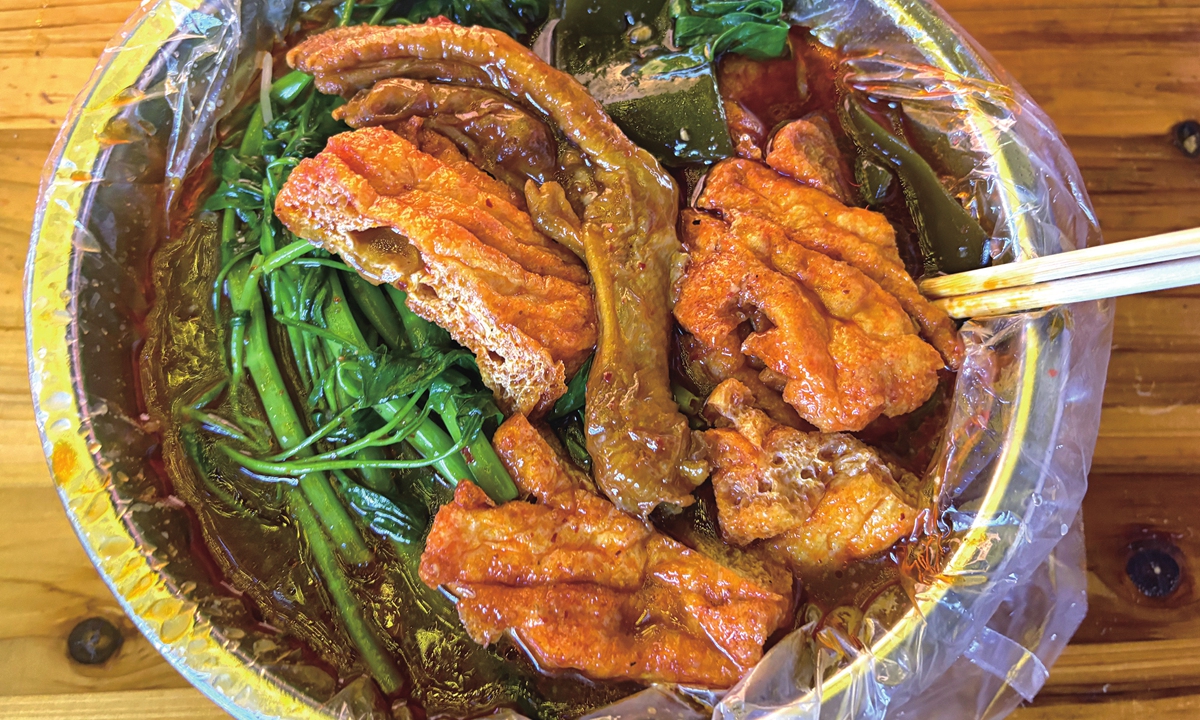
A bowl of luosifen, a local specialty in Guangxi Photo: Li Hang/GT
As evening settles over Nanning, capital of South China's Guangxi Zhuang Autonomous Region, the city takes on a different rhythm. By 9 pm, night markets are drawing diners looking for a late meal, a place to meet friends or simply a chance to enjoy the cooler evening air.In Nanning, this after-dark scene is more than a weekend attraction or a passing trend. It has been woven into the city's everyday life. With its subtropical monsoon climate and long, hot summers, the city offers a natural reason to save some outdoor activities for the evening. As temperatures ease, food stalls and open-air eateries become inviting places to linger, turning a meal into an occasion to socialize and relax.
Walking through these markets, the variety of food on offer is hard to miss. Local specialties such as suanye, or pickled fruit and vegetables, and grilled skewers share space with Vietnamese rice rolls, Thai-style dishes and Vietnamese coffee.
From local favorites to flavors from Southeast Asian countries, these night markets offer a taste of the region's diverse culinary traditions, all in one place.
Nightly rituals
Night markets have long been part of the city's everyday life. Their popularity is closely linked to Nanning's climate and lifestyle. Due to its subtropical monsoon climate and long, hot summers, evenings are often more suitable for outdoor activities than the daytime.
Eating out after dark has become a familiar routine for many residents, and street food stalls provide accessible places to gather and socialize.
From established food streets to smaller neighborhood markets, night markets are scattered across Nanning. Zhongshan Road, Jianzheng Road and Pingxi are among the areas where diners can find a wide selection of street food.
Its food culture has also helped sustain the tradition. Influences from the Zhuang ethnic group, Lingnan cuisine, Cantonese food and southwestern Chinese cooking have contributed to a diverse range of local dishes and snacks. Rice noodles, grilled food and sour, spicy specialties are among the familiar choices that make street dining an important part of daily life.
Still, local specialties remain central to the experience. Suanye is a popular snack made with ingredients such as green mangoes and guava, often seasoned to create a balance of sour, sweet and spicy flavors. Other regional favorites include rice noodles and grilled skewers. Guangxi is also known for luosifen, or river-snail rice noodles, a dish famous for its pungent aroma and rich broth.
But the food on offer is not limited to local specialties. At the Pingxi night market, we saw stalls serving a variety of snacks and grilled dishes. Local food shares space with flavors from neighboring Southeast Asian countries. Vietnamese rice rolls, Thai-style dishes and Vietnamese coffee have become familiar sights in the city's street food scene.
A local vendor selling Vietnamese pho told me that Guangxi already presents an established tradition of eating rice noodles, making the dish's flavors relatively easy for local diners to embrace. Vietnamese-style noodles have also found their way into everyday home cooking, with ingredients readily available in local markets. Visitors from ASEAN countries are also a familiar sight at the stall, he added.
A taste of Southeast Asia
Vietnamese pho, Thai dishes and Indonesian snacks can be found alongside Guangxi street food. Rather than remaining a niche offering for foreign residents, these dishes have found a wider audience among local diners.
Geography is part of the explanation. Guangxi shares a border with Vietnam, and Nanning has long served as an important gateway for China's exchanges with ASEAN countries. But the spread of Southeast Asian cuisine is not simply a matter of geographical proximity. Growing connectivity, trade and cultural exchanges, as well as the movement of people, have all helped bring the region's food traditions into the city.
The China-ASEAN Expo, first held in Nanning in 2004, has also played a role in bringing the city closer to its Southeast Asian neighbors, according to the Xinhua News Agency.
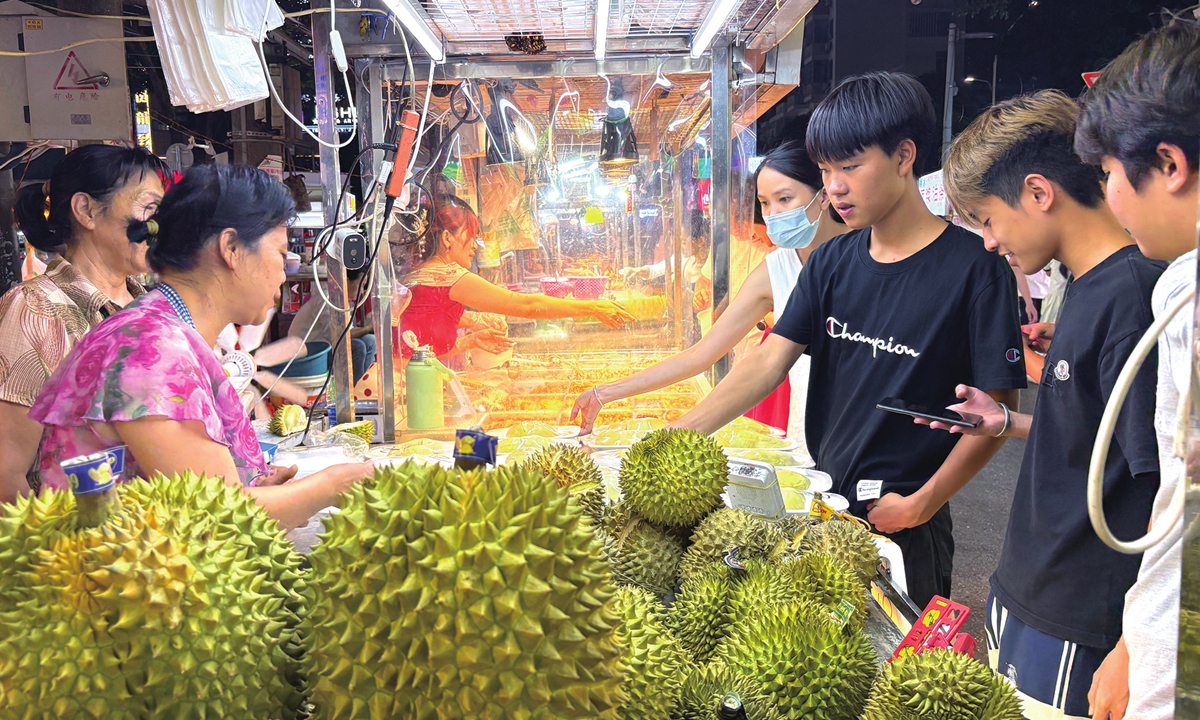
Customers select durian at a stall in Pingxi Night Market in Nanning, Guangxi. Photo: Li Hang/GT
Today, Nanning is affectionately known as the "city of rice noodles." Indeed, while locals remain loyal to famous Laoyou and Luosi noodle dishes, Vietnamese chicken pho has become just as beloved.A local resident surnamed Wang who moved to Nanning from northern China about a decade ago told me that the city's food was one of the main reasons she decided to settle there. Already a fan of rice noodles, she was surprised by the sheer variety available in Nanning and the different ways they are prepared and enjoyed.
The people behind these food businesses have helped make Southeast Asian flavors part of everyday life. Some are Southeast Asian residents who have settled in Nanning with their families, while others are international students who stayed after graduation and started businesses of their own. Their restaurants and food shops bring familiar tastes from home to the city, while introducing local customers to dishes they might otherwise encounter only when traveling abroad, according to Xinhua.
Trade has made it easier for restaurants and food businesses to source ingredients from Southeast Asia. Lemongrass, fish sauce, coconut products and other ingredients used in regional cooking are increasingly accessible through cross-border commerce and distribution networks.
The similarities between Guangxi and Southeast Asian cuisines have made these flavors easier for local diners to embrace. Sour and spicy tastes are common in both, so many of the flavors found in Southeast Asian dishes are not entirely unfamiliar. Ingredients from neighboring countries add new dimensions to familiar dishes. For diners in Nanning, trying food from neighboring countries no longer necessarily means going somewhere unfamiliar. These dishes have found their place in the city's everyday dining scene, shaped in turn by local ingredients and tastes.
RELATED ARTICLES