ARTS / CULTURE & LEISURE
From sizzling woks to bustling streets, China’s late-night snacks shape city life
Culture that glows after hours
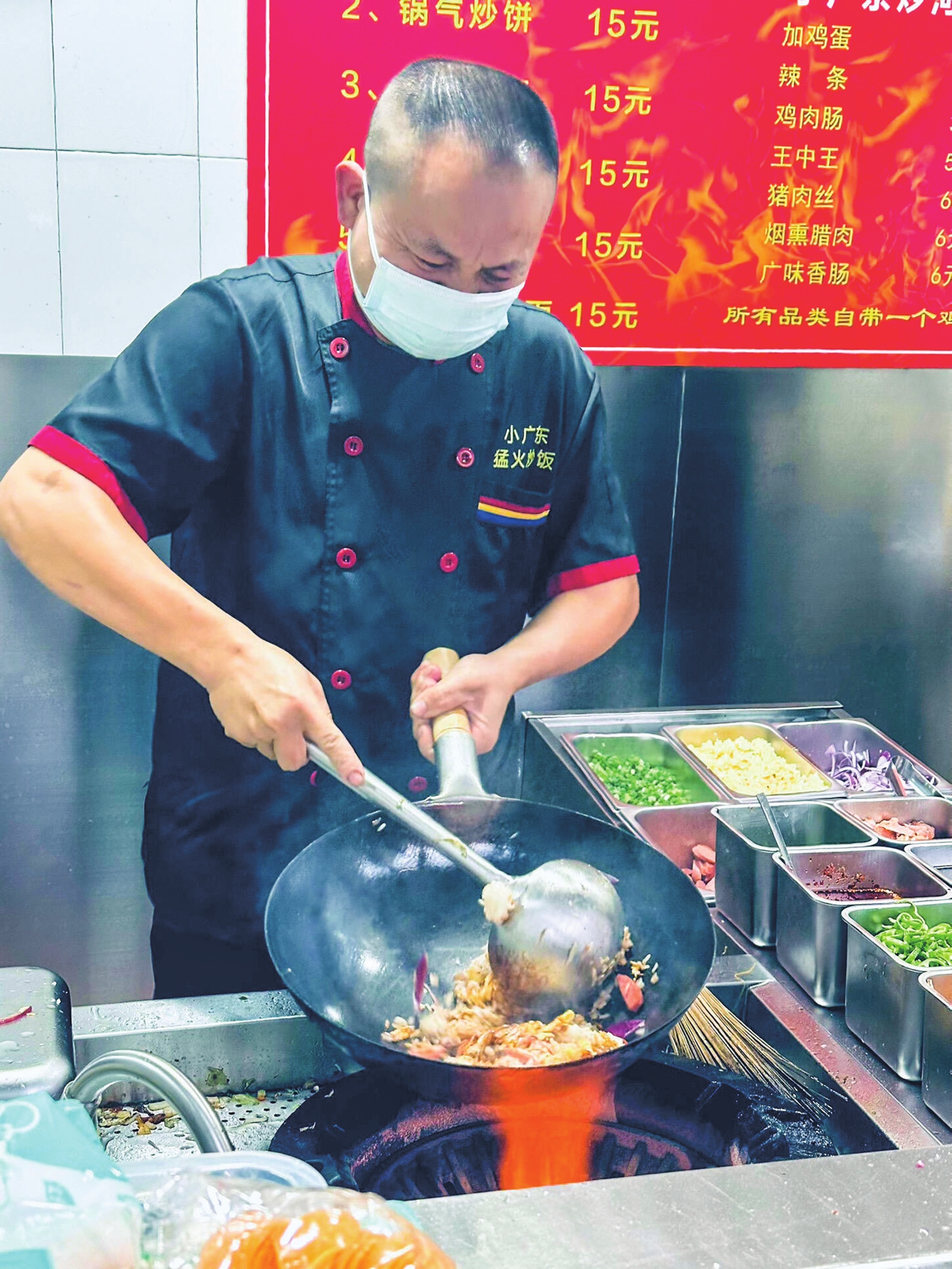
A cook makes stir-fried rice in the Tuanjiehu neighborhood in Beijing on November 2, 2025. Photo: Courtesy of Lü Siqi
On a brisk early Wednesday night in Beijing, a long line stretched along a street in Chaoyang district. Despite the chill of early winter, people still waited patiently for a chance to taste the now-viral "Little Guangdong Fierce-Fire Fried Rice" at a small shop in the Tuanjiehu neighborhood. Two cooks stood behind roaring flames, tossing rice or noodles and shredded pancakes in searing-hot woks up in the air.For some, the wait has become part of the experience.
Wang Jingye, who works at a nearby hotel, told the Global Times on Wednesday that he is often struck by the crowds outside while passing by the shop. Curiosity finally pushed him to join the line. By the time the clock edged past midnight, he had already waited half an hour and, yet still hadn't reached the point where he could place his order.
Scenes like this are far from unusual in cities across China, where people regularly flock to late-night barbecue stands or spicy hotpot stalls after long shifts. For many, the pursuit of good food after a day, even at the cost of sleep, has become a way to relax, socialize, and unwind.
Late-night dining, or yexiao, has grown into a key component of China's night economy, and its meaning stretches far beyond food. It is now a cultural phenomenon embedded in the rhythms of urban life, Bu Xiting, an associate researcher at the School of Cultural Industries Management at the Communication University of China, told the Global Times. "Late-night snacks have already transcended simple eating. They carry emotion, facilitate social interaction and reflect the vitality of a city."
Bu sees two major forms of pressure relief embedded in China's late-night dining culture. The first is the immediate comfort of hot, freshly cooked food - a sensory balm after a long day. The second is emotional: For many young people living alone in big cities, the lively bustle and smoky warmth of late-night stalls can help fend off loneliness.
Flavor in the cold
Lü Siqi, a 33-year-old finance professional based in Beijing, first learned about the fried-rice vendor from posts on the lifestyle-sharing platform Xiaohongshu, where videos of the owner stir-frying at a mobile stall drew huge attention. When she discovered through a WeChat group chat that the business would open a physical shop, she rushed to visit it on opening day in November.
Even before the doors opened, a line had already formed. She was fourth. After about an hour, she finally got her bowl of fried rice.
"My first reaction was that the wok aroma was strong. It was freshly stir-fried and fragrant, and every grain of rice stood apart," Lü told the Global Times.
"I'm the type who will travel far and wait as long as needed for good food. Because the moment you eat something delicious, it just makes you happy," she added.
Xin Ping, a 44-year-old Beijing resident also waited for an hour to get a taste. "The strongest impression for me was the fragrance," she said.
Behind this behavior lies a broader cultural undercurrent - China's distinct late-night dining culture.
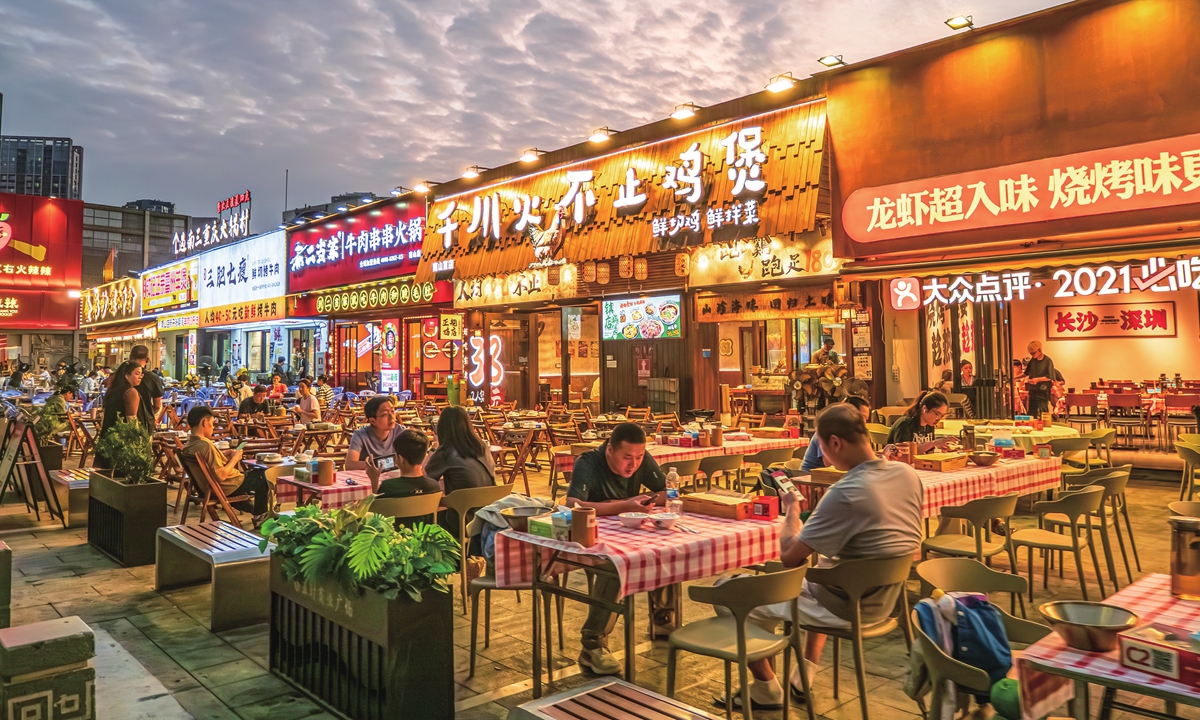
Diners spend time at a night market's late-night food stalls in Shenzhen, South China's Guangdong Province, on October 26, 2025. Photo: VCG
Unique nightscapeLü describes herself as a late-night snack enthusiast, a habit rooted in her northeastern upbringing. "Back home, we often enjoy barbecue," she said. But after moving to Beijing, such opportunities became much rarer. During her time studying in the UK, late-night outings were few and far between. "Most of the time, we were just in bars," she recalled.
Zhong Shuru, an associate professor at the School of Tourism Management at Sun Yat-sen University, told the Global Times that China's vast geography and diverse local cuisines have produced distinct late-night food cultures across cities, from Jinzhou-style barbecue in Northeast China to stinky tofu in Changsha, Central China's Hunan Province, and marinated seafood in Chaoshan, South China's Guangdong Province.
People tend to be most relaxed at night. So late-night snacks naturally evolved to fit this setting - foods that are usually a bit more stimulating, making them suitable for groups gathering at night, according to Zhong.
This lively, communal spirit is visible even at a casual street corner: The clang of woks, the hiss of chili peppers hitting hot oil, the calls of vendors, and the laughter of friends form a buzz of energy that pulls people in.
The allure of late-night dining isn't lost on visitors, either. Ryan Lewis, 40, whose Chinese name is Liu Laien, hails from Seattle and frequently visits Xi'an, Northwest China's Shaanxi Province. An active user of Chinese social media platforms such as Xiaohongshu, he frequently shares videos offering his perspectives on a variety of topics, including late-night dining. For him, late-night dining in China is nothing short of "incredible."
"I love the fact that with yexiao you can always find a place to relax, eat, drink a beer, and chat with friends - it's truly amazing for just quality of life, freedom, and culture," he told the Global Times, listing the wide variety of late-night Chinese snacks he has tried.
According to Lewis, this type of late-night dining culture doesn't exist in the US, even though many cities there have food trucks. This highlights what sets China's night-snack scene apart globally.
That uniqueness also has deep historical roots. China's late-night dining tradition stretches back to its agrarian past. In ancient times, people slept right after sunset and often woke again at night, when they would briefly drink tea, talk, and eat a little before returning to sleep and rising at sunrise, Zhong remarked.
RELATED ARTICLES