The most promising sign is the sight of young Chinese people queuing in front of one of the shops on the Ponte Vecchio in Florence. Through word of mouth on Xiaohongshu (RedNote), the most active Chinese platform in the tourism sector, they have discovered that there they can buy an exclusive souvenir of their trip, a Humilis jewel, with the Florentine Lily and the Rose Window of Santa Maria del Fiore being particularly sought after. These are handcrafted items from Arezzo, where goldsmith Fabio Baldini has drawn inspiration from Franciscan simplicity to create unique pieces such as rings, pendants and bracelets in silver or 18-carat gold, now making their way to China.
In the last two years, the configuration of Chinese tourism in Italy has undergone a significant qualitative evolution, with a consolidation of target destinations and purchasing power. "China has accustomed us to very rapid changes: it would be a mistake to continue thinking of Chinese tourism as large bus groups," noted Stefano Generali, managing director of Intarget Shanghai, an Italian digital consulting company. "Italy is attracting educated, young, and affluent travelers who visit alone, with small families, or in dynamic groups, seeking four- and five-star hotels, spas, excellent food and wine, and sports."
In this context, age plays a decisive role: new travel choices are largely driven by tourists under 44, who account for 68 percent of this demographic. Millennials and Gen Z are leading this shift in tourism, particularly those hailing from China's major economic hubs — led by Shanghai (26.2 percent) and Beijing (25.4 percent), followed closely by Chengdu and Guangzhou, a significant detail within China's economic geography.

A visitor takes a picture of the coast of Sardinia. Photo: Milano Finanza
Free Independent Travelers represent 56 percent of Chinese travelers in Italy; they move independently or in small family or thematic groups, the latter fitting well with the experiential nature of place and time, such as truffle hunting, olive picking or grape harvesting that characterize the autumn period, or winter sports and outdoor activities. The Olympic Bridge (Beijing 2022 and Milan-Cortina 2026) has generated 300 million winter sports enthusiasts in China, and what better opportunity for trekking in the Dolomites, skiing, snowboarding, sailing, golf and cycling tourism. High-altitude stays with spas, branded technical equipment and tours combined with major sporting events are also attracting new Chinese consumers. "Chinese holidays in October and February represent a great opportunity for the 'deseasonalization' of Italian tourism offerings," suggested Generali. "In the heart of winter and autumn, we can think of alpine resorts, thermal centers and historic villages that would otherwise suffer from low season." Consequently, organized group tours that move by bus to shopping malls, which have become cathedrals to celebrate the ritual of shopping, are less appealing.
As for target destinations, alongside the classic artistic hubs of Milan, Rome, Florence and Venice, alternative destinations such as Sicily, Sardinia, the Ligurian coast of the Cinque Terre and coastal areas are being favored. These destinations are preparing to better communicate their appeal. Online searches in China dedicated to Sardinia, for example, have grown by 90 percent, while bookings made through major online travel agencies have seen a 108 percent increase, following a promotional campaign in the Chinese market in May and June, carried out by Huawei's Petal platform in collaboration with the regional tourism department.
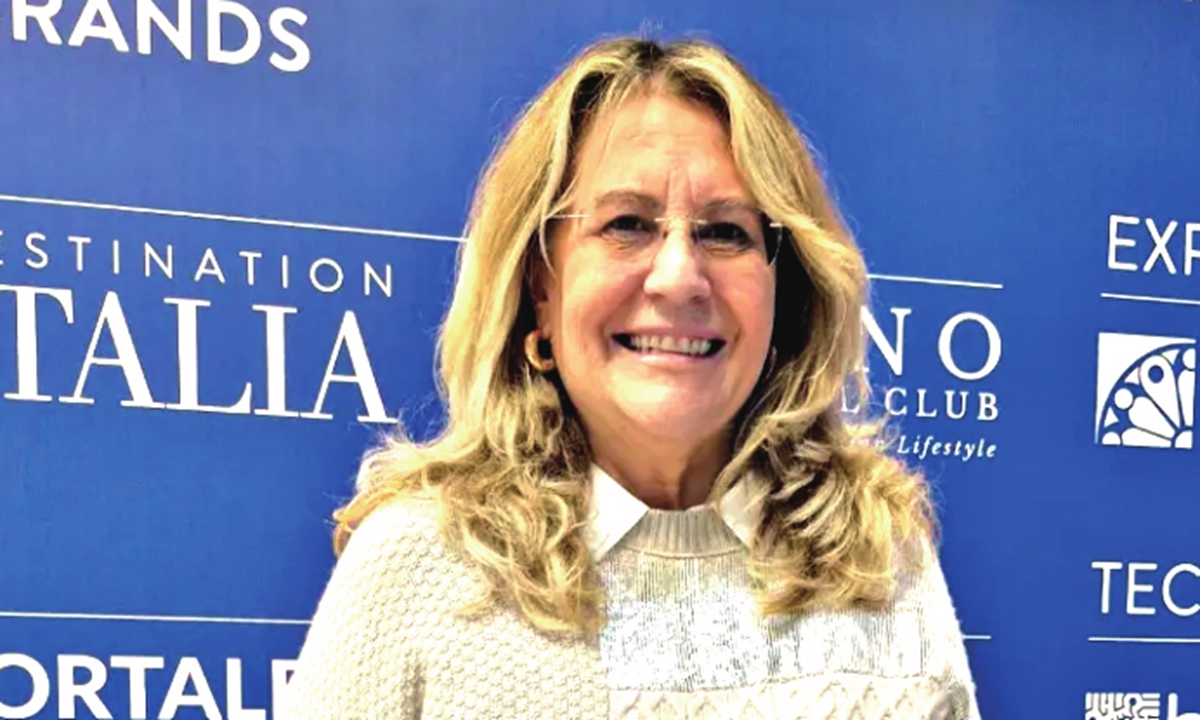
Dina Ravera, president of Destinazione Italia Photo: Milano Finanza
Moreover, the number of Chinese visitors arriving in Sardinia this year has increased by 5.4 percent, while the average length of stay has grown by 13.6 percent, indicating a growing interest in the destination and a greater propensity for longer stays. "We have targeted three groups of high-spending travelers who spend a lot of time in the places they choose for vacations: young people aged 24 to 34, high-income families and senior travelers," clarified Jaime Gonzalo, vice president of Huawei Ecosystem in Europe. "These are people looking for cultural experiences, not just famous attractions, nature, clean air and good food."
"It is necessary to intensify communication actions with Chinese platforms like Xiaohongshu, which is the most qualified in this case," urged Cristiano Varotti, area manager for East Asia at ENIT. The moment is favorable for Italian intermediary agencies to establish contacts with Chinese tour operators who, after the pandemic, need to rebuild their network worldwide. ENIT, which has communication infrastructures and a network with major Chinese agencies for the high-end segment, can act as an intermediary for companies, regions or other organizations targeting the Chinese market. In the past three years, Italy, as a destination, has been experiencing substantial growth.
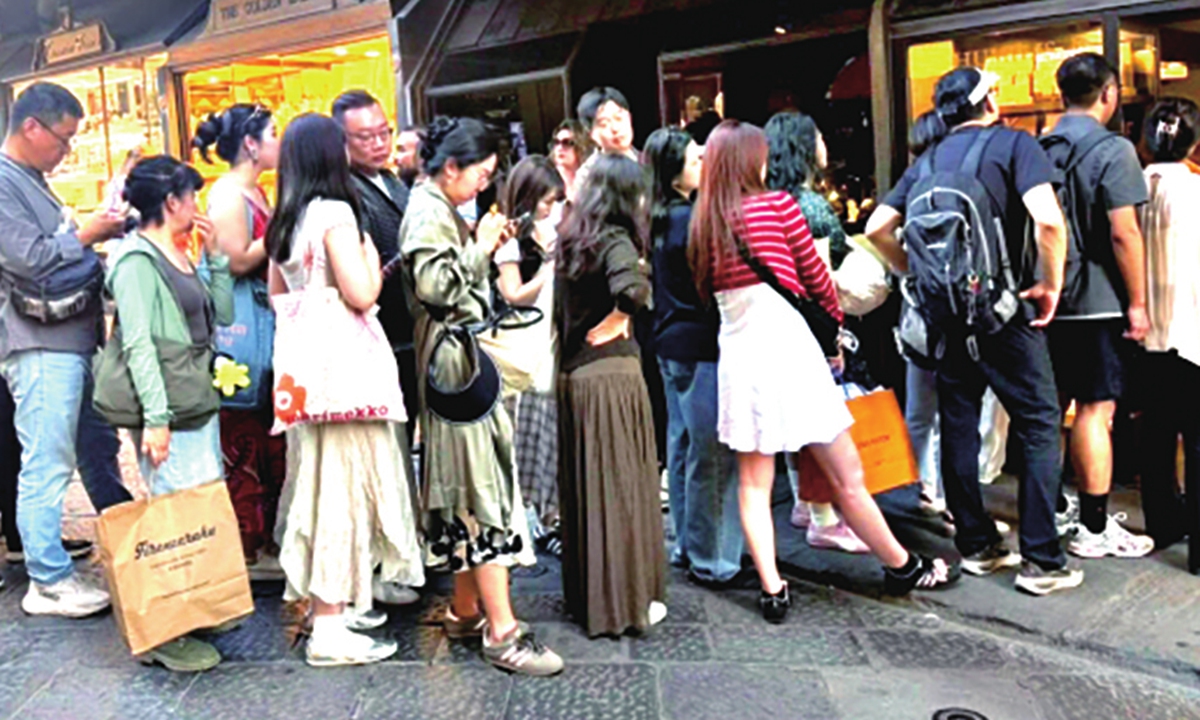
Chinese tourists queue in front of the Humilis shop on the Ponte Vecchio in Florence. Photo: Milano Finanza
"For us, 2026 is showing excellent growth," confirmed Dina Ravera, president of Destinazione Italia, the travel tech active in experiential incoming tourism, also based in Shanghai. "Sales generated through collaboration with travel agencies have increased by over 400 percent compared to the previous year. This result refers to our commercial activity, which is accompanied by the construction of a solid base of loyal customers."
One of the winning factors of this loyalty strategy is to transform the trip to Italy into a unique experience, just as it happens in showrooms in China where the Italian brand must compete with Chinese competitors by revealing its strengths that justify the price and the intrinsic qualities of the product. In traveling to Italy, Chinese consumers are increasingly less interested in purchasing material goods as status symbols but seek unique items, exclusive collections not available in Asia. Thus, the destination creates consensus and appeal.
RELATED ARTICLES