SCI-TECH / OTHERS
China’s Shenzhou-23 crew retrieves biological samples exposed to 5 months of space radiation
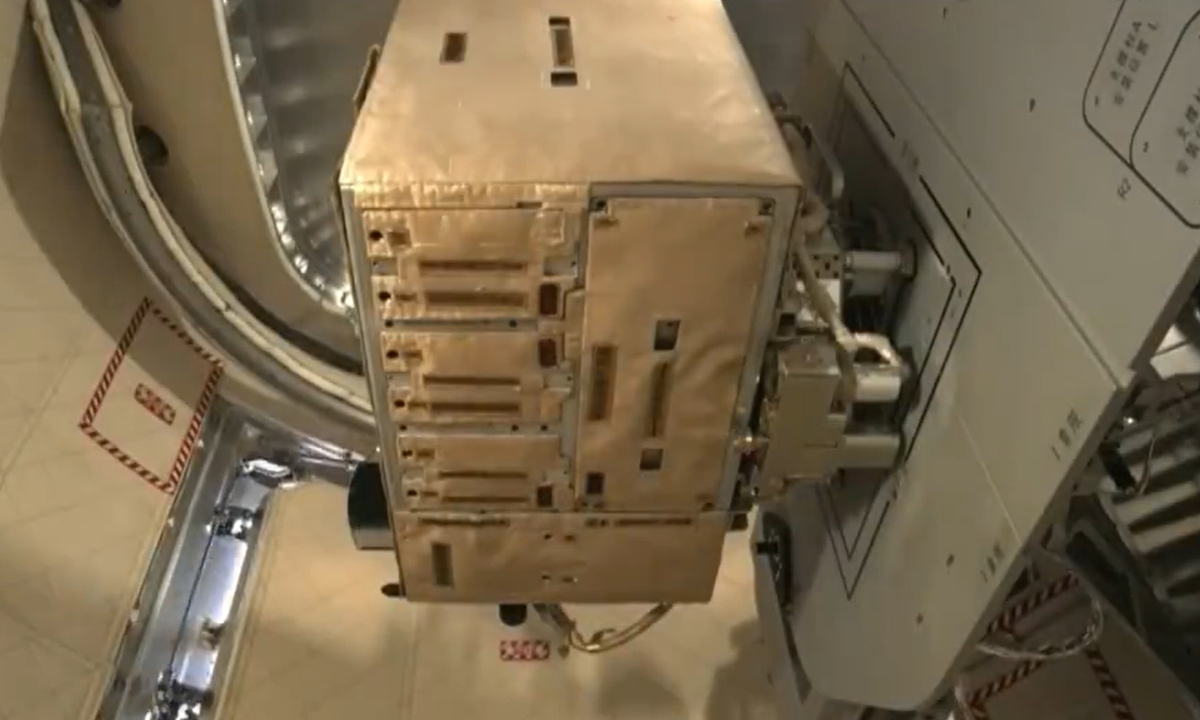
Photo: CCTV
China's Shenzhou-23 crew has retrieved a batch of biological samples that spent five months exposed to the harsh environment outside the country's space station, marking the completion of the fourth round of an experiment studying the effects of space radiation on living organisms, according to China's state broadcaster CCTV on Sunday.The samples, including nanozymes, actinomycetes and plant seeds, were placed in a space radiation exposure device outside the station five months ago. During their time in orbit, they were exposed to high-energy particle radiation, intense ultraviolet radiation and an extremely high vacuum, as well as sharp temperature differences between the sunlit and shaded sides of the station.
The astronauts completed the removal and storage of the samples, along with the handling of the exposure device. The samples will be brought back to Earth aboard the Shenzhou-23 spacecraft for further research, according to CCTV.
Scientists will study the samples to investigate the effects of space radiation on biological materials, including radiation damage and the ability of living organisms to tolerate extreme conditions.
The experiment is being conducted outside the space station because ground-based laboratories cannot fully reproduce the complex conditions of space. Although ultraviolet lamps and vacuum chambers can simulate some aspects of space, they cannot completely replicate the combined effects of atomic oxygen erosion, micrometeoroid impacts and drastic temperature fluctuations.
The exposure platform was installed outside China's Mengtian laboratory module. It has two deployable panels, one facing Earth and the other facing away from it, as well as a fixed platform mounted on the module's exterior. Together, they provide 37 positions for experiments.
The samples retrieved by the Shenzhou-23 crew are the fourth to undergo the experiment. China's first such experiment began in June 2023. In October that year, the first batch of samples, including nematodes, plant seeds and microorganisms, returned to Earth in good condition.
In April 2024, archaea were added to the experiment, which also marked the first time biological samples were exposed to solar ultraviolet radiation outside the station.
Through these experiments, scientists can collect data on radiation damage and biological tolerance. The research covers a range of subjects, from catalysts related to the origins of life and microbial adaptation to genetic changes in higher plants. The findings are expected to provide data for research into radiation-resistant drugs, protection for astronauts during long-term missions and the development of future lunar bases.
The three Shenzhou-23 astronauts, Zhu Yangzhu, Zhang Zhiyuan and Li Jiaying, are now in the sixth month of their mission, with a busy schedule of scientific experiments and station maintenance.
In addition to the biological exposure experiment, the crew has been conducting research into the effects of microgravity on the musculoskeletal system. Using a foot-pressure measurement device, the astronauts collect data during a typical workday to help researchers study the forces placed on bones and muscles under different conditions in orbit.
The astronauts have also collected nasal swabs and samples from surfaces inside the station. The samples will be used in research into interactions between viruses, the immune system and metabolism.
The crew has also completed computer-based assessments of their emergency decision-making abilities and tests of their emotional states. The results will help ground researchers analyze changes in the astronauts' cognitive and emotional conditions during the mission.
Other tasks include replacing experimental samples in the fluid science cabinet and a filter in the combustion science cabinet, supporting ongoing experiments in microgravity.
As part of routine station maintenance, the crew conducted tests of total volatile organic compounds and air cleanliness, replaced components in the regenerative life-support system and changed the hot-air heating unit in the station's galley. They also cleaned the station's interior to maintain a suitable living environment.
The three astronauts are continuing their scheduled exercise and equipment use routines, including using a bone-loss countermeasure device to help reduce the effects of prolonged weightlessness and maintain their health in orbit, according to CCTV.
RELATED ARTICLES


