ARTS / CULTURE & LEISURE
From traditional incense to present-day perfumes, a centuries-old Chinese custom is being embraced by new generations
Ancient aromas, modern rituals
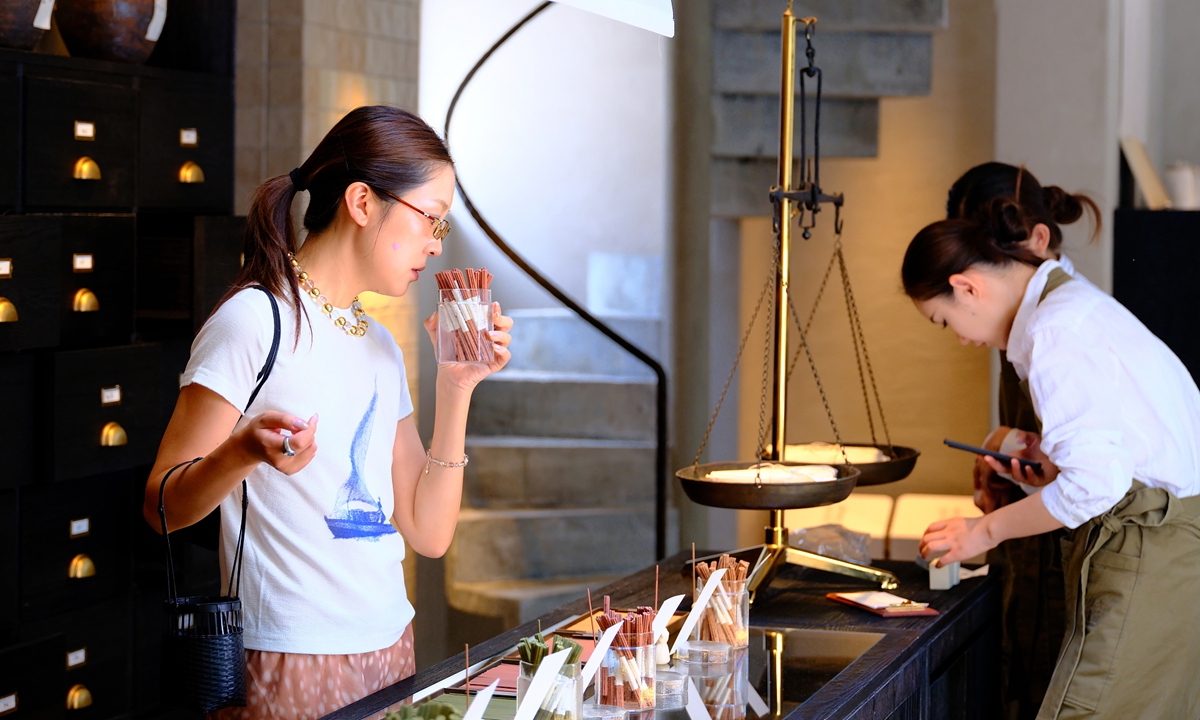
A customer smells incense sticks at a shop in Beijing on July 6, 2026.
For Lou Li, 25, lighting a stick of incense has become part of her routine. After work, she often lights one and lets the fragrance fill her room. She also burns incense when she meditates, a habit she says helps her unwind after a long day.
Incense has also become a popular gift among her friends since 2025. Lou sometimes buys it herself, while friends have introduced her to new scents by giving her different varieties.
She shared with the Global Times that she has even bought several incense holders specifically for burning incense at home.
For a growing number of young Chinese consumers, incense is no longer confined to ceremonies. Once closely associated with the refined pastimes of scholars, it is finding a place in modern homes, where younger generations are drawn to its cultural roots, distinctive scents and role in everyday rituals.
On Douyin, China's popular short-video and e-commerce platform, traditional Chinese incense has become the best-selling fragrance category.
Livestreams featuring incense inspired by intangible cultural heritage and new Chinese-style aesthetics have also gained popularity, attracting growing interest from younger consumers. Those aged 25 to 34 account for 68.4 percent of online incense orders, according to CCTV.com.
From agarwood and sandalwood to historically inspired fragrances, a variety of traditional scents are attracting renewed attention. For many younger consumers, burning incense is no longer limited to special occasions. It has become part of home decoration, meditation and daily relaxation.
The renewed popularity of incense, however, is not simply a passing consumer trend. It also reflects a broader rediscovery of traditional Chinese culture and the ways in which it can be incorporated into contemporary life.
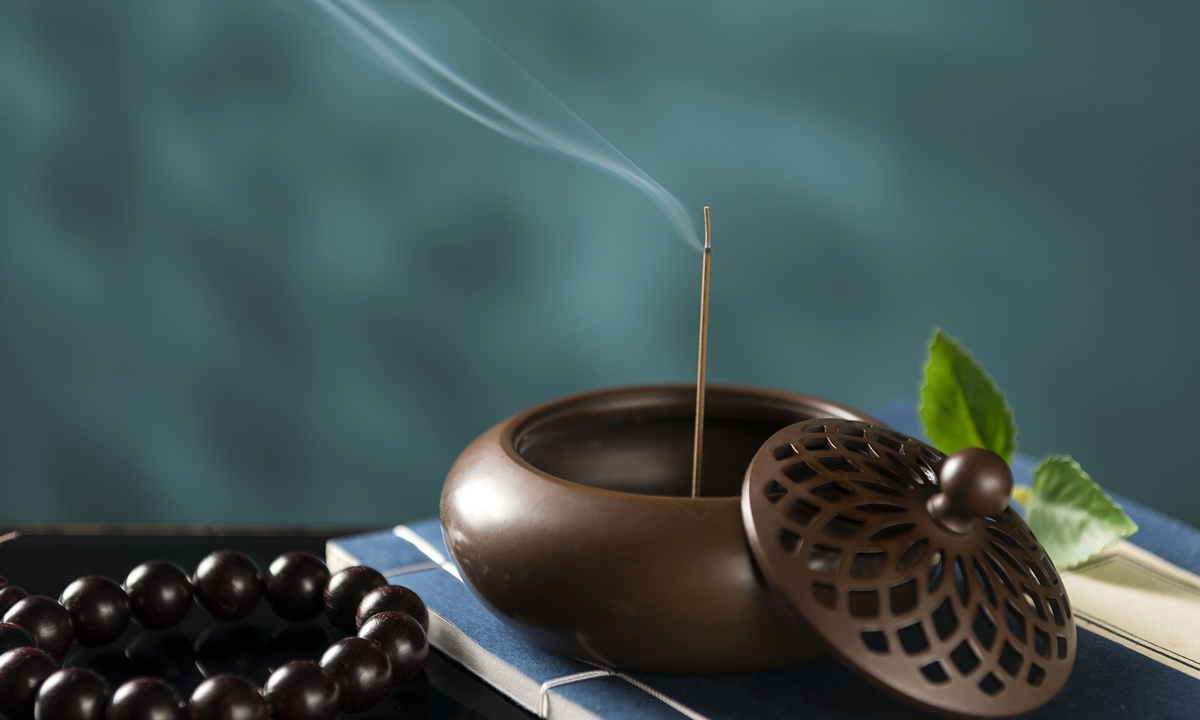
A burning incense stick Photos: VCG
A modern expressionThe history of incense in China stretches back thousands of years.
As early as the Han Dynasty (206BC-AD220), Boshan Lu, or hill-shaped incense burners, were already part of aristocratic life. Used to perfume clothing and living spaces, they filled rooms with delicate fragrances and curling wisps of smoke, creating a quiet and calming atmosphere.
Incense later became closely associated with the refined lifestyle of the Song Dynasty (960-1279), when burning incense, drinking tea, arranging flowers and appreciating paintings were among the pursuits enjoyed by scholars and literati.
Incense was also closely linked to traditional Chinese medicine and its understanding of the relationship between body and mind. Agarwood, sandalwood and various aromatic herbs were used in different ways, with each believed to have its own properties.
Over the centuries, incense found its way into both ceremonies and everyday life.
Today, traditional incense is finding a new audience as interest in Chinese culture grows among younger generations.
Guochao (which literally means "national trend," referring to domestically created designs, often inspired by traditional Chinese culture) has brought traditional clothing, tea, handicrafts and other cultural elements back into the spotlight. Incense, too, has become a way for young people to bring a touch of traditional Chinese aesthetics into their daily lives.
"To me, Chinese-style fragrances are often rooted in traditional Eastern aesthetics, which can be seen in everything from their packaging to the decorations on the incense burners themselves," Wang Tong, a 28-year-old Beijing-based enthusiast of Chinese-style fragrances, told the Global Times.
According to Wang, compared with Western perfumes, incense scents tend to be softer and less overpowering, and often feature ingredients associated with China, such as tea, gardenia and jasmine.
Some fragrance brands she follows, which have become popular among young consumers, have also started offering their own incense sticks. She has already bought some.
For younger consumers, trying traditional incense does not necessarily mean following old customs or rituals. Some simply enjoy exploring different fragrances, while others see burning incense as a way to make their homes feel more comfortable or to set aside a little time for themselves.
"After a tiring day at work, I like to light a stick of incense before going to bed. The fragrance helps me relax, and makes it easier for me to settle down for the night," Wang told the Global Times.
Science behind the scent
Traditional Chinese medicine (TCM) has long used aromatic herbs as part of its approach to regulating qi (vital energy) and promoting well-being.
According to Wang Jing, chief physician and head of the integrated traditional Chinese and Western medicine ward at Beijing Anding Hospital, different aromatic substances are traditionally understood to have different properties and uses.
Modern research offers another perspective. The sense of smell is closely linked to the brain's emotional centers. Fragrance molecules enter the nose and interact with olfactory receptors, sending signals to the brain, including areas of the limbic system such as the hippocampus and amygdala that are involved in emotion and memory, said Wang.
These signals may help regulate the release of neurotransmitters such as serotonin and dopamine, easing tension and anxiety, calming the mind and supporting better sleep. Compared with oral medication, inhaling fragrances is a gentler approach and may be easier to incorporate into a long-term routine, noted Wang.
But more is not necessarily better. Experts advise choosing fragrances according to individual needs and sensitivities, keeping rooms well ventilated and avoiding prolonged exposure to smoke. People with allergies or respiratory problems should be particularly cautious, and incense should not be used as a substitute for medical treatment.
Peng Wei, deputy chief nurse at the aromatherapy and traditional Chinese medicine treatment clinic of West China Fourth Hospital affiliated with Sichuan University, noted that this connection helps explain why certain fragrances can influence people's emotional responses.
Some scents may help people feel more relaxed, while others may make them feel refreshed or more alert. However, responses to fragrance differ from person to person and depend on factors such as individual sensitivity and the way a scent is used.
Experts also advise people to choose fragrances according to their own needs and physical condition. Those who are sensitive to strong smells or have respiratory problems should take extra care.
RELATED ARTICLES