Who will foot the bill for proposed buyers' club meant to curb China's export strength?

export, trade, cooperation Illustration: Tang Tengfei/GT
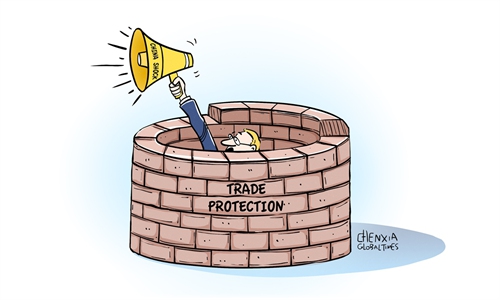
A Bloomberg opinion article published this week argues that China is using exports as a weapon and proposes a global "buyers' club" to counter its influence. The idea is that market economies, unable to match China's strength on the supply side, could pool their purchasing power to gain leverage over Beijing.
But this argument treats China's export controls and broader manufacturing strength as part of the same geopolitical threat, overlooking the market forces behind the country's export competitiveness.
It raises a more fundamental question: If the response to China's industrial strength is to organize buyers against it, whose interests would such a club really serve - those of businesses seeking competitive and reliable suppliers, or those of policymakers seeking geopolitical leverage?
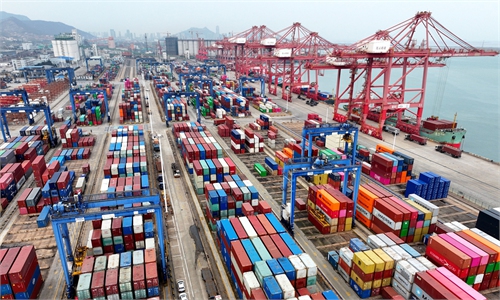
Global trade has long been shaped by supply and demand, competitive costs and trust between buyers and sellers. China's export strength follows the same logic. Decades of investment, technological progress and fierce competition have built an extensive manufacturing network capable of producing at scale and responding to global demand.
International buyers choose Chinese suppliers for their competitive prices, consistent quality and reliable delivery. These are commercial advantages developed through years of production and competition. Treating them as evidence of trade being weaponized confuses market competitiveness with geopolitical coercion.
According to the International Energy Agency (IEA), battery pack prices in China were 30 percent lower than in the US and 35 percent lower than in Europe in 2025. The IEA's Global EV Outlook 2026 also found that differences in manufacturing efficiency accounted for more than 40 percent of the battery cell production cost gap between Europe and China. Such disparities help explain why international buyers value Chinese supply chains.
China's export controls on specific products do not mean its broader manufacturing and export strength is being used as a geopolitical weapon. China has consistently maintained that such controls should be fair, reasonable and non-discriminatory, and are intended to safeguard national security and fulfill international nonproliferation obligations. These are legitimate purposes recognized in export control systems worldwide. Export controls on specific products do not justify portraying China's broader export strength as a geopolitical weapon.
There is also a striking double standard. Washington has long used export controls, investment restrictions and punitive tariffs to pursue strategic objectives. The Bloomberg article acknowledges these measures and their limitations, yet proposes a broader coalition that could impose coordinated tariffs, quotas and import bans. Rather than questioning the growing use of trade restrictions as geopolitical tools, the proposed solution would extend such measures across more economies.
The proposed buyers' club goes well beyond encouraging companies to diversify their suppliers. The Bloomberg article argues that combining the purchasing power of major economies could reduce China's market influence while helping offset the higher costs of replacing cheaper Chinese goods. But a larger pool of buyers does not automatically make alternative suppliers cheaper, more capable or more reliable. If weakening China's market position becomes the priority, commercial interests could take a back seat to geopolitical goals.
Who would decide where companies should buy, and who would pay for the shift? A European renewable-energy developer or a Southeast Asian electronics producer cannot switch suppliers overnight. Alternative components may require testing, production adjustments and new logistics arrangements, often at additional cost. Businesses and consumers could ultimately bear the expense of purchasing decisions shaped more by political priorities than commercial needs.
The IEA estimated this year that a one-month halt in Chinese battery supply chain exports could cost electric vehicle factories outside China $17 billion in lost output, more than half of it in the EU. A similar disruption to solar component exports could cost overseas solar panel makers about $1 billion, with more than 40 percent of the losses in Southeast Asia and India. The figures show how disruptions to China's supply chains could reverberate across industries and regions.
Collective purchasing would not necessarily strengthen buyers' bargaining power. Buyers can negotiate better terms when credible suppliers compete for their business. If a club shuts out competitive suppliers for political reasons, members could end up with fewer choices and weaker negotiating positions. The benefits of pooling demand could be offset by the loss of competition.
There is nothing wrong with diversifying supply chains. Relying too heavily on a single source creates risks, and developing alternatives makes economic sense. But genuine resilience requires reliable production capacity, better infrastructure, greater transparency and contingency planning. It also depends on keeping markets open, promoting fair competition and strengthening international cooperation, particularly with China, given its central role in global manufacturing and supply chains.
If trading partners are chosen increasingly by geopolitical alignment rather than commercial competitiveness, businesses worldwide will face greater uncertainty, while developing economies could lose opportunities to participate in global value chains.
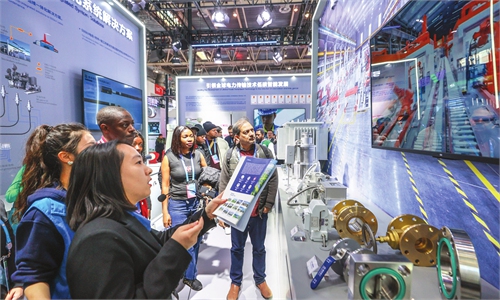
At this week's APEC Business Advisory Council meeting in Shenzhen, business representatives have called for open and predictable trade and investment, stronger connectivity and more resilient supply chains. Such cooperation can open new avenues for growth across the Asia-Pacific region. By contrast, exclusive purchasing blocs risk creating new divisions in an increasingly interconnected regional economy, undermining the very cooperation that has helped it prosper.
The author is a reporter with the Global Times. bizopinion@globaltimes.com.cn
RELATED ARTICLES