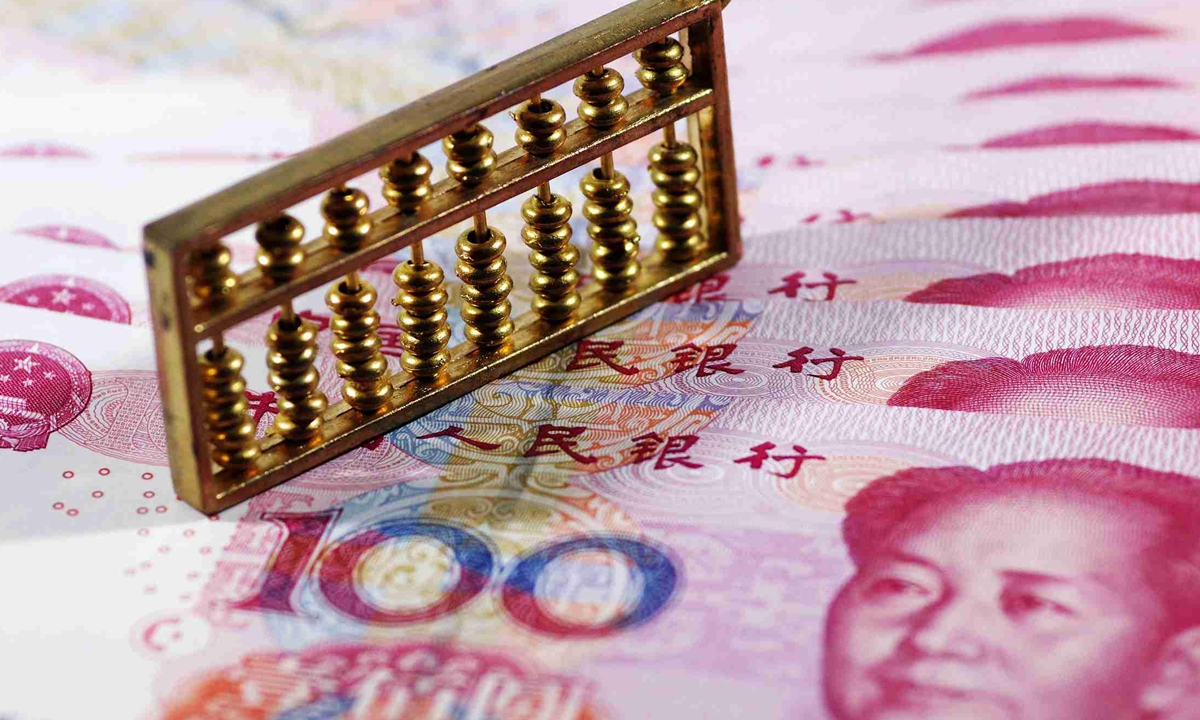
Chinese yuan Photo:VCG
The yuan's central parity rate - the daily reference level set by China's central bank - rose to 6.7118 against the US dollar on Wednesday, its strongest level in more than four years.
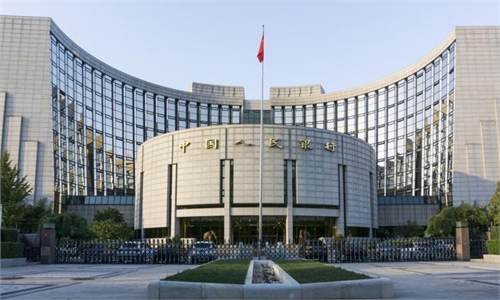
The central parity rate of the yuan against the US dollar stood at 6.7118 on Wednesday, according to data from the People's Bank of China (PBC), the central bank. This reading was the highest since July 2022, according to media reports.
Cheng Shi, chief economist of ICBC International, told the Global Times that the US dollar is supported by higher US real interest rates, while the yuan is being lifted by improved domestic foreign-exchange supply and stronger corporate conversion demand.
The PBC has taken steps to moderate this pro-cyclical trend. On November 3, it announced that the foreign-exchange reserve requirement ratio - the share of foreign-currency deposits that banks must keep at the central bank - would rise from 4 percent to 6 percent starting November 15. It was the first increase in nearly five years.
Wen Bin, chief economist of China Minsheng Bank, estimated that the hike would freeze roughly $24 billion in foreign-currency liquidity, based on about $1.2 trillion in foreign-currency deposits at the end of September.
"Given that China's daily foreign-exchange market turnover exceeds $800 billion, the amount itself is not large enough to reshape supply and demand. Its main effect is signaling: banks have less US dollar liquidity available to sell in the domestic market, the cost of holding surplus dollars rises, and the urge to convert foreign currency is mildly restrained," Wen told the Global Times.
In an October statement on exchange-rate policy, the central bank repeated that it does not set a fixed exchange-rate target for the yuan. However, if herd behavior or irrational expectations emerge, it is prepared to use market-based tools to prevent short-term, disruptive overshooting.
Global Times
RELATED ARTICLES