China's central bank to stick to moderately loose monetary policy, backed up by more effective incremental measures in H2
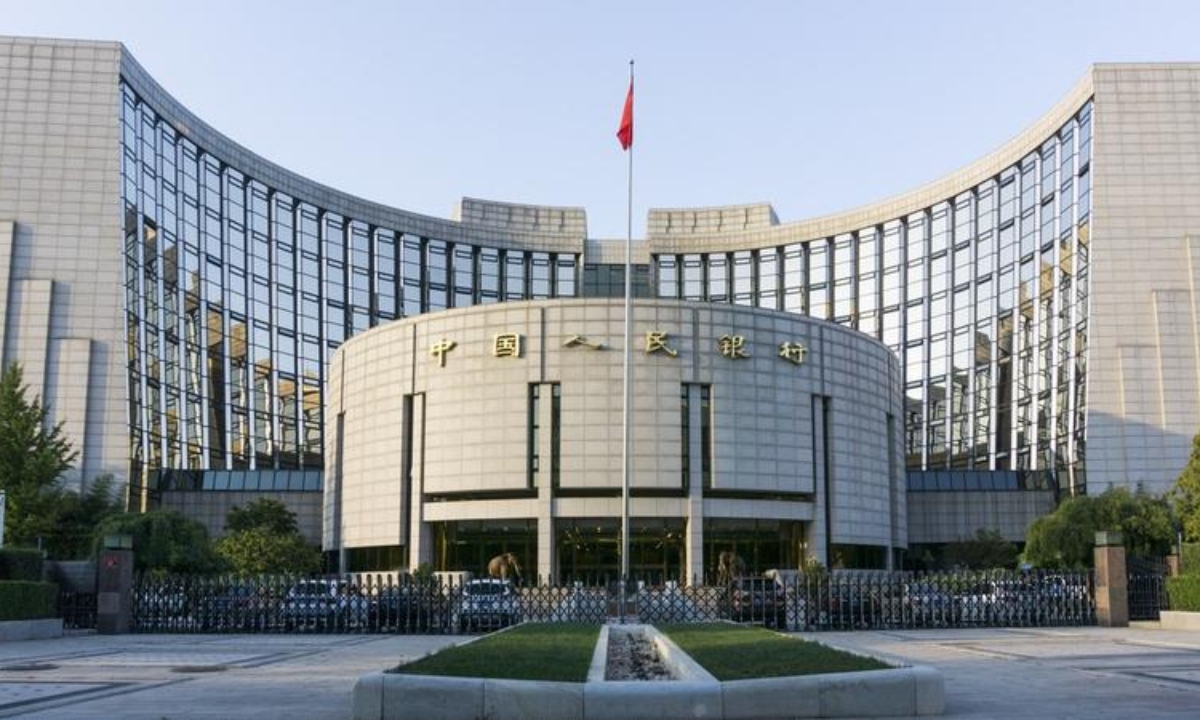
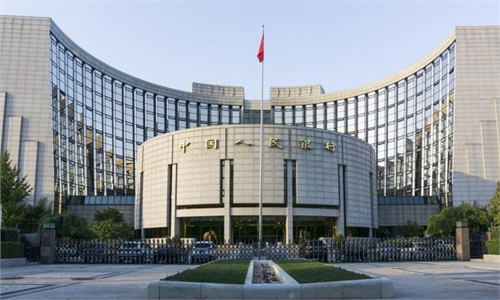
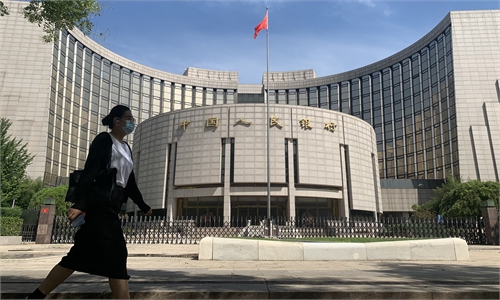
The headquarters of the People's Bank of China in Beijing Photo: IC
The People's Bank of China (PBC), the central bank, pledged to keep monetary policy moderately loose in the second half of 2026, to be accompanied by more pragmatic, effective, incremental measures, while implement stronger counter-cyclical adjustment to expand domestic demand and optimize market supply, it said on Sunday.
At its work conference for the second half of the year held on Saturday, the PBC said that it will give full play to existing policies while keeping market liquidity ample, guiding financial institutions to smooth the pace of credit issuance so that growth in aggregate financing and money supply match the pace of economic growth, according to a statement seen on the central bank's website.
The PBC said that it will move to adjust policy tools in a timely manner, regulate lending practices, push down intermediary financing fees and keep overall social financing costs at a low level.
The central bank will also continue to assess and refine its monetary policy framework, and keep the yuan basically stable at a reasonable and balanced level while preserving its flexibility, stressing that the market plays the decisive role in the exchange rate formation.
Data released at the meeting showed that, at the end of June, aggregate social financing rose by 7.4 percent year-on-year and the so-called broad money supply (M2) grew by 8 percent.
In the first half of this year, the PBC combined reverse repos, the medium-term lending facility and the treasury bond trading to supply short-, medium- and long-term market liquidity, while refining short-term rate control by adding overnight reverse repo operations and narrowing the rate corridor for overnight operations.
Structural tools were expanded too. The central bank cut interest rates on structural monetary policy tools, raised relending quotas for technological innovation and equipment upgrading and for agriculture and small businesses, set up a dedicated relending facility for private enterprises, merged risk-sharing tools for sci-tech and private-enterprise bonds, and broadened the coverage of relending for services consumption and elderly care and more.
Total lendings under the "five major areas" of financing — technology, green, inclusive, pension and digital finance — expanded by 11 percent year-on-year at the end of June, markedly outpacing overall loans growth, while cumulative issuance of sci-tech innovation bonds exceeded 2.8 trillion yuan ($414.73 billion).
On monetary sector opening-up, the central bank said that it will carry out currency swap and local-currency settlement cooperation with overseas central banks, support more foreign issuers in tapping the panda-bond market, develop offshore yuan market, back Shanghai in upgrading cross-border and offshore financial services, and consolidate Hong Kong's status as an offshore yuan hub. Panda bond issuance topped 160 billion yuan in the first half of the year. The bank will also advance the Cross-border Interbank Payment System, deepen international payment cooperation and improve digital yuan cross-border infrastructure construction.
The central bank meeting also called for prudently defusing sector risks in some key areas, including continued financial support for resolving local government financing-platform debt and assisting their market-oriented transformation, using a richer macro-prudential and financial stability toolkit, and implement effective use of the two monetary instruments to support the capital market.
Global Times
RELATED ARTICLES