China, South Korea substantially conclude second phase of FTA negotiations: MOFCOM
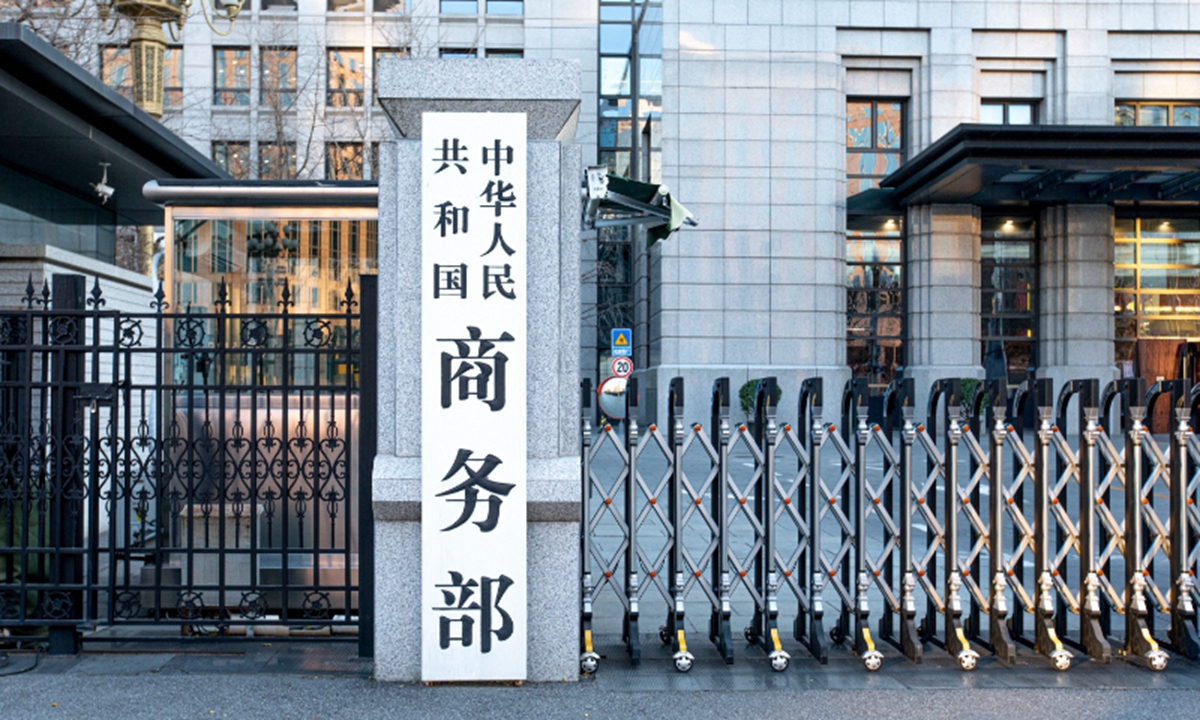
The Ministry of Commerce of China File photo: VCG
China and South Korea have substantially concluded the second phase of negotiations on their free trade agreement (FTA) after more than eight years of talks, reaching a mutually beneficial, high-standard outcome that will further enhance investment and services trade liberalization and facilitation, an official from China's Ministry of Commerce (MOFCOM) said.
With the negotiations substantially concluded, the two sides will review and confirm technical details of the final text and complete translation and legal review to prepare for the formal signing of the upgraded agreement.
According to the MOFCOM official, the substantial conclusion of the negotiations will create new development opportunities for businesses in both countries, further consolidate the foundation of bilateral economic and trade cooperation, and inject fresh momentum into the stable development of the China-South Korea strategic cooperative partnership.
It also represents a practical step by both sides to uphold multilateralism and free trade, as well as concrete action to jointly oppose unilateralism and protectionism and safeguard the multilateral trading system, sending a positive signal to the international community, according to the official.
The second phase of negotiations was jointly launched by the two heads of state in December 2017, with both sides adopting a negative list approach to negotiations on investment and trade in services. Since the first round of negotiations in March 2018, the two sides have held 17 formal rounds of talks, making progress in consultations on relevant rules and market access.
The China-South Korea FTA was signed on June 1, 2015, and officially entered into force on December 20 of the same year. Eleven rounds of tariff reductions have since been implemented, with the benefits of tariff concessions on goods gradually materializing, helping sustain bilateral trade in goods at high levels and deepen the integration of the two countries' industrial and supply chains.
According to Chinese statistics, bilateral trade reached $331.24 billion in 2025, up 1.2 percent year on year. In the first 10 months of 2026, bilateral trade amounted to $440.9 billion, surging 63.7 percent year on year.
The second phase of negotiations covers upgrades to the original FTA's chapters on investment, trade in services, financial services and economic cooperation, as well as related annexes, further enhancing rules governing investment and services liberalization and facilitation.
The two sides have adopted a negative list approach to making market opening commitments in areas including investment, cross-border trade in services and financial services, establishing transparent, stable and predictable market access rules for future two-way investment and services trade.
Once upgraded, the FTA will further consolidate the foundation of bilateral cooperation through more robust institutional arrangements, effectively expand the scale and improve the quality of bilateral investment and services trade, and support the continued development of bilateral economic and trade relations, the MOFCOM official said.
Global Times
RELATED ARTICLES