AI Photo: VCG
As global technology companies race to expand their artificial intelligence (AI) capabilities, a recent series of digital service disruptions in the US has brought renewed attention to a fundamental challenge facing the global digital economy: how to ensure that the systems people and businesses depend on every day can keep up with the rapid pace of technological innovation.
The US tech outages are severe - affecting everything from flights to banking to even some of the biggest tech firms. On Tuesday local time, Microsoft CEO Satya Nadella addressed last week's global service outage at the company's annual Ignite technology conference, acknowledging that Microsoft still has work to do to improve the resilience of its services.
On the same day, Apple experienced technical disruptions affecting multiple services, including its App Store and iCloud Mail, following an internal update. Some Gmail users also reported service disruptions, although Google said it had found no evidence of a widespread outage.
US Homeland Security Secretary Markwayne Mullin said on Tuesday that a series of recent technology outages was not tied to cyberattacks but rather to aging computer systems that were in need of upgrades, Reuters reported.
As companies introduce increasingly sophisticated technologies, keeping their existing systems running smoothly is becoming just as important as developing new products.
Cloud computing, for example, has enabled businesses to improve operational efficiency and gain access to advanced technological capabilities. However, as more enterprises and public institutions rely on a relatively small number of technology providers, the impact of an individual technical failure can extend far beyond the service provider itself.
Last week's Microsoft outage offered an illustration of this challenge. According to the Associated Press (AP), online tracker Downdetector said it received outage reports from 74 countries and territories within about an hour. The AP also reported disruptions to businesses, government operations and healthcare services.
The challenge is not necessarily technological backwardness, but the growing complexity of digital systems. Introducing new technologies into existing infrastructure while maintaining uninterrupted services is a complicated undertaking, even for the world's leading technology companies.
There is also an economic dimension to this issue. Launching a new AI product can attract customers, generate revenue and draw investor attention. Spending money on replacing old computer systems or maintaining backup servers, however, may bring few immediately visible returns. If these investments are successful, customers may not even notice them, because everything continues to work as expected. Yet the cost of neglecting such investments may only become apparent when something goes wrong.
This issue deserves particular attention as AI moves beyond content generation and becomes increasingly integrated into business operations. If an AI chatbot used to answer general questions stops working, users may simply have to wait or look elsewhere for information. But when AI is used to perform more critical tasks, such as processing orders, managing inventories or coordinating deliveries, a similar disruption could delay business transactions and lead to financial losses.
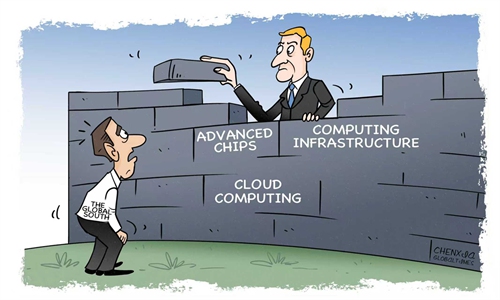
While the US is still trying to understand these issues and eventually address them, this should serve as a wake-up call to all: tackling these challenges requires cooperation among companies, industries, and - above all - countries. Such cooperation must be based on mutual trust and the free flow of technologies and products. In this regard, Washington's growing propensity to impose more technological restrictions would not help at all - and may even make matters worse.
RELATED ARTICLES