Japan’s business community pushes for China exchanges; biz diplomacy alone cannot solve political obstacles: expert
China Japan Photo: GT
Japanese business leaders are stepping up efforts to maintain economic exchanges with China amid prolonged bilateral tensions, reflecting growing concerns over the costs of deteriorating relations for Japanese businesses, according to media reports. Chinese experts said that while Beijing values economic cooperation, Japan cannot expect business ties to develop normally until Japanese Prime Minister Sanae Takaichi corrected her erroneous remarks concerning China's Taiwan region.
Ken Kobayashi, chairman of the Japan Chamber of Commerce and Industry (JCCI), said at a regular press conference on Wednesday that he hoped to dispatch an economic delegation to China as soon as possible, stressing that the business community would continue exchanges with China independently of political developments, Kyodo News reported.
A delegation led by the heads of the JCCI, the Japan-China Economic Association and the Japan Business Federation, known as Keidanren, had originally planned to visit China in January, but the trip was postponed. The organizations are now coordinating a possible visit to Beijing in March 2027, according to the report.
Meanwhile, business organizations including the Kansai Economic Federation are planning to send a delegation to Beijing in December. Kobayashi said he hoped to use the visit to deepen communication with the Chinese side behind the scenes.
Lü Chao, dean of the Institute of US and East Asian Studies at Liaoning University, told the Global Times on Thursday that Japan's eagerness to resume high-level business exchanges reflects mounting anxiety over the economic consequences of strained bilateral relations.
"China and Japan have developed closely interconnected industrial and supply chains through decades of economic cooperation. China remains an important market for Japanese businesses," Lü said, noting that political tensions have inevitably affected economic ties.
Lü said Tokyo has shown no willingness to retract or apologize for Takaichi's erroneous remarks on Taiwan region, indicating that its fundamental political approach remains unchanged.
"Political relations and economic cooperation cannot be completely separated. Japan cannot treat China as a major security threat and challenge its sovereignty and core interests while simultaneously expecting Beijing to maintain or expand economic cooperation on terms favorable to Tokyo," Lü said.
The renewed push comes as Japan's business community faces growing uncertainty over access to the Chinese market and the stability of deeply interconnected industrial and supply chains. A survey released by PwC Japan on October 16 found that 49 percent of Japanese companies planned to maintain their China operations at current levels, up from 39 percent in 2025 and 35 percent in 2024, underscoring the continued importance of the Chinese market to Japanese businesses.
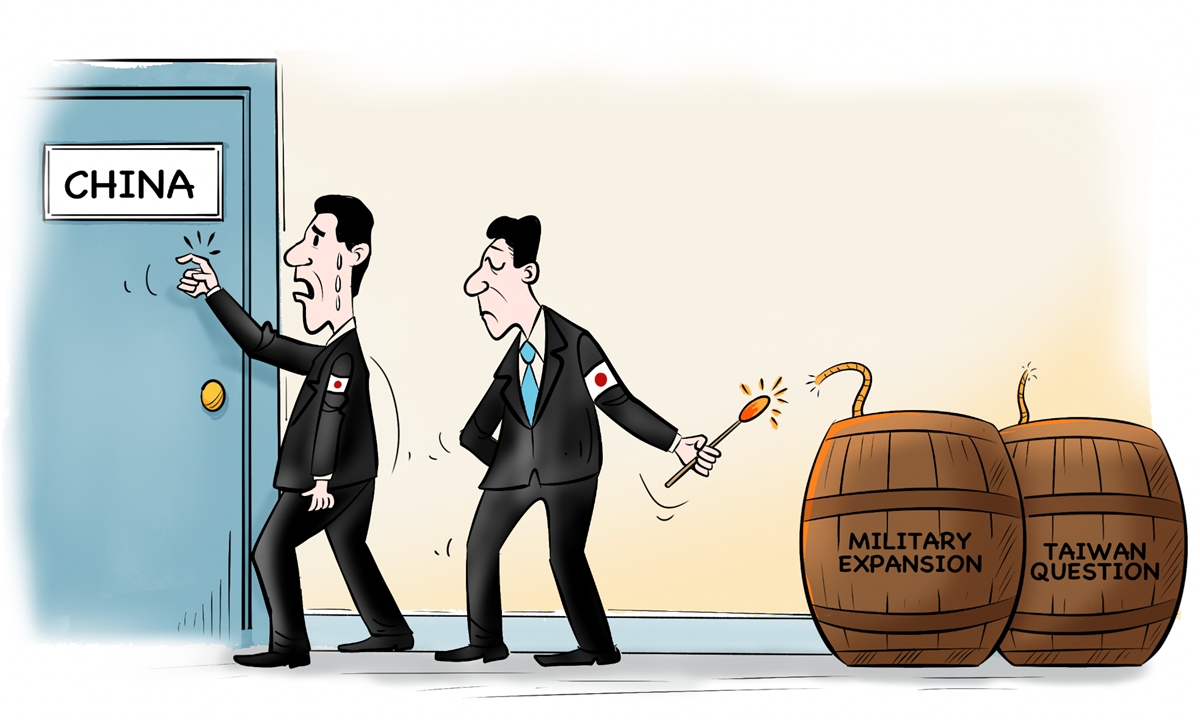
China's firm position reflects strategic patience and its determination not to trade national sovereignty and dignity for short-term economic benefits, Lü said. He warned that Japan's continued rightward political shift and military expansion risk further undermining the foundations of bilateral cooperation.
"The key to restoring China-Japan economic relations is not when a Japanese business delegation visits Beijing, but whether the Takaichi administration is prepared to seriously reflect on and correct its erroneous words and actions," Lü said, stressing that business diplomacy alone cannot resolve the political obstacles facing bilateral ties.
The economic fallout is particularly evident in Japan's tourism industry, which has seen a sharp decline in arrivals from China.
According to the latest figures released Wednesday by the Japan National Tourism Organization (JNTO), visitor arrivals from the Chinese mainland plunged 47 percent year-on-year to 379,500 in October, marking the 11th consecutive monthly decline.
China's Foreign Ministry has stressed that the responsibility for improving bilateral relations rests with Japan. At a regular press briefing on October 12, spokesperson Mao Ning said that "the real issue lies in the distorted and erroneous views toward history and China held by those running the Japanese government, which has severely undermined the political foundation of China-Japan relations."
"The situation does not serve the two countries' interests, and the responsibility rests fully with Japan. To bring China-Japan relations back to the right track, the ball is, apparently, in Japan's court," Mao said.
RELATED ARTICLES