ARTS / CULTURE & LEISURE
How a group of amateurs with no filmmaking background made an unlikely AI hit
From novices to creators
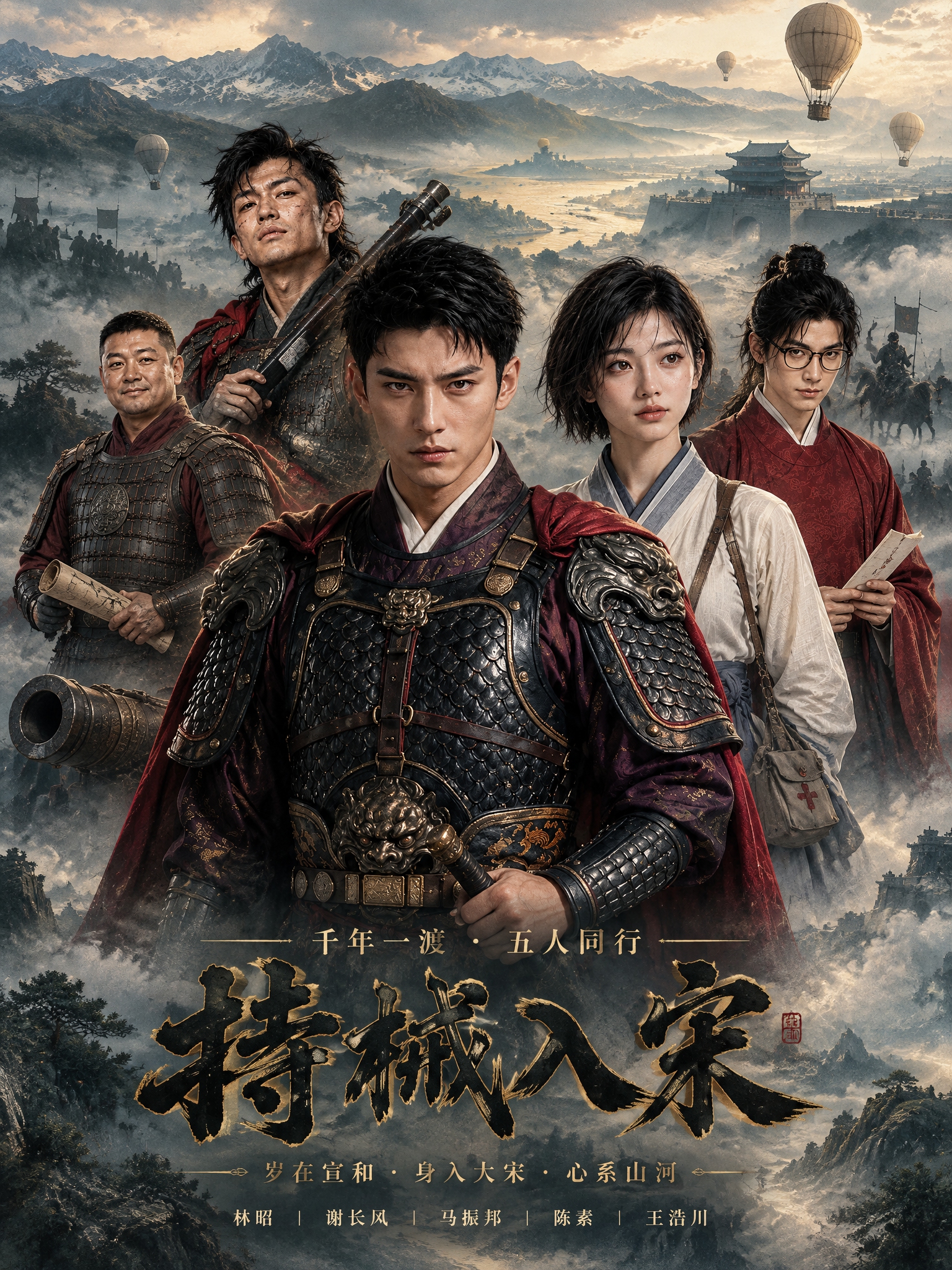
A poster for Armed into the Song Dynasty Photo: Courtesy of Li Chaohua
As warfare engulfs the Northern Song Dynasty (960-1127), five modern soldiers are transported back in time to an ancient battlefield, bringing rifles and contemporary military skills with them. The team comprises a commander, a sniper, a weapons specialist, a communications expert and a medic.
This is the premise of Armed into the Song Dynasty, an AI-generated short drama, known in Chinese as duanju, created by a team of six people with no prior filmmaking experience.
Since its debut in August, the series has released 11 seasons, comprising more than 1,000 episodes, each less than two minutes long. The series has surpassed 1.2 billion views in total as of November 6, with many viewers even setting alerts to be notified when new episodes are released.
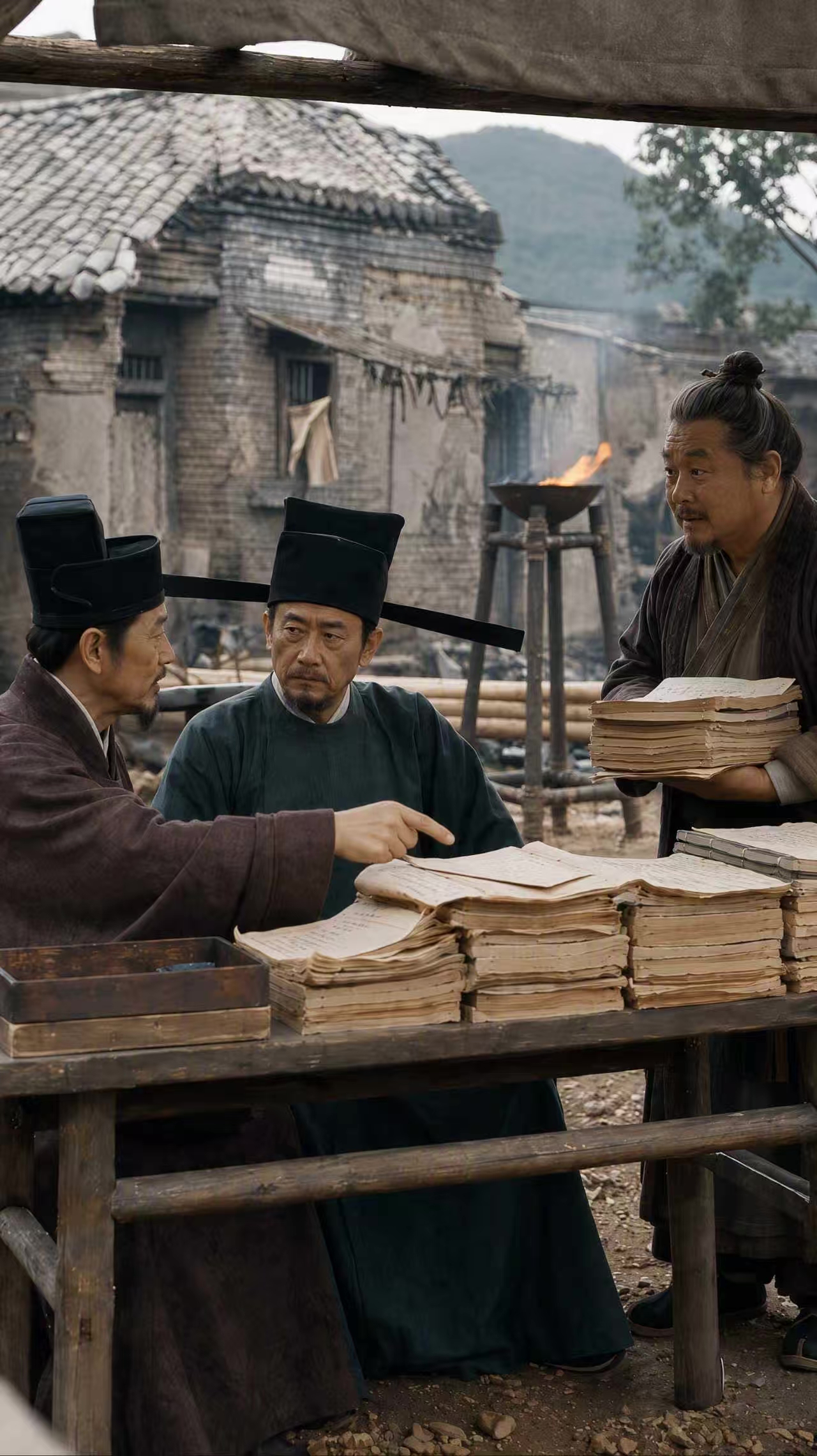
An AI-generated scene in Armed into the Song Dynasty Photo: Courtesy of Li Chaohua
Starting from zero
The team members come from diverse professional backgrounds. Some had previously worked as ride-hailing drivers or delivery workers, while others held office jobs. None had formal training in film production or prior experience in the entertainment industry.
Before coming together, they had explored different career paths and business ventures, including agency work, running businesses and shops, and pursuing independent work online.
Li Chaohua, the series' chief producer and chief screenwriter, told the Global Times that he first began following AI-related developments in the news in 2022 and experimented with AI creative tools in early 2023. In 2024, he started learning the basics of large language models and prompt engineering, studying on and off for about a year. By 2025, as more AI-generated video stories appeared online, he began to realize that ordinary people could increasingly create video stories.
With no knowledge of filmmaking, he taught himself through online tutorials and AI discussion groups, initially learning by imitating existing works. He gradually expanded his studies to screenwriting, directing, acting, social psychology and film production. The team came together gradually as Li met others who shared his interest in AI-generated dramas while he learned and experimented with the format.
Zhang Hansheng, a member of the team, selected the novel on which Armed into the Song Dynasty is based. What attracted the creators was its ensemble narrative, in which characters support one another and confront difficulties together.
Rather than focusing on a protagonist who effortlessly overcomes every obstacle, they wanted to tell a story about ordinary people making choices and taking responsibility amid dramatic changes in their circumstances.
"Patriotism and a sense of national responsibility should not remain abstract slogans, but should be reflected in the decisions characters make when confronted with difficult situations," he said.
Adapting the novel for the screen required much more than feeding text into an AI tool and generating images. The team first mapped out the historical setting, character relationships and individual personalities. They also created visual references for the main characters to ensure visual consistency throughout the series.
Despite the series running to more than 1,000 episodes, most teams can now maintain consistency in character's facial features and clothing, he said. The real difference lies in whether creators pay attention to such details and are willing to revise a shot repeatedly to get it right.
As the series attracted a growing audience, viewers began paying closer attention to even the smallest details, with some eagerly awaiting each new episode.
Li attributed the growing engagement partly to audience interest in historical stories and themes of national identity, as well as the experience the team accumulated over successive seasons and its increasingly proficient use of AI tools.
Technology has also made production easier. While Seedance 1.0 could generate only five-second silent clips, requiring separate software for lip-syncing and dubbing, the newer Seedance 2.5 can produce videos of up to 30 seconds with sound effects and synchronized dialogue based on text prompts, significantly simplifying the process.
Yet AI has not eliminated the challenges of making a compelling drama. The technology can accelerate production and generate scenes that would once have been difficult or expensive to realize. But it cannot decide which stories are worth telling or what makes a character resonate with an audience.
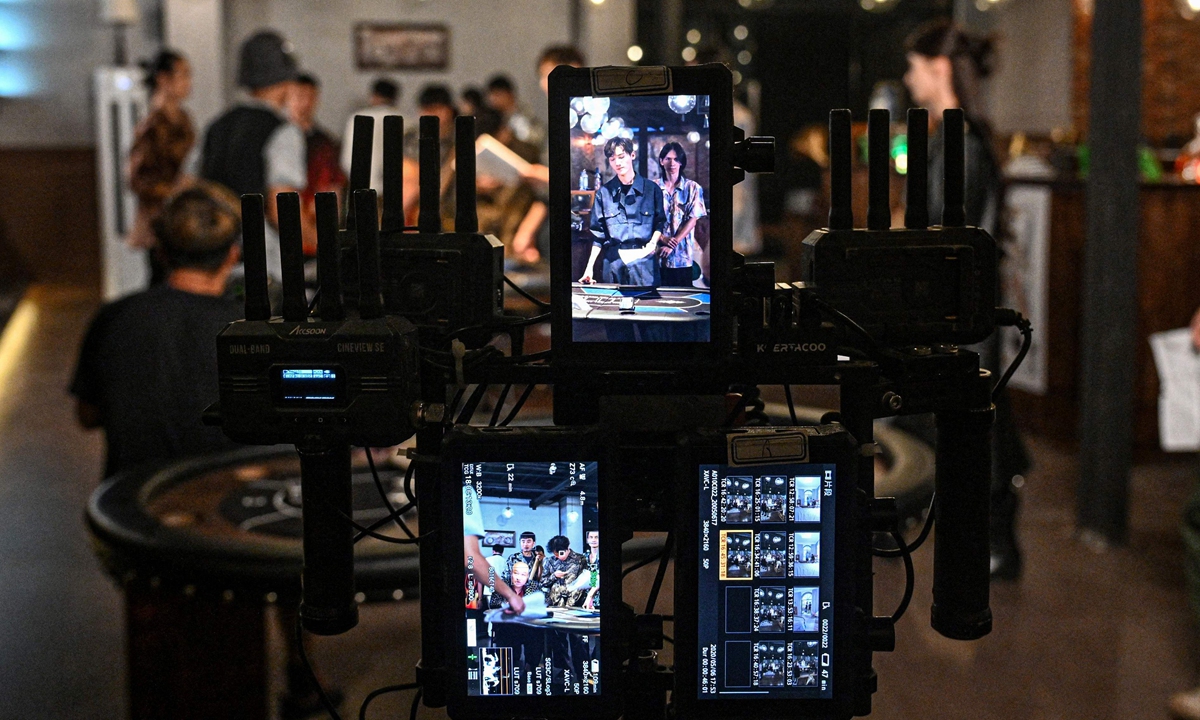
The monitor screens at a duanju film studio in Shanghai on October 10, 2025 Photo: VCG
The human touch
With AI-generated duanju gaining momentum and more people gaining access to the same tools, the ability to assess a story's quality and understand what audiences want becomes even more important.
Technology is evolving at a rapid pace, but human emotions and the human spirit remain unchanged, noted Li. "In my view, what is hardest to replicate in AI-generated dramas is never a particular prompt or set of parameters, but rather the creator's understanding of the content and sincerity when engaging with the audience. Ultimately, it is people who make the difference," said Li.
If their experience offers any lesson, Li said, it is that ordinary people can tell meaningful stories of their own, including stories about Chinese civilization.
"We hope more audiences will discover the richness of Chinese civilization through such works, as well as the passion and dedication of ordinary Chinese creators," said Li.
With more creators joining the AI duanju industry, questions are also emerging about what it takes to achieve lasting success and stand out in an increasingly crowded field.
"There is no formula for producing a hit in the AI-generated duanju market, nor is success ever guaranteed. Rather than chasing success through mass production, the industry needs to move toward creating higher-quality, more refined works," Zhang Peng, a cultural researcher and associate professor at Nanjing Normal University, told the Global Times.
Competing on cost, speed and output may bring short-term gains, but competitors will eventually catch up in these areas.
"What will ultimately set creators apart is the effort they put into making content that resonates with audiences. The experience of Armed into the Song Dynasty suggests that the next stage of AI-generated dramas is not about making them faster, but about making them better. Quality will be key to the industry's long-term growth," added Zhang.
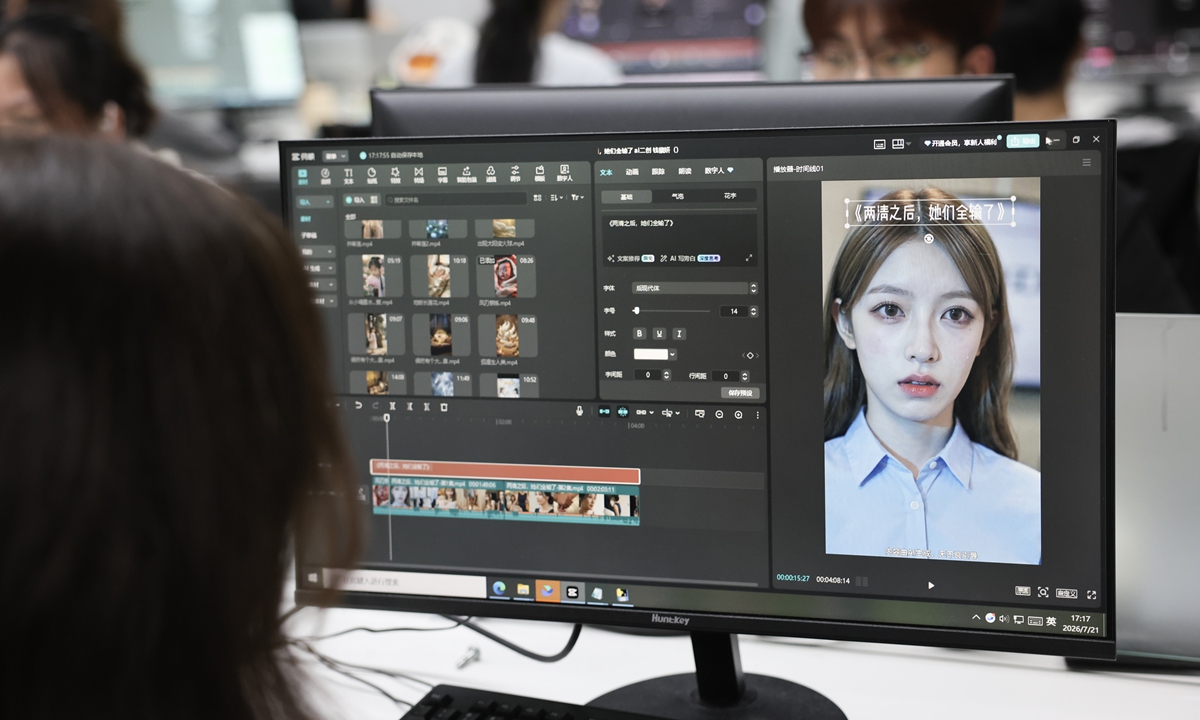
A staff member works on a duanju in Jiaxing, East China's Zhejiang Province, on July 21, 2026. Photo: VCG
RELATED ARTICLES