China, US hold military maritime safety talks in Shanghai; dialogue helps reduce risks, promote stability: expert
China US Photo: VCG
The Chinese and US militaries held the second working group meeting and annual meeting of the China-US Military Maritime Consultative Agreement (MMCA) mechanism for 2026 in Shanghai from Wednesday to Friday, according to a release by the Chinese People's Liberation Army (PLA) Navy on Friday. The two sides exchanged views on the current maritime and air security situation, reviewed the annual implementation of the Rules of Behavior for Safety of Air and Maritime Encounters, discussed measures to improve military maritime safety and security, and agreed on topics for the 2027 working group meeting.
A Chinese military affairs expert said that regular maritime security dialogue between China and the US could help reduce miscalculations and friction, while effective communication and emergency response mechanisms could help the two sides address unexpected incidents and prevent tensions from escalating.
The meeting was aimed at implementing the important consensus reached by the two countries' leaders and promoting the healthy, stable and sustainable development of military-to-military relations, the PLA Navy said. It followed a working group meeting under the same mechanism in Hawaii on May 28 and 29, when the two militaries reviewed the implementation of the air and maritime encounter rules since their 2025 meeting and discussed measures to improve military maritime safety.
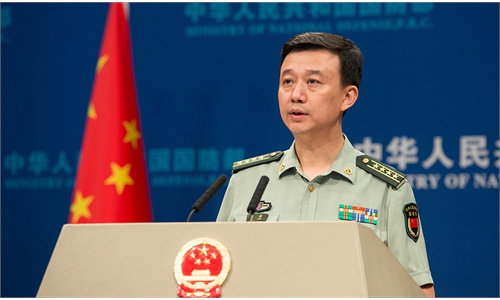
Observers noted that the Chinese and US militaries have kept communication channels open recently, as General Yang Zhibin, commander of the Chinese PLA Eastern Theater Command, had led a delegation to Victoria, Canada, to attend the 2026 Asia-Pacific Chiefs of Defense Conference jointly hosted by the Canadian Armed Forces and the US Pacific Command, according to Chinese defense ministry spokesperson Jiang Bin on September 4. The spokesperson said that the Chinese side delivered a keynote speech at the event, presenting China's stance and achievements in maintaining regional peace and stability, and proposing that regional countries enhance defense cooperation and jointly address common challenges. The Chinese delegation also held bilateral meetings with representatives, including those from the US.
The two militaries also held their fourth Crisis Communication and Prevention Working Group meeting on November 2 and 3 in Washington DC. The two sides had an in-depth exchange of views on how to deliver on the consensus reached by the two presidents, strengthen communication, and avoid misunderstanding and miscalculation, Chinese Defense Ministry spokesperson Chen Xi said on November 13. He added that the two defense departments remained in communication and coordination over exchanges and dialogue at various levels.
Song Zhongping, a military affairs expert, told the Global Times on Friday that the Chinese and US militaries could face complicated situations in maritime interactions, and any unintended incidents between the two militaries could have wider security implications, so there is a need to regularly refine rules and strengthen communication to prevent miscalculations from escalating tensions.
The military exchanges come amid efforts to implement the consensus reached by the Chinese and US leaders. During a meeting with US President Donald Trump in Shenzhen on Thursday, Chinese President Xi Jinping said that the key to sustaining the current momentum of stable and positive growth in the relationship lies in taking actions to deliver on the consensus between the two presidents.
The Chinese president said that communication between our teams should also keep pace. Differences that cannot be resolved for the time being should be managed in a constructive way, and escalation should be prevented. The two sides agreed to formulate an action plan on building a constructive relationship of strategic stability.
At the trilateral summit with Russia and the US in Shenzhen on the same day, the Chinese leader called for regular high-level exchanges, keeping dialogue channels open at all levels, and establishing crisis communication and prevention mechanisms, to ensure that misjudgments occur less, differences can be managed, and frictions will not escalate.
Following the summit, the leaders of China, Russia and the US issued the China-Russia-US Heads of State Declaration toward Peace, stating their commitment to maintaining strategic stability and international security.
Song said that establishing and improving military risk-management, dialogue and hotline mechanisms between China and the US would help safeguard regional peace and stability.
Song noted that the Asia-Pacific's role as a major engine of global economic growth and its overall peace and stability were closely linked to restraint and efforts by China and the US to avoid conflict and confrontation. Continued commitment to this approach is important for maintaining regional and global peace, he said.
RELATED ARTICLES