SCI-TECH / OTHERS
China sets new record in deep oil well casing replacement in Xinjiang region
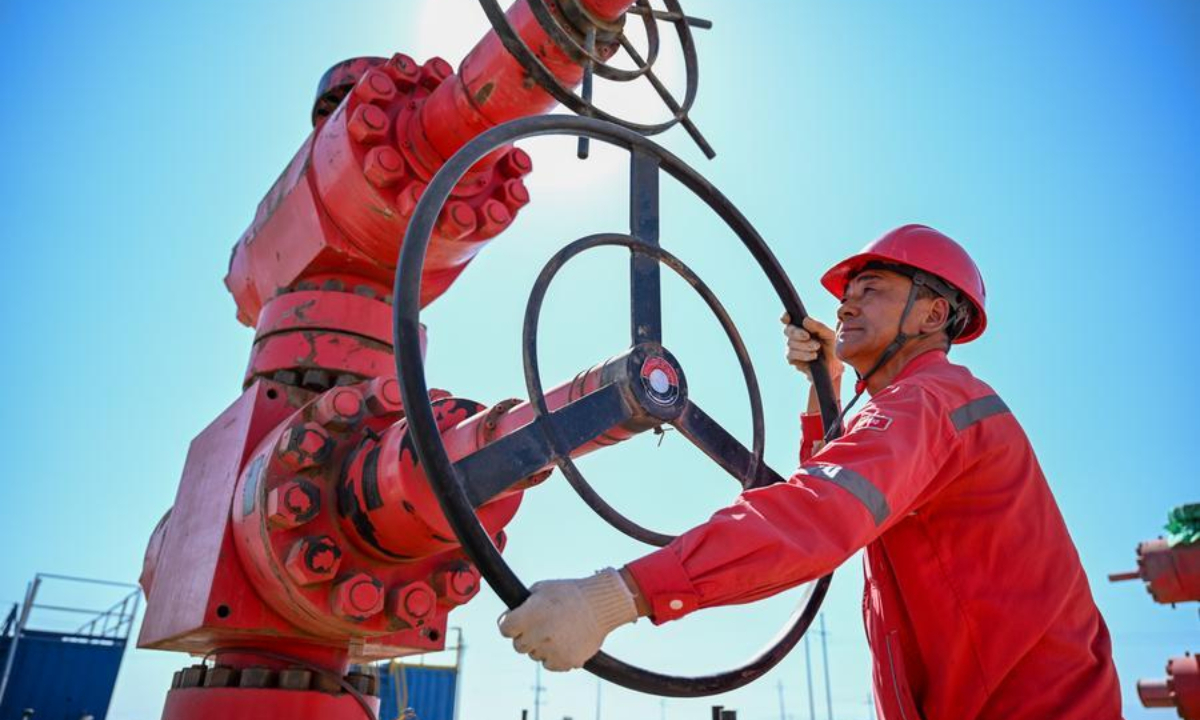
Xinjiang Oilfield Photo: Xinhua
The Xinjiang Oilfield, a major oil production base in northwestern China, belonging to the China National Petroleum Corporation (CNPC) has announced that it has completed a deep underground casing replacement trial at a depth of 1,819 meters, setting a new domestic record and marking progress in technologies designed to repair aging oil wells and extend their service life, the China News Service reported Saturday.
The expanded field trial was recently completed at a Gobi Desert drilling site in the Luliang oilfield, with the operation successfully reconnecting 1,819 meters of casing and completing cementing work in the space between the casing and the surrounding wellbore.
The achievement extends the limits of a technique developed by the oilfield to tackle severe damage to underground well casings, which can otherwise make wells difficult to maintain and continue operating.
In an oil well, steel casing pipes are installed inside the drill hole to support the well walls and provide a stable passage for extracting oil or injecting water. Over years of operation, however, these pipes can corrode, become deformed or break, potentially restricting the well's internal passage and disrupting production.
At the Xinjiang Oilfield, located in the Junggar Basin in Northwest China's Xinjiang Uygur Autonomous Region, prolonged exposure to highly mineralized water and the gradual deformation of water-absorbing mudstone formations have contributed to increasingly serious casing damage, including large sections suffering leakage and broken pipes.
Conventional repair methods, such as plugging damaged sections, may only address the immediate leakage without removing the underlying damaged casing. Meanwhile, traditional casing replacement techniques used in shallower sections are not well suited to the complicated conditions encountered deeper underground.
To address the problem, researchers at the Xinjiang Oilfield's Oil Production Technology Research Institute developed a deep open-hole casing replacement technique in 2025. The approach involves removing damaged casing sections and installing replacement pipes, aiming to restore the wellbore to its original internal diameter rather than simply sealing the damaged areas.
An initial field trial was successfully conducted in October 2025 at Well 1424, operated by the Baikouquan Oil Production Plant. The operation replaced casings at a depth of 996 meters and accomplished 809 meters of open-hole casing milling, setting two domestic records at the time.
Building on the experience, the research team continued refining the technique in 2026, focusing on several challenges that had affected the efficiency and safety of deep underground operations.
These included difficulties in milling long unsupported sections of casing, the risk of tools becoming stuck when working along the edge of the casing, and the time-consuming process of cutting and retrieving damaged pipes at greater depths.
The team developed standardized combinations of downhole tools for different operating conditions and procedures for handling complicated situations. During the latest trial, engineers also adjusted the construction plan in real time, modified tool configurations and optimized the length of each milling section.
As a result, the depth at which casings could be replaced increased from 996 meters to 1,819 meters, while the length of open-hole casing milling rose from 809 meters to 1,319 meters.
The two measurements reflect different stages of the operation: The replacement depth indicates how far down the well casing replacement work has reached, while the milling length measures the section of casing removed through milling.
The latest achievement provides technical support for repairing wells with deep casing leaks, fractures and dislocations, according to the report.
The development is also relevant to the long-term management of mature oilfields, where maintaining existing wells is an important part of sustaining production. CNPC has previously identified casing replacement and other well-repair technologies as important tools for dealing with damage in production and water-injection wells.
The Xinjiang Oilfield has stated it will further refine the supporting cementing techniques for long replacement sections, improve measures to protect well walls and continue upgrading key tools.
It also plans to establish well-selection criteria and company-level technical standards, turning the trial results into standardized procedures that can be replicated and applied more widely.
The oilfield aims to prepare the technology for large-scale application in 2027, with the goals of improving operational efficiency and reducing costs while supporting stable production in its mature oilfield areas.
RELATED ARTICLES