China develops intelligent diagnostic robot for insulators on electricity transmission lines
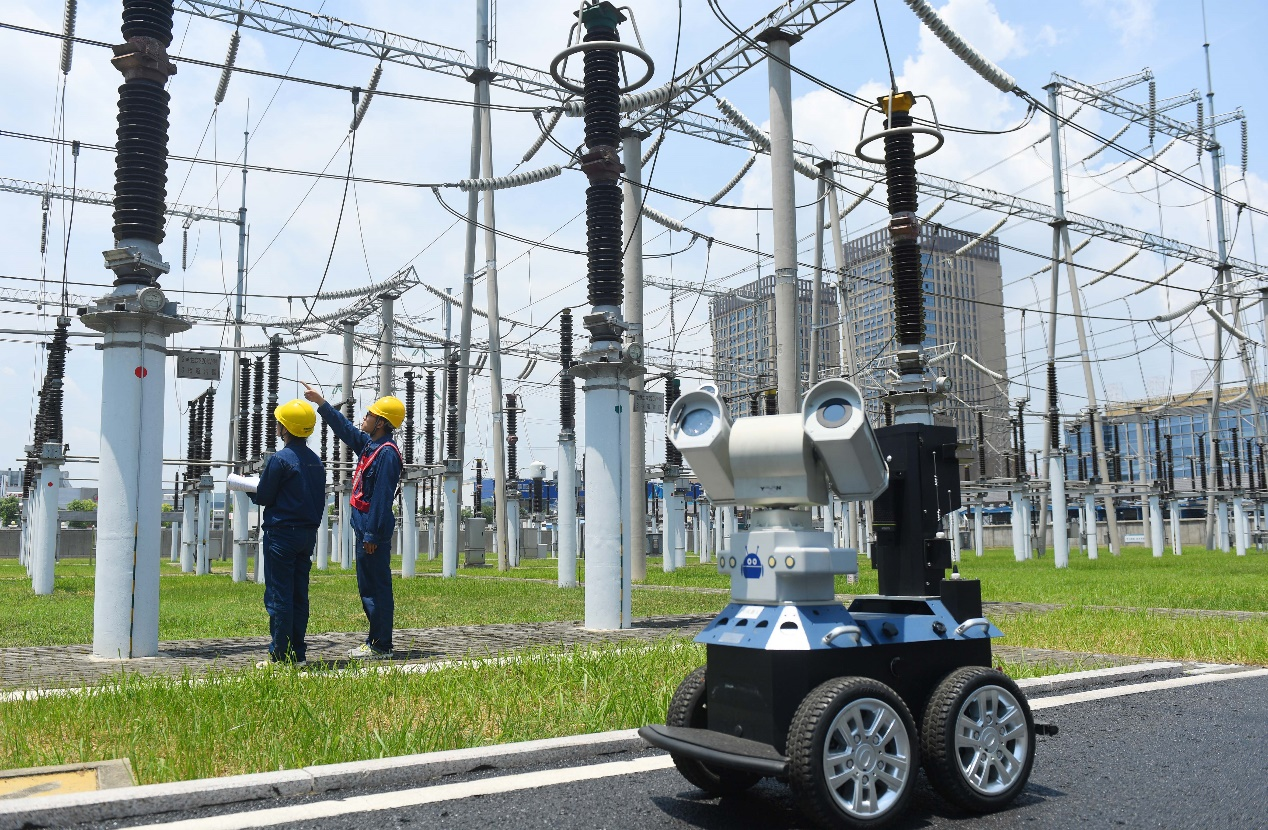
Power workers address equipment hazards identified by a smart robot. File photo: VCG
China has recently developed an intelligent diagnostic robot for zero-value insulators on overhead power transmission lines, which can accurately locate low-resistance zero-value insulators without a power outage or tower climbing by maintenance personnel, the Science and Technology Daily reported on Monday.
The robot, developed by the China Electric Power Research Institute, provides a domestically controlled, new intelligent technical solution for the safe and stable operation of ultra-high-voltage and extra-high-voltage transmission lines. Experts assessed the overall technology as reaching an internationally leading level, according to the report.
According to project technicians, the robot inspects an entire string of 35 insulators on 500 kV transmission lines in just 6 minutes and achieves recognition accuracy exceeding 95 percent. It improves operational efficiency by approximately 80 percent compared with traditional manual methods.
The robot can perform fully unmanned high-altitude operations, completely eliminate risks of personnel falling from height or suffering electric shock, and help shift grid maintenance from passive repair toward proactive defense and intelligent prediction.
Transmission lines serve as the “main arteries” of energy delivery. Porcelain insulators, critical basic components of these lines, easily suffer material degradation under prolonged exposure to complex outdoor atmospheric conditions and mechanical and electrical stresses. This degradation produces zero-value defects that can trigger insulation breakdown or even string breakage accidents and endanger grid safety. Traditional manual tower-climbing inspections carry high risks, often miss defects, and operate at low efficiency, so they cannot meet the needs of large-scale grid maintenance.
The team from the institute innovatively integrated photoelectric sensing with insulator defect detection concepts, achieving miniaturization and wide-range iterative upgrades of crystal sensors and built a mature engineering identification system. In October, the team completed the full robot system and conducted comprehensive testing.
Industry experts noted that the achievement vividly demonstrates how China’s power grid maintenance sector pursues technological self-reliance and self-strengthening and fosters new quality productive forces through breakthroughs in key core technologies. The result held significant importance for accelerating the construction of a new-type power system and safeguarding national energy security.
Global Times
RELATED ARTICLES