Chinese-bred red rose variety eyes overseas markets
Thornless flower showcases progress as China builds floral breeding capacity
By Published: Nov 23, 2026 10:19 PM

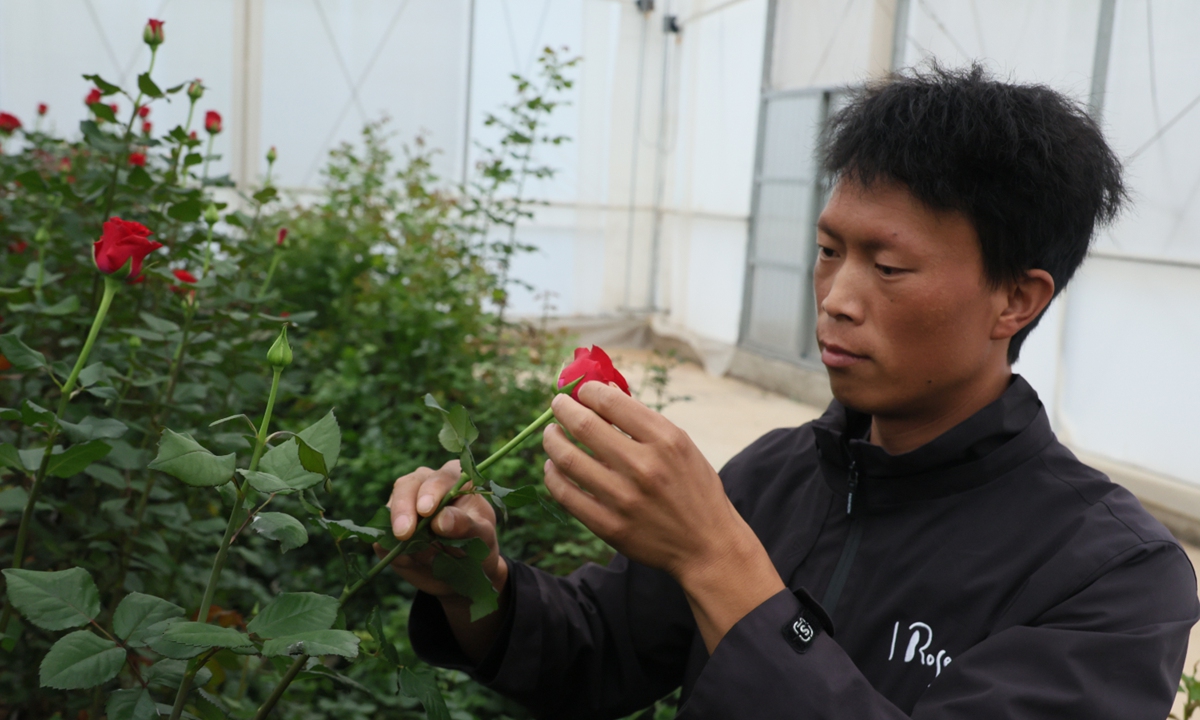
The homegrown thornless red rose variety "Shiguang"
Around 20 to 30 million stems of Chinese-bred thornless red roses featuring great attributes are expected to enter the market by 2027, the head of the rose breeding team told the Global Times in an exclusive interview on Monday.The variety, named Shiguang (literally meaning "time and light" in Chinese), recently made its debut in Kunming, Southwest China's Yunnan Province, highlighting the country's efforts to develop homegrown flower varieties and strengthen its position in the global flower industry.
The variety, developed by a team led by rose breeding expert Li Shubin, was unveiled on November 6 at an event showcasing the industrialization of Yunnan's flower industry. Including Shiguang, a total of 35 rose varieties with independently owned intellectual property rights were presented at the event.
According to Li, the thornless Shiguang offers several advantages over established red rose varieties such as Carola and Highland Red, which have long dominated China's cut-flower market. Carola, a popular variety for nearly two decades, is known for its vivid red color and attractive flower shape but has thorny stems. Highland Red has fewer thorns, but its color tends to be darker and its flowers smaller during the summer, Li told the Global Times.
In comparison, Shiguang is smooth, thorn-free, making it friendlier to the hands of gardeners and consumers, while sporting a bright, pure red color comparable to that of Carola. More importantly, its petals are particularly thick and leathery, allowing the flowers to better withstand handling and storage after harvesting. The variety can remain in cold storage for more than 10 days without significant deterioration, Li said, noting that these characteristics could give it an advantage in opening up overseas markets, particularly Russia and Central Asian countries, as it is better suited for long-distance transportation.
"For roses, tolerance to shipping stress is a crucial trait given the fact that global flower growing regions and consumption market are far from each other."
The variety also has a relatively long vase life, comparable to Highland Red and longer than that of Carola, according to Li.
Li noted that some thornless red rose varieties developed overseas have struggled with problems such as petal-edge damage and insufficient resistance during storage and transportation, limiting their competitiveness in commercial cultivation. He described Shiguang as a domestically developed variety with the potential to compete with international products, while stressing that its ultimate market position will still depend on actual market performance and consumer preferences.
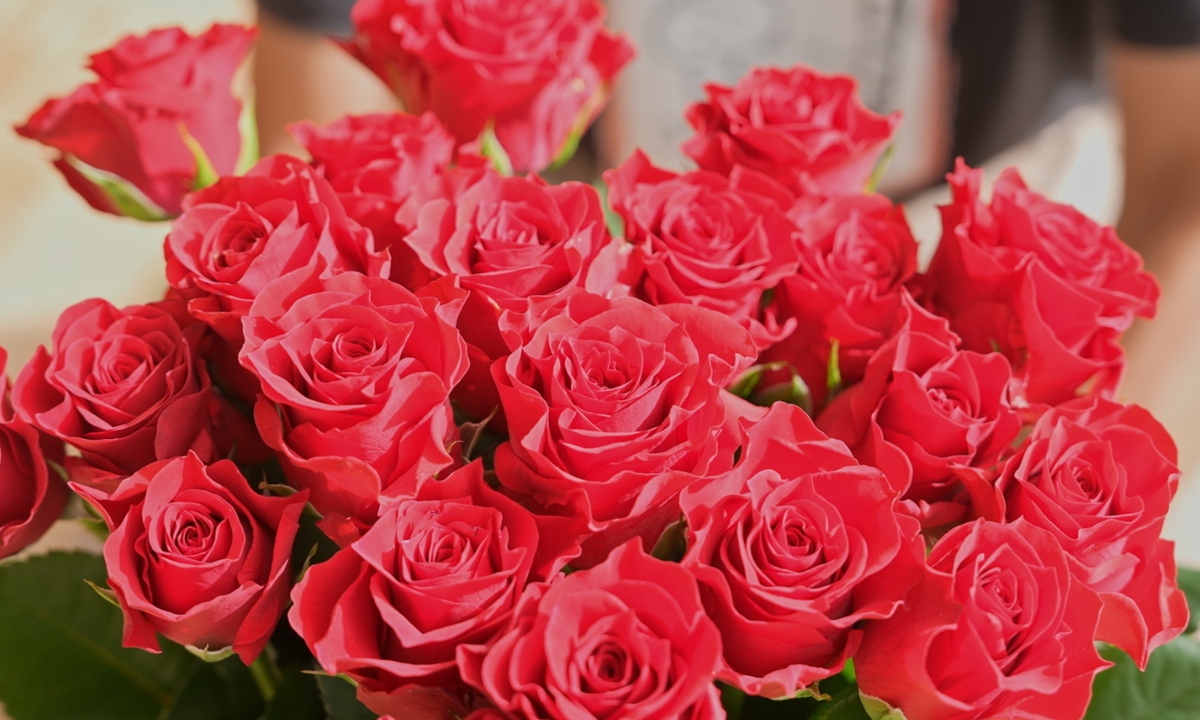
The homegrown thornless red rose variety "Shiguang"
The variety's commercial rollout is already underway. Planting contracts for Shiguang have exceeded 200 mu (13.3 hectares), and the team expects between 20 million and 30 million stems to enter the market in 2027, Li said. The team is currently prioritizing seedling production to meet growers' demand, with some of the harvested stems being used to propagate seedlings rather than sold as cut flowers.Yunnan is China's largest fresh-cut flower producer and exporter. In the first half of 2026, the province's fresh-cut flower exports reached 790 million yuan ($118.3 million), up 48.1 percent year-on-year and accounting for 61.1 percent of the national total, according to the Kunming customs authority. Its flowers were exported to 59 countries and regions, media reported.
Yet the province's strength in flower production and exports also highlights a broader challenge facing China's flower industry: strengthening its capacity for independent breeding. More than 90 percent of the rose varieties currently used in China's market are imported, Li said, noting that popular varieties such as Carola and Highland Red were also developed overseas.
For some varieties still under patent protection, growers pay royalties in proportion with the sales revenue, Li said. But developing homegrown varieties is about more than reducing royalty payments.
"For a long time, China has mainly occupied the planting end of the global flower industry chain," Li said. "We bear substantial labor and environmental costs, but possess a relatively small share of the industry's overall value."
Seeds are often referred to as the "chips" of agriculture. In the flower industry, control over breeding resources and variety rights is similarly crucial. Developing original varieties and strengthening intellectual property ownership should help Chinese companies move into higher-value segments, including breeding and marketing, while giving the country a stronger voice in the international flower industry, industry experts have said.
While Shiguang's long-term market position remains to be tested, its commercial rollout and breeding achievements offer a glimpse of how China's flower industry is seeking to move beyond its traditional role as a major producer and become a stronger player in global breeding and trade, they said.
Li's team currently preserves more than 300,000 breeding materials and has applied for intellectual property rights for 498 rose varieties. It screens approximately 1 million hybrid seeds annually, with its breeding scale ranking among the world's leading levels, according to the Xinhua News Agency.
Li said the team's large-scale breeding operations provide a foundation for sustained innovation, as developing commercially competitive varieties requires extensive crossbreeding, screening and testing. The team has also prepared several other red rose varieties for future introduction.
"Although Shiguang is a great rose for me, there is no guarantee that it will definitely win the hearts of consumers as tastes differ in the flower market. But we have a dozen proprietary red rose breeds waiting in the reserve echelon," the expert said.
Zhao Ruonan contributed to the story
RELATED ARTICLES