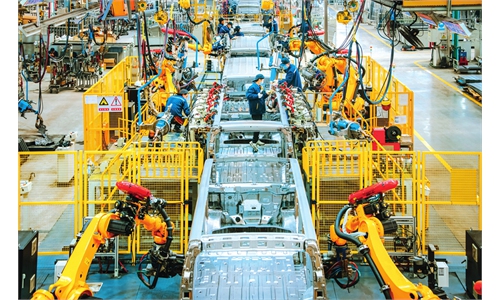
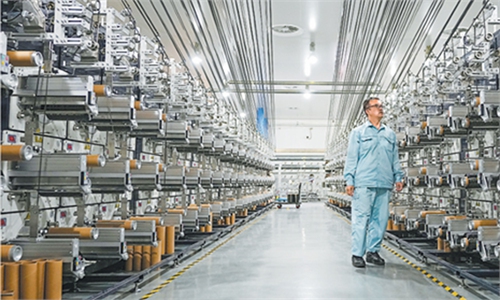
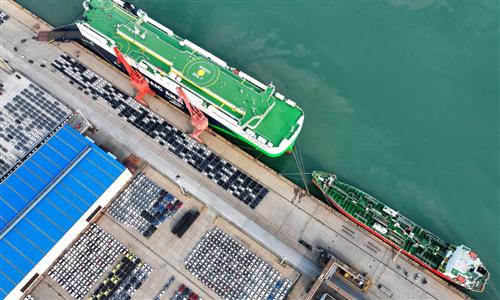
Tesla Shanghai plant nears 5m vehicle milestone, highlighting China's manufacturing strength
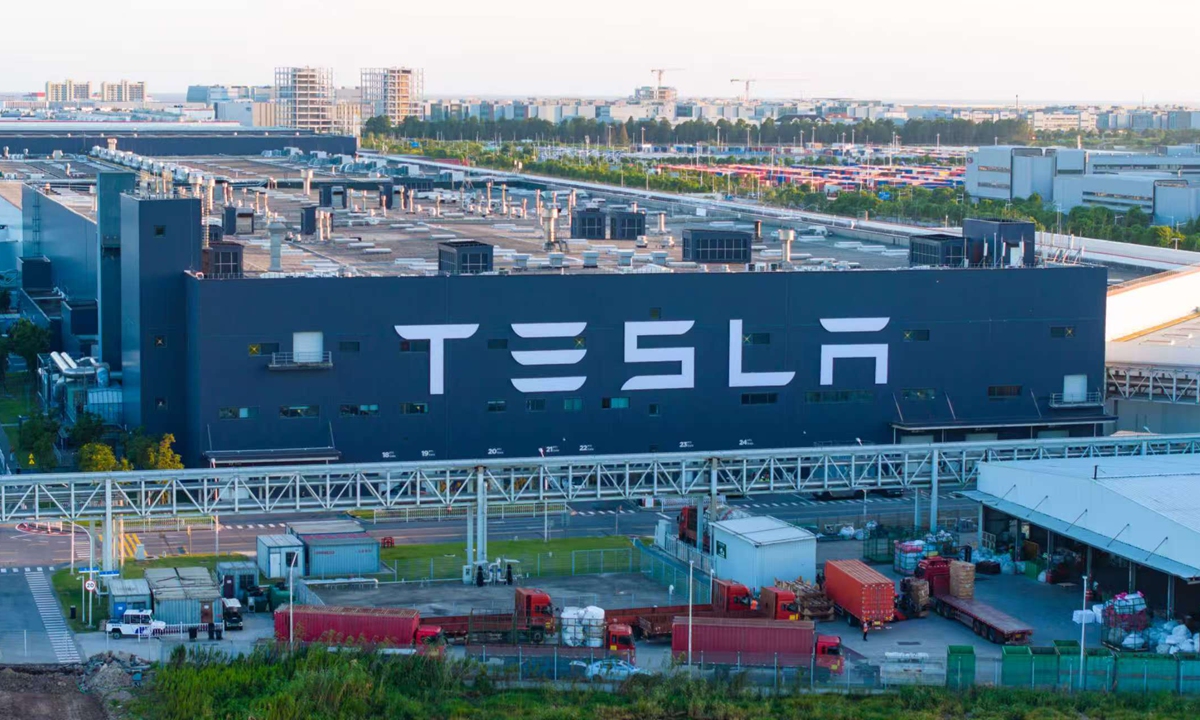
Tesla's Gigafactory in Lingang, Shanghai Photo: VCG
Tesla's Shanghai Gigafactory is set to roll out its 5-millionth vehicle, another milestone for the US electric vehicle (EV) maker in China that highlights the country's strengths in automotive manufacturing, industrial supply chains and global production, an expert said.
Tesla Vice President Tao Lin revealed the upcoming milestone in a post on Chinese social media platform Weibo on Wednesday, inviting customers to share their stories with Tesla through videos, photos, or written posts by December 4.
Construction of the Shanghai Gigafactory began in January 2019, with production starting by the end of that year. The factory reached the milestone of 4 million vehicles in December 2025. Over the past six and a half years, Tesla's Shanghai Gigafactory has produced more than 4.5 million electric vehicles, accounting for more than 45 percent of the company's global output, according to an August post published on the official website of the Lin-gang Special Area.
The Shanghai plant delivered nearly 468,000 vehicles in the first half of 2026, up 28.4 percent year-on-year, its strongest first-half performance in three years.
Beyond serving Chinese consumers, the factory has become a major export hub for Tesla. Its extensive integration with local suppliers has helped improve production efficiency and reduce logistics costs.
During the 9th China International Import Expo earlier in November, Tao said that the localization rate of components at Tesla's Shanghai Gigafactory had reached 98 percent, highlighting China's rapidly responsive supply chains and consumers' willingness to embrace new technologies as important drivers of product innovation, according to The Paper.
Tesla CEO Elon Musk visited the Shanghai Gigafactory last Thursday during a brief trip to China, praising the facility's manufacturing capabilities and the Chinese team's execution and efficiency, according to a separate Weibo post by Tao.
Tesla's manufacturing milestone comes as international automakers are accelerating their electrification and localization efforts in China amid intensifying competition from domestic brands.
Foreign automakers are also accelerating their electrification efforts in China. While retail sales of new-energy vehicles fell 13.7 percent year-on-year in October, mainstream joint-venture brands bucked the trend, posting 69 percent growth, according to the China Passenger Car Association (CPCA).
The CPCA report also showed that new all-electric models from SAIC-Volkswagen and FAW-Volkswagen recorded strong sales growth, while plug-in hybrids became a major sales driver for SAIC-GM and Japanese automakers performed relatively well in the hybrid segment.
Despite mounting competitive pressure, foreign automakers continue to introduce products tailored to Chinese consumers. German automaker BMW, for instance, is rolling out its Neue Klasse lineup with the launch of the iX3 in China this month, according to the company's latest financial statement.
Bian Yongzu, a senior economic analyst, told the Global Times that Tesla's approaching production milestone reflects China's comprehensive advantages in automotive manufacturing. The country's mature industrial clusters, extensive supplier networks and advanced manufacturing capabilities enable multinational automakers to shorten production cycles, reduce costs and accelerate technological innovation.
China is increasingly becoming not only a major consumer market but also a global manufacturing and innovation hub for international automakers, Bian said.
Intensifying market competition is encouraging foreign companies to deepen localization and accelerate technological upgrades, creating mutual benefits for multinational automakers and China's automotive industry, Bian added.
RELATED ARTICLES