China discovers gene in lichen-forming fungus to boost crop drought resistance, yields
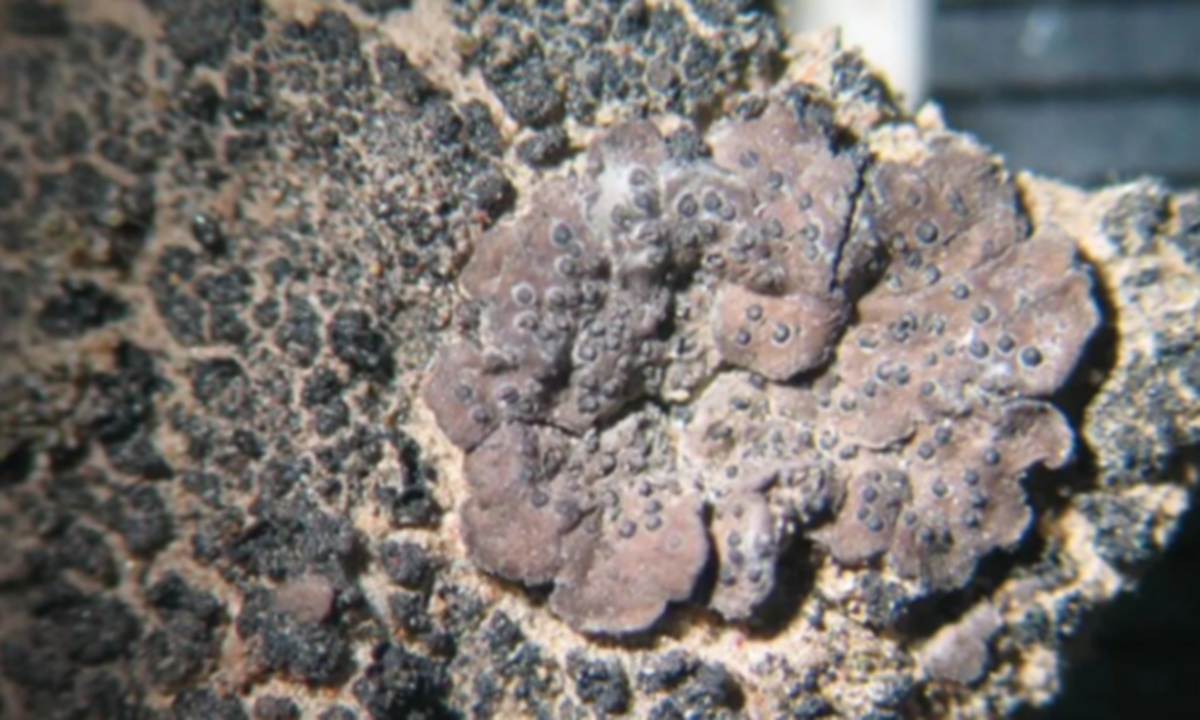
Surface communities of lichen Photo: Screenshot from Xinhua
The findings, published online in the international journal Nature on Thursday, provide new genetic resources and theoretical insights for breeding drought-resistant, high-yield grain crops.
Drought is a major constraint on food production. Lichens, which are symbiotic associations between fungi and photosynthetic organisms, can survive for extended periods in harsh environments, including extremely dry, nutrient-poor and cold regions, making them a valuable source of stress-tolerance genes.
Through large-scale screening, the Chinese research team identified a novel drought-tolerance gene, known as EpTFIIAγ, in the genome of a lichen-forming fungus adapted to extremely dry environments.
Field trials conducted over multiple years and across different locations and genetic backgrounds, following cross-species genetic transformation, showed that the gene enables crops to better balance survival under environmental stress with growth and development.
The gene significantly improved drought resistance in wheat, rice and corn, increasing per-plant yields by 19.7 to 42.4 percent under drought conditions. It also helped boost yields in some crops under normal irrigation conditions, according to Xinhua.
Experts said that the research expands the scope for identifying valuable genes for crop breeding. Its broad applicability across different crops and growing conditions could help effectively address the risks that drought poses to agricultural production amid climate change. The findings have important scientific value and application prospects for safeguarding food security in China's drought-prone regions and promoting innovation in the seed industry.
The study was jointly conducted by teams led by Kang Zhensheng and Mao Hude of Northwest A&F University and Wei Jiangchun of the Institute of Microbiology of the Chinese Academy of Sciences.
Kang said that the study breaks away from the traditional approach of searching for superior genes only in crops, demonstrating that organisms from extreme desert environments represent an untapped treasure trove of genetic resources.
Global Times
RELATED ARTICLES