IN-DEPTH / IN-DEPTH
An American’s decades‑long bond with Chinese county Huangyuan fuels his dedication to its medical and educational advancement
A Chinese hometown across borders
By and Yang Ruijia in Huangyuan Published: Nov 29, 2026 10:51 PM

Editor's Note:
American David V. Plymire arrived in Huangyuan County, Northwest China's Qinghai Province, as a one-year-old in 1932 and lived there until the age of 18. After returning in 1987 following a 38-year absence, he made more than 20 return trips and helped raise funds for medical equipment and supported local education.
In the first installment of a two-part series, Global Times reporters retrace Plymire's footsteps through his former home, the old streets where he played as a child and the hospital he later helped. The second installment will examine changes in the hometown he has continued to care about.
Inside Tongkhor Ancient Town in Huangyuan County, Northwest China's Qinghai Province, a single courtyard holds buildings associated with two generations of an American family.
The building to the north was funded by David's father, Victor Plymire. A two-story building on the eastern side was later built with support from David, Huo De, a local cultural researcher, told the Global Times during a recent visit.
The compound was David's childhood home. It was also where his father provided medical treatment and taught practical skills to local residents.
Long after leaving Huangyuan, David continued to regard the town as his home. When he returned in 1987, visits to familiar places were followed by efforts to help local hospitals and schools.
On his return trips, the old courtyard remained a place he would visit, Huo said. For elderly residents who remembered the family, it also held stories of children welcomed inside to play, neighbors seeking medical help, and people sheltering there during the bandit unrest before the New China.
Following those memories through the courtyard, the old streets and the county hospital, the family's century-long connection with Huangyuan comes into view through the people who have kept it alive.
A courtyard open to the town
Victor was working in Northwest China by 1908 and settled in Huangyuan in the early 1920s. At the time, the town was an important trading center where people from agricultural and pastoral areas exchanged goods.
Caravans carrying wool, livestock, medicinal herbs and salt met merchants bringing grain, cloth and metal goods from other parts of China. The town was home to people from several ethnic groups and was known locally as "Little Beijing" for its commercial activity. Huo said its climate, transportation links and diverse population helped draw Victor there.
From the compound where he lived, Victor provided free medical treatment to impoverished residents. He also helped people acquire skills such as making felt boots, hats and woolen bags, giving them another way to earn a living, according to Huo.
During the visit, Huo pointed out a drawer that had belonged to Victor. Alongside such surviving objects, memories of the house have been preserved in accounts passed down by local residents.
An official with the Huangyuan County Federation of Literary and Art Circles, Huo has spoken with elderly residents of the old town about the family. Some recalled visiting the courtyard as children.
One elderly resident told Huo that Victor never drove the children away. His instruction was simple: They could play, as long as they did not fight.
There was another reason children liked to visit. The family sometimes gave them small white pieces of candy and picture cards. At a time when sweets were scarce, the treats and the little figures on the cards stayed in their memories, Huo said.
The compound also became a refuge during the unrest in Huangyuan in 1929. According to Huo's account of written records and local memories, women, children and elderly people crowded into its rooms and basement as fighting spread through the town.
Victor handed over money and other property to armed men who came to the compound, asking them to spare the people sheltering there. When another group tried to enter, he stood in front of the door and insisted that they would have to kill him first, Huo said.
Victor also treated people wounded in the unrest. These acts of shelter and medical care helped establish the trust that residents continued to place in the family long before David began donating equipment to the hospital.
David arrived in Huangyuan in 1932 and grew up among children whose families already knew his father. Elderly residents remembered David as a childhood playmate, including trips to swim and bathe in the Huangshui River.
The local dialect remained with him. Huo said that hearing David speak fluent Huangyuan dialect decades later was one of the details that struck him most. Even some local people who increasingly used Putonghua spoke the dialect less often than David did, he observed.
According to people who know him, David spoke the Huangyuan dialect to himself in front of a mirror every day and recorded himself speaking, so he wouldn't lose it while living away from his hometown.
When David left Huangyuan with his family in 1949 at the age of 18, he left a community in which his family had lived, worked and shared some of the town's most difficult years. He would return 38 years later.
Returning to help
The county hospital gave David a way to respond to needs he found after returning. Discussions with local doctors turned to diagnostic equipment, which the county hospital lacked, Huang Jiong, its current president, told the Global Times.
In 1989, David brought the hospital a black-and-white ultrasound scanner. It allowed doctors to examine abdominal and gallbladder conditions with equipment that had previously been unavailable there, Huang recalled.
More donations followed. Among them, Huang remembers most clearly the hospital's first CT scanner, which arrived in 2000. David and the hospital's former president, Wang Shikang, had discussed what equipment would be most useful before settling on a CT scanner, Huang said.
Finding the money took time. David was not wealthy and approached friends and sought donations. Huang estimated that raising the funds took roughly two or three years. Completing the procedures needed to bring the scanner to Huangyuan required further work.
Huang, then an emergency physician, first met David when the scanner was donated.
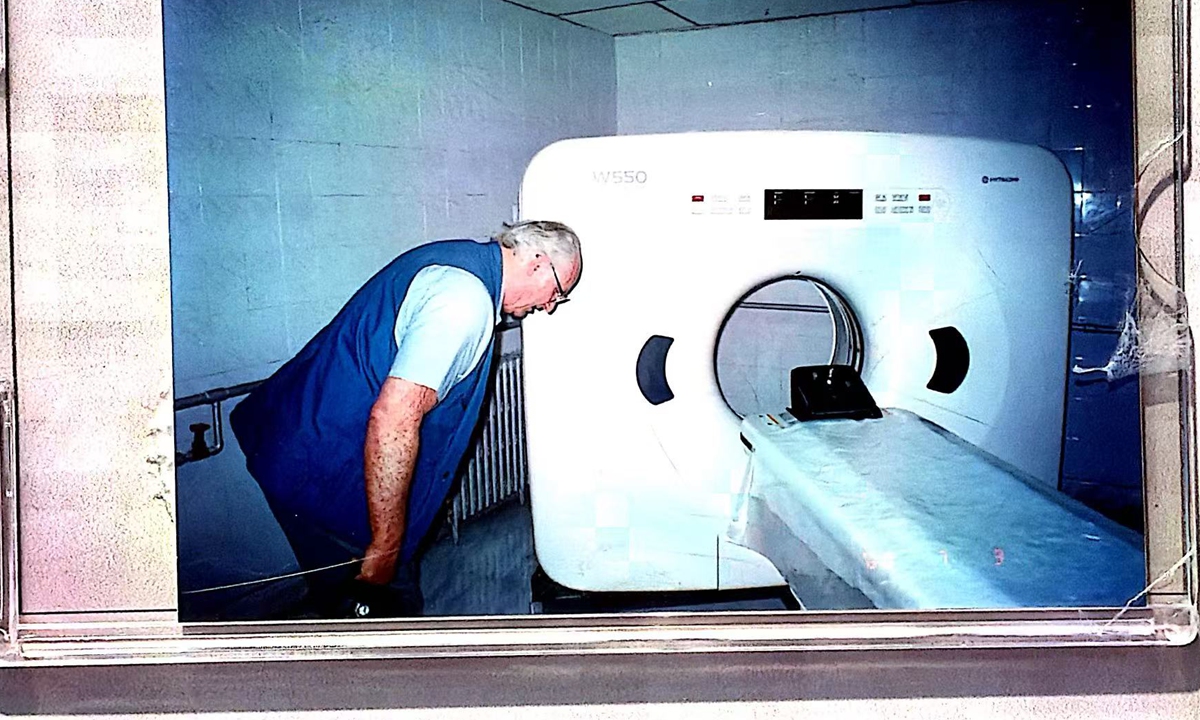
He remembers the small ceremony held after its installation: David stepped toward the machine and bowed.
Huang recalled him asking the scanner to serve the people of his hometown well, now that he had finally managed to bring it there. A photograph preserves the gesture, and Huang said seeing it still reminded him of the effort behind the donation.
Over the years, David made more than 20 return trips to Huangyuan. With help from relatives and friends, he helped provide more than 30 pieces of medical equipment worth over 6 million yuan ($902,000). The donations consisted of ultrasound scanners, gastroscopes, monitoring equipment and other devices needed by local medical workers.
As Huang moved from emergency medicine into hospital administration, he came to know David better. They met whenever David returned, on at least 10 occasions by Huang's recollection. Some of his strongest memories concern the visitor's everyday habits.
David often wore a waistcoat on his visits, and he had a green one and a blue one. Some of his clothes were already old, but he was reluctant to replace them, Huang recalled. On one occasion, his shoes appeared almost worn through at the soles. Hospital staff offered to buy him another pair, but he declined.
At mealtimes, he asked for familiar local dishes: hand-grabbed mutton, liangpi, a cold noodle-like local snack, or stir-fried pickled cabbage with vermicelli. When visiting people in the countryside, he was content with tsampa. "He would mix it himself, eat it and have some milk tea," Huang said.
David also worked through his contacts to bring foreign teachers to Huangyuan to teach English.
Huo recalled David explaining his sense of responsibility in straightforward terms: Doing something for the people of his hometown was doing something for his own family. Huang, too, remembered David telling hospital staff that they were his family.
A town remembers
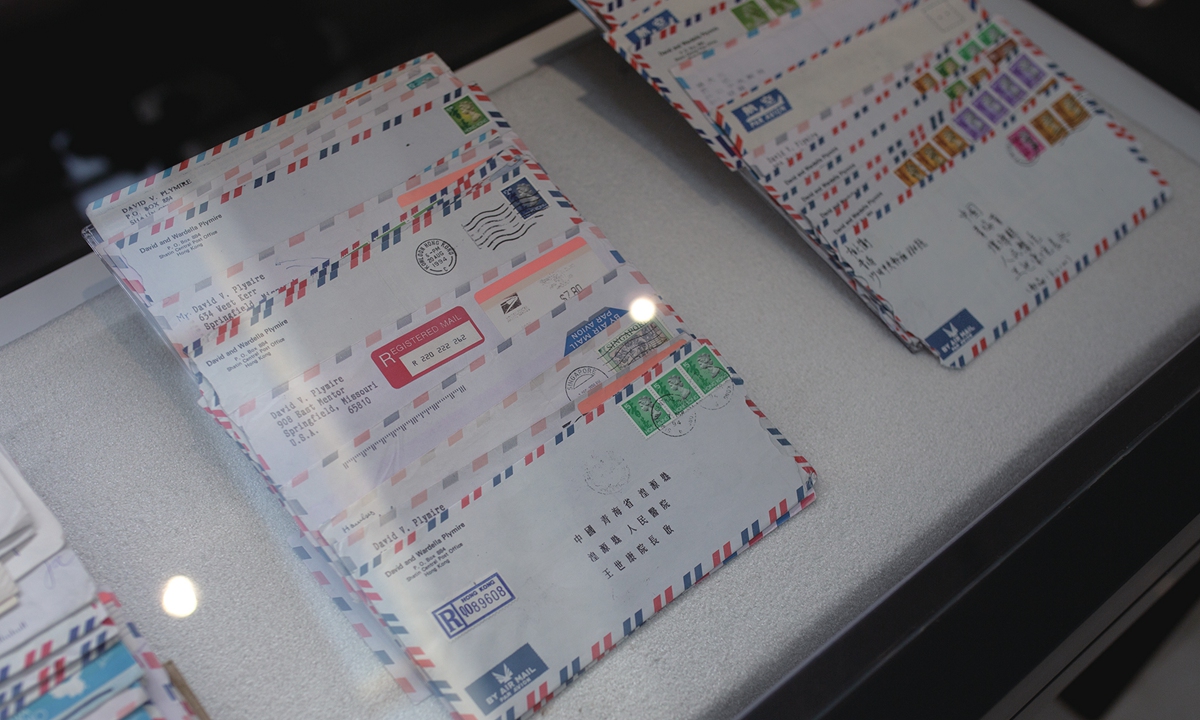
At the county hospital, letters exchanged between David and Wang have been preserved alongside photographs and equipment. During the Global Times' visit, hospital staff pointed out the affectionate forms of address in the correspondence: "older brother" and "younger brother."
Hospital staff also remember the day David's sister, Mary Ann Plymire, was brought back to Huangyuan for burial. She had also supported the hospital, including contributing funds toward its first ambulance, Huang said. After her death in Canada, her family brought her ashes to Huangyuan in accordance with her wishes.
Huang had not known her personally, but he joined colleagues who went to pay their respects. He recalled David arriving with her husband and children. Many hospital employees attended.
The family already had relatives buried in Huangyuan. Victor's first wife and his son John had died of smallpox in 1927 and were laid to rest north of the town. Mary Ann's wish brought another member of the family back to Huangyuan.
Other parts of the family's history returned through photographs. During his years in China, Victor photographed streets, buildings, trading caravans and ordinary people at work and at leisure. His images show residents collecting water, spinning wool and swimming in the river. Some also preserve scenes from his own family's life.
David kept these photographs and later donated hundreds of them to Huangyuan. Local experts helped identify and organize the images, which were collected in an album. The images now allow residents and researchers to examine details of a town that earlier generations knew.
For Huo, who studies local history, the photographs provide a direct record of buildings, street layouts and everyday life. The elderly residents he has spoken with add names, relationships and childhood experiences to the surviving images.
At the hospital, the donated equipment has now been retired and gathered in a collection. The hospital plans to develop a history museum to house the devices, letters and photographs, Huang said. New employees already hear David's story as part of their first lesson when joining the hospital.
"Our generation knows this story, but those who come after us may not," Huang said. "We want to pass it on from one generation to the next."
For Huang, remembering David also carries a responsibility in the hospital's daily work. "We have to improve our medical skills," he said. "Only by doing our own work well can we repay his help."
American David V. Plymire arrived in Huangyuan County, Northwest China's Qinghai Province, as a one-year-old in 1932 and lived there until the age of 18. After returning in 1987 following a 38-year absence, he made more than 20 return trips and helped raise funds for medical equipment and supported local education.
In the first installment of a two-part series, Global Times reporters retrace Plymire's footsteps through his former home, the old streets where he played as a child and the hospital he later helped. The second installment will examine changes in the hometown he has continued to care about.
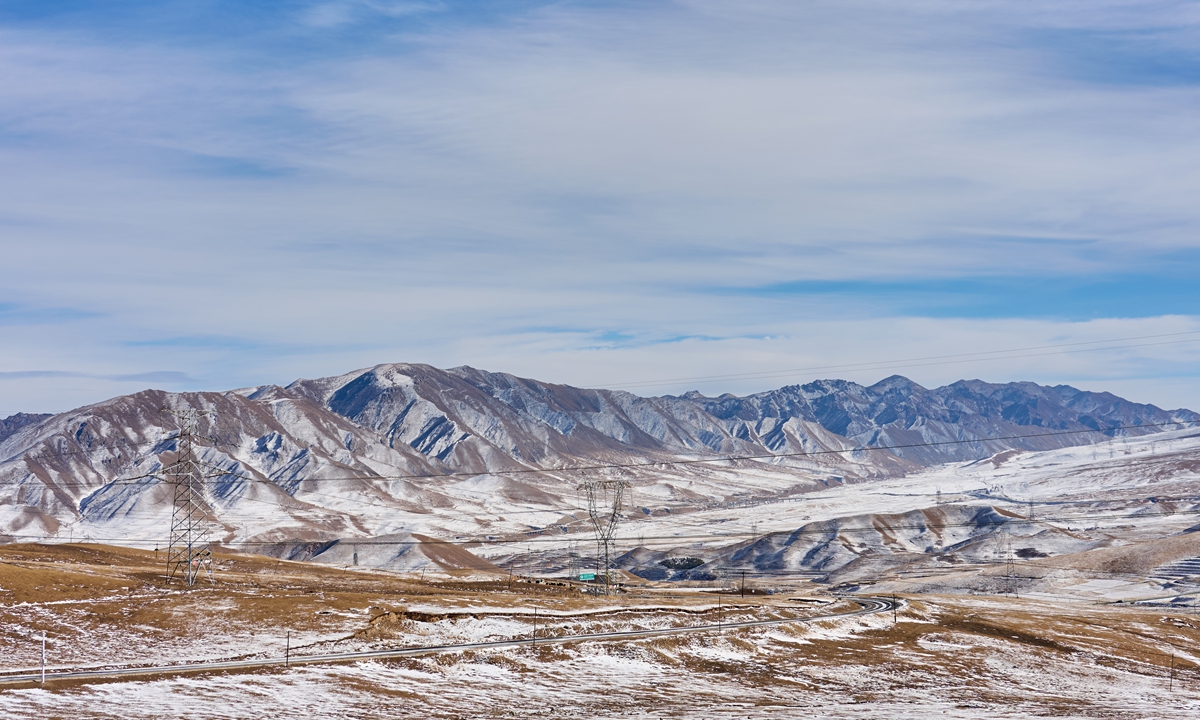
Winter mountain scenery of Huangyuan County, Xining, Qinghai Province Photo: VCG
Inside Tongkhor Ancient Town in Huangyuan County, Northwest China's Qinghai Province, a single courtyard holds buildings associated with two generations of an American family.
The building to the north was funded by David's father, Victor Plymire. A two-story building on the eastern side was later built with support from David, Huo De, a local cultural researcher, told the Global Times during a recent visit.
The compound was David's childhood home. It was also where his father provided medical treatment and taught practical skills to local residents.
Long after leaving Huangyuan, David continued to regard the town as his home. When he returned in 1987, visits to familiar places were followed by efforts to help local hospitals and schools.
On his return trips, the old courtyard remained a place he would visit, Huo said. For elderly residents who remembered the family, it also held stories of children welcomed inside to play, neighbors seeking medical help, and people sheltering there during the bandit unrest before the New China.
Following those memories through the courtyard, the old streets and the county hospital, the family's century-long connection with Huangyuan comes into view through the people who have kept it alive.
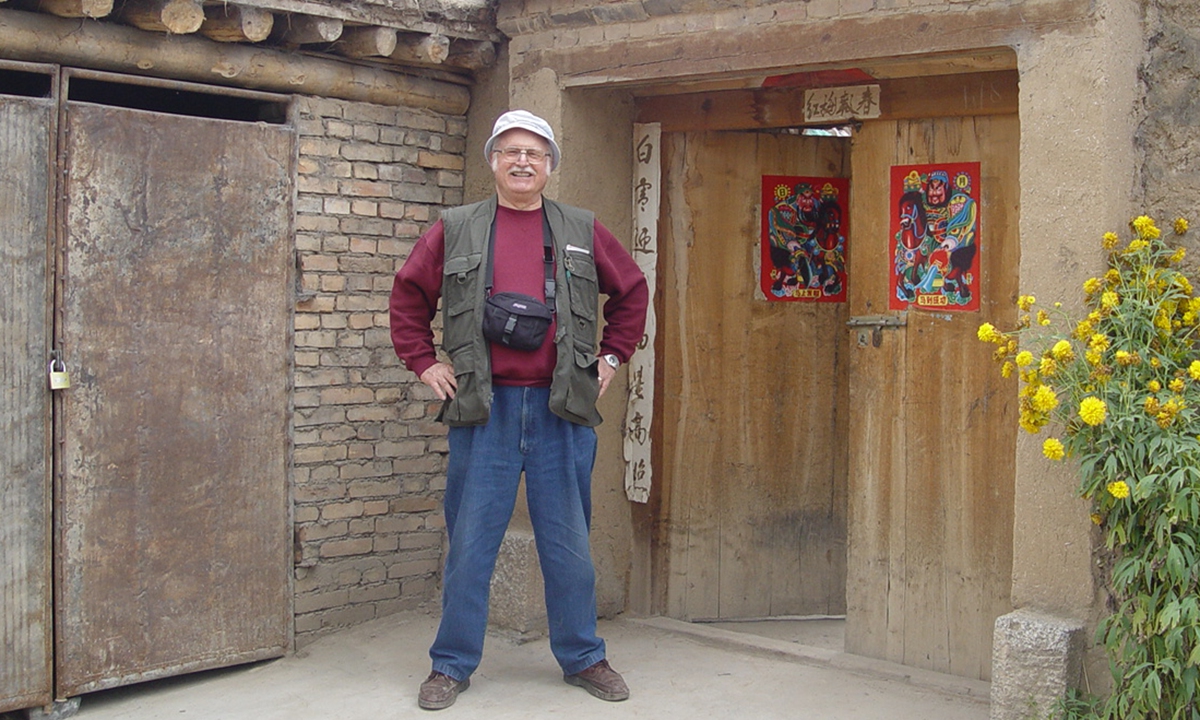
David V. Plymire returns to Huangyuan County in this undated photo. Photo: Courtesy of the Publicity Department of the CPC Huangyuan County Committee
A courtyard open to the town
Victor was working in Northwest China by 1908 and settled in Huangyuan in the early 1920s. At the time, the town was an important trading center where people from agricultural and pastoral areas exchanged goods.
Caravans carrying wool, livestock, medicinal herbs and salt met merchants bringing grain, cloth and metal goods from other parts of China. The town was home to people from several ethnic groups and was known locally as "Little Beijing" for its commercial activity. Huo said its climate, transportation links and diverse population helped draw Victor there.
From the compound where he lived, Victor provided free medical treatment to impoverished residents. He also helped people acquire skills such as making felt boots, hats and woolen bags, giving them another way to earn a living, according to Huo.
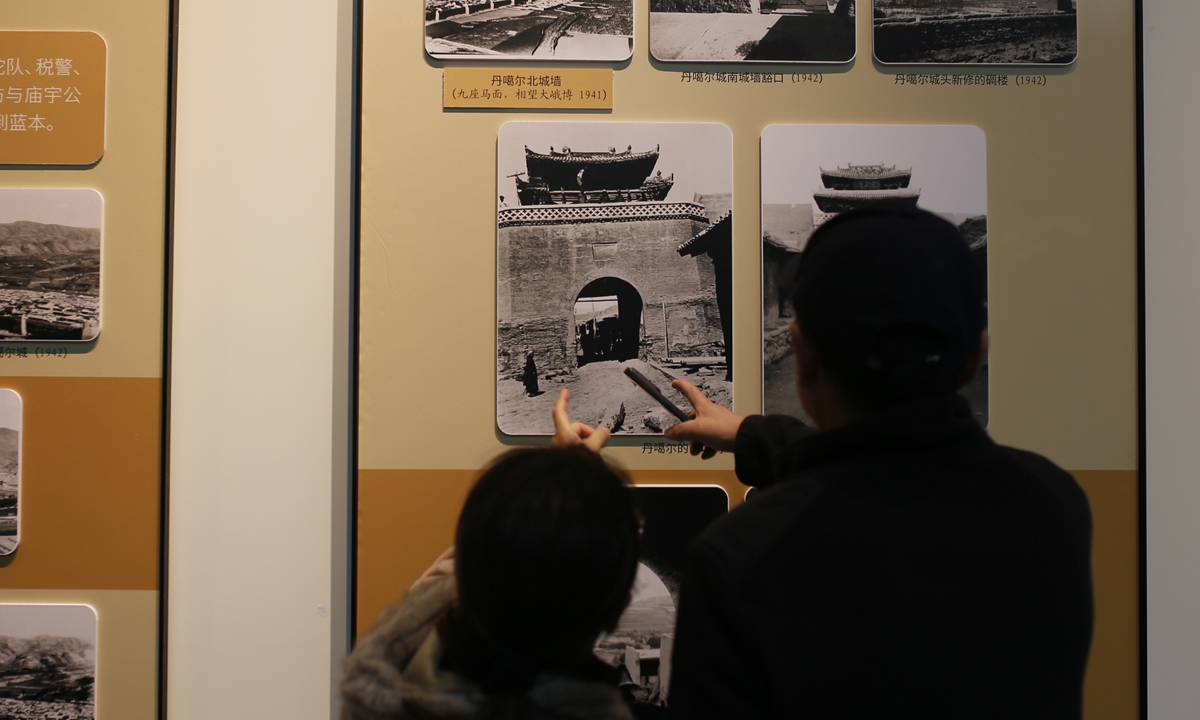
Visitors view a photo exhibition about David V. Plymire at Xining Museum in Northwest China's Qinghai Province on November 24, 2026. Photo: Shan Jie/Global Times
During the visit, Huo pointed out a drawer that had belonged to Victor. Alongside such surviving objects, memories of the house have been preserved in accounts passed down by local residents.
An official with the Huangyuan County Federation of Literary and Art Circles, Huo has spoken with elderly residents of the old town about the family. Some recalled visiting the courtyard as children.
One elderly resident told Huo that Victor never drove the children away. His instruction was simple: They could play, as long as they did not fight.
There was another reason children liked to visit. The family sometimes gave them small white pieces of candy and picture cards. At a time when sweets were scarce, the treats and the little figures on the cards stayed in their memories, Huo said.
The compound also became a refuge during the unrest in Huangyuan in 1929. According to Huo's account of written records and local memories, women, children and elderly people crowded into its rooms and basement as fighting spread through the town.
Victor handed over money and other property to armed men who came to the compound, asking them to spare the people sheltering there. When another group tried to enter, he stood in front of the door and insisted that they would have to kill him first, Huo said.
Victor also treated people wounded in the unrest. These acts of shelter and medical care helped establish the trust that residents continued to place in the family long before David began donating equipment to the hospital.
David arrived in Huangyuan in 1932 and grew up among children whose families already knew his father. Elderly residents remembered David as a childhood playmate, including trips to swim and bathe in the Huangshui River.
The local dialect remained with him. Huo said that hearing David speak fluent Huangyuan dialect decades later was one of the details that struck him most. Even some local people who increasingly used Putonghua spoke the dialect less often than David did, he observed.
According to people who know him, David spoke the Huangyuan dialect to himself in front of a mirror every day and recorded himself speaking, so he wouldn't lose it while living away from his hometown.
When David left Huangyuan with his family in 1949 at the age of 18, he left a community in which his family had lived, worked and shared some of the town's most difficult years. He would return 38 years later.
David V. Plymire bows to a CT scanner he donated to Huangyuan County People's Hospital in 2001. Photo: Courtesy of Huangyuan County People's Hospital
Returning to help
The county hospital gave David a way to respond to needs he found after returning. Discussions with local doctors turned to diagnostic equipment, which the county hospital lacked, Huang Jiong, its current president, told the Global Times.
In 1989, David brought the hospital a black-and-white ultrasound scanner. It allowed doctors to examine abdominal and gallbladder conditions with equipment that had previously been unavailable there, Huang recalled.
More donations followed. Among them, Huang remembers most clearly the hospital's first CT scanner, which arrived in 2000. David and the hospital's former president, Wang Shikang, had discussed what equipment would be most useful before settling on a CT scanner, Huang said.
Finding the money took time. David was not wealthy and approached friends and sought donations. Huang estimated that raising the funds took roughly two or three years. Completing the procedures needed to bring the scanner to Huangyuan required further work.
Huang, then an emergency physician, first met David when the scanner was donated.
He remembers the small ceremony held after its installation: David stepped toward the machine and bowed.
Huang recalled him asking the scanner to serve the people of his hometown well, now that he had finally managed to bring it there. A photograph preserves the gesture, and Huang said seeing it still reminded him of the effort behind the donation.
Over the years, David made more than 20 return trips to Huangyuan. With help from relatives and friends, he helped provide more than 30 pieces of medical equipment worth over 6 million yuan ($902,000). The donations consisted of ultrasound scanners, gastroscopes, monitoring equipment and other devices needed by local medical workers.
As Huang moved from emergency medicine into hospital administration, he came to know David better. They met whenever David returned, on at least 10 occasions by Huang's recollection. Some of his strongest memories concern the visitor's everyday habits.
David often wore a waistcoat on his visits, and he had a green one and a blue one. Some of his clothes were already old, but he was reluctant to replace them, Huang recalled. On one occasion, his shoes appeared almost worn through at the soles. Hospital staff offered to buy him another pair, but he declined.
At mealtimes, he asked for familiar local dishes: hand-grabbed mutton, liangpi, a cold noodle-like local snack, or stir-fried pickled cabbage with vermicelli. When visiting people in the countryside, he was content with tsampa. "He would mix it himself, eat it and have some milk tea," Huang said.
David also worked through his contacts to bring foreign teachers to Huangyuan to teach English.
Huo recalled David explaining his sense of responsibility in straightforward terms: Doing something for the people of his hometown was doing something for his own family. Huang, too, remembered David telling hospital staff that they were his family.
Letters written by David V. Plymire to friends in Huangyuan County Photo: Courtesy of Huangyuan County People's Hospital
A town remembers
At the county hospital, letters exchanged between David and Wang have been preserved alongside photographs and equipment. During the Global Times' visit, hospital staff pointed out the affectionate forms of address in the correspondence: "older brother" and "younger brother."
Hospital staff also remember the day David's sister, Mary Ann Plymire, was brought back to Huangyuan for burial. She had also supported the hospital, including contributing funds toward its first ambulance, Huang said. After her death in Canada, her family brought her ashes to Huangyuan in accordance with her wishes.
Huang had not known her personally, but he joined colleagues who went to pay their respects. He recalled David arriving with her husband and children. Many hospital employees attended.
The family already had relatives buried in Huangyuan. Victor's first wife and his son John had died of smallpox in 1927 and were laid to rest north of the town. Mary Ann's wish brought another member of the family back to Huangyuan.
Other parts of the family's history returned through photographs. During his years in China, Victor photographed streets, buildings, trading caravans and ordinary people at work and at leisure. His images show residents collecting water, spinning wool and swimming in the river. Some also preserve scenes from his own family's life.
David kept these photographs and later donated hundreds of them to Huangyuan. Local experts helped identify and organize the images, which were collected in an album. The images now allow residents and researchers to examine details of a town that earlier generations knew.
For Huo, who studies local history, the photographs provide a direct record of buildings, street layouts and everyday life. The elderly residents he has spoken with add names, relationships and childhood experiences to the surviving images.
At the hospital, the donated equipment has now been retired and gathered in a collection. The hospital plans to develop a history museum to house the devices, letters and photographs, Huang said. New employees already hear David's story as part of their first lesson when joining the hospital.
"Our generation knows this story, but those who come after us may not," Huang said. "We want to pass it on from one generation to the next."
For Huang, remembering David also carries a responsibility in the hospital's daily work. "We have to improve our medical skills," he said. "Only by doing our own work well can we repay his help."
RELATED ARTICLES