Chinese smartphone makers cautious over Huawei’s HarmonyOS 2.0
Many give a thumbs-up for domestic system, but silent on adoption
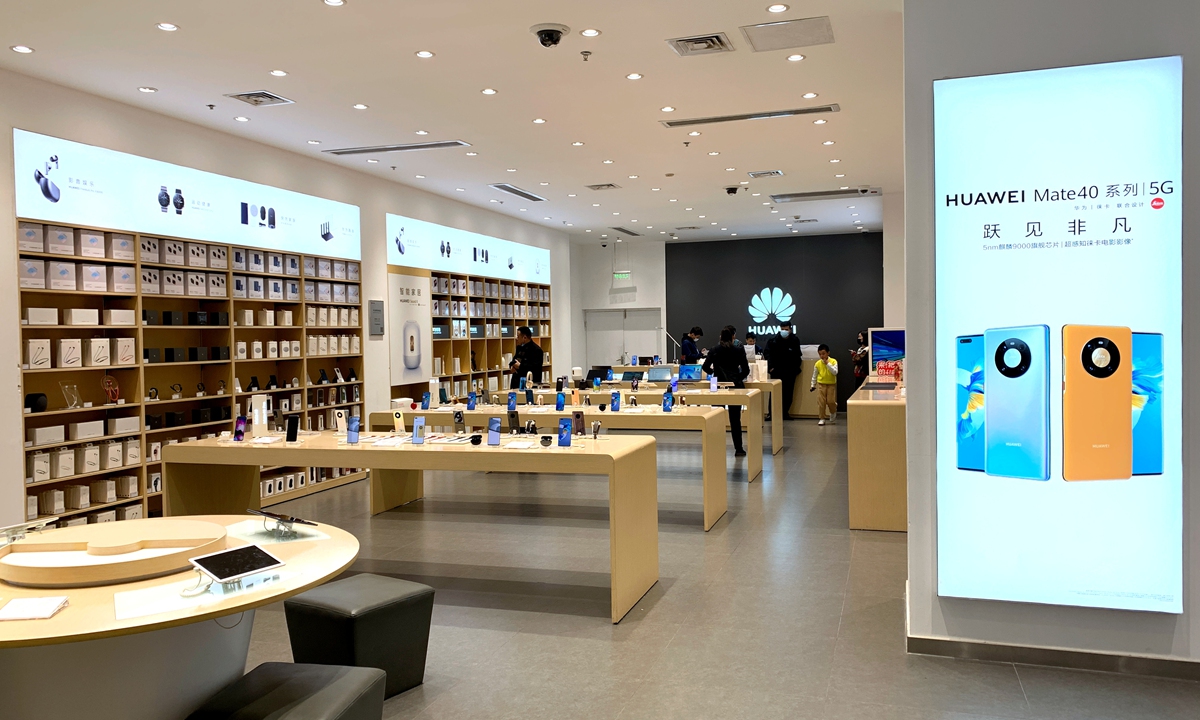
Customers visit a Huawei store in Fuzhou, East China's Fujian Province. Photo: cnsphoto
Major Chinese smartphone makers have been silent so far on whether they will adopt Huawei's self-developed operating system (OS), known as HarmonyOS 2.0, which the company launched on Wednesday with much fanfare, though some industry leaders gave a thumbs-up for the domestic OS.
So far, only Huawei's own phones and some under the Honor brand are included on the official installation list.
The notable silence among Chinese smartphone markers raised questions over industry-wide adoption of the HarmonyOS 2.0 in the near term. Analysts said that more time and reforms for Huawei's business strategy may be necessary for the success of the OS.
Apart from Huawei's own phones, which started to upgrade the system from Wednesday, some models under Honor, the previous sub-brand of Huawei, will be able to use the OS starting from the fourth quarter this year, Huawei announced.
As of Thursday, smartphone maker Meizu was the only other smartphone brand to confirm that it will use this system, although not in its smartphones. The Meizu Lipro ecosystem - its smart home products line - will join hands with HarmonyOS, Meizu announced on May 28.
Others have indicated their support for the domestic OS, but they haven't made it clear whether they will install the OS.
Liu Zuohu, founder of domestic smartphone maker OnePlus, gave a "thumbs-up" to a HarmonyOS message on his personal account on China's Twitter-like Sina Weibo.
Another smartphone maker, Oppo, said it "supports domestic innovation and calls for and supports the industry to develop together," after an Oppo employee said that the company would not use the HarmonyOS. The employee later apologized and resigned, according to media reports.
In response to the companies' silence over adoption, Wang Chenglu, head of Huawei's consumer software business, said that "people do not have to worry about it too much, since using it is a business choice," according to a report by domestic news website cnbeta.com.
Wang added that it has donated the core basic infrastructure of HarmonyOS to the Openatom Foundation, and any company can acquire and customize the software.
Analysts said that major domestic smartphone companies are unlikely to quickly shift to the new OS, because it will take time for the market to test the newly unveiled software. In the short term, HarmonyOS can't be as widely accepted by consumers as Google's Android on phones, analysts added.
"For mobile phone manufacturers facing both the domestic and global markets, they must consider both domestic and international market responses. It will be difficult for mainstream mobile phone brands to use HarmonyOS in the short term," Fu Liang, a veteran industry analyst, told the Global Times on Thursday.
Moreover, these companies - which are aggressively moving abroad - may also be concerned about being cut off from using Google's GMS services, an industry analyst who preferred to be anonymous told the Global Times on Thursday.
But under the current volatile China-US tie, the HarmonyOS still has vast market prospects and could be viewed by many as a back-up, said the analyst.
Earlier this year, Huawei said that the HarmonyOS will be installed on about 300 million devices by the end of 2021, with about 200 million being Huawei's own devices.
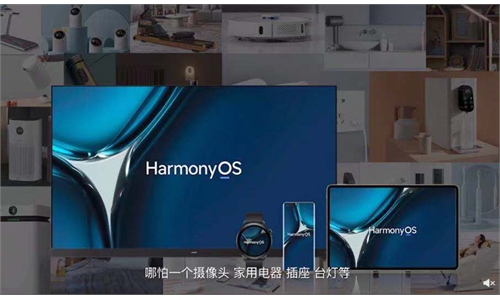
During the launch on Wednesday, Huawei stressed that the OS was not only designed for smartphones but aims for use in the Internet of Things (IoT) era, since it could easily connect multiple devices including phones, watches, smart TVs and other smart home devices.
The OS' partners include Chinese home appliance makers such as Midea Group and Joyoung, and carmakers such as BAIC. Himalaya, an immersive learning platform that provides audio courses, also announced on Thursday that it is among the first batch of ecosystem partners of HarmonyOS 2.0.
Fu said that Huawei may have to separate the HarmonyOS 2.0 from its consumer businesses to establish a very open culture, because focusing on its own interests and crushing opponents - which may help its telecommunications businesses - would not fit areas such as OS that require openness.
To succeed, Huawei must be willing to stay behind the scenes, so that more of its partners such as Midea, TCL, Meizu and BAIC can come to the fore, instead of Huawei's mobile phones, smart screens, or tablets, Fu explained.
Huawei said on Wednesday that more than 300 app and service partners, 1,000 hardware partners, and 500,000 developers have jointly participated in the construction of the Harmony ecosystem.
RELATED ARTICLES