China-US relations too big to fail, one-China principle a red line must not be crossed: Ambassador
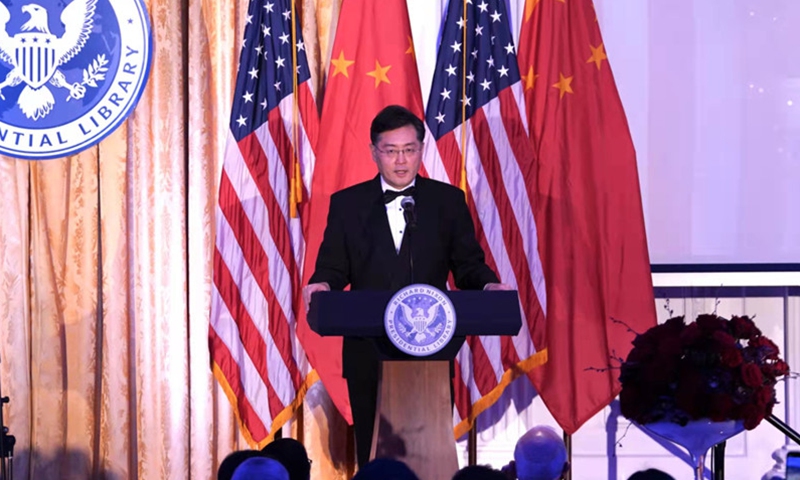
Photo: Screenshot of the Website of the Chinese embassy in US
Then US President Richard Nixon's pragmatic diplomacy culminated in this monumental visit 50 years ago, and the legacy by leaders of China and the US still serves as an important reference today - extraordinary strategic vision, huge political courage, and exceptional diplomatic wisdom, Chinese Ambassador to the US Qin Gang said on Thursday US local time.
Qin made the remarks at the Commemoration for the 50th Anniversary of President Richard Nixon's Visit to China and the issuance of the Shanghai Communique.
The China-US relationship has also undergone tremendous changes, Qin noted. Over the past 43 years of diplomatic relations, China and the US have grown into a "close-knit community with inseparable economic interests," our people have developed unbreakable ties, and we are both important stakeholders in international system. China-US relations have become just "too big to fail," according to Qin.
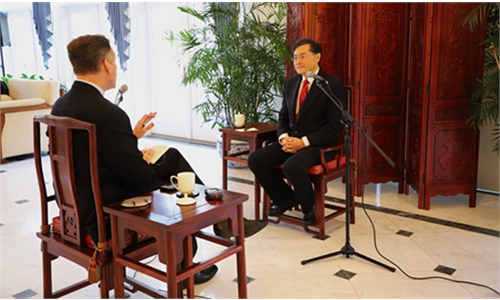
Qin noted that before he came to California, he visited former US Secretary of State Henry Kissinger in New York to listen to his ideas about what people can learn from President Nixon's visit. Kissinger told Qin that President Nixon was good at taking a historical perspective into foreign policy making. Kissinger himself also sent a video message to the event.
The China-US relationship has come to another historical juncture, and the two countries are entering a new round of "mutual exploration, understanding and adaptation," trying to find a way to get along with each other in the new era, Qin said.
"Taiwan independence" separatist forces are the biggest obstacle to China's reunification. If they are allowed to go down the dangerous path, risks for tension will be heightened. Qin said that the US side should honor its commitments on the Taiwan question, and work with China to oppose and contain "Taiwan independence" separatist forces.
Fifty years ago, China and the US shared the strategic need to counter the common threat, and the two countries' common interests outweighed differences; then 50 years later, do we still have that basis to develop our relations?
Qin noted that "our common interests have never been as extensive as they are today." They represent over $750 billion of annual trade and millions of jobs in both countries supported by the trade. Over 70,000 US companies have invested in China; and there are over 300,000 Chinese students studying in the US; and citizens collectively made 5 million mutual visits each year before COVID-19. There are more than 280 pairs of sister provinces, states and cities between China and the US.
The two countries' common "enemy" should be the major challenges concerning the survival and development of both sides and mankind, including climate change, energy security, food security, global development gap and the pandemic. "Competition and confrontation should not be the keynote of China-US relations," Qin noted.
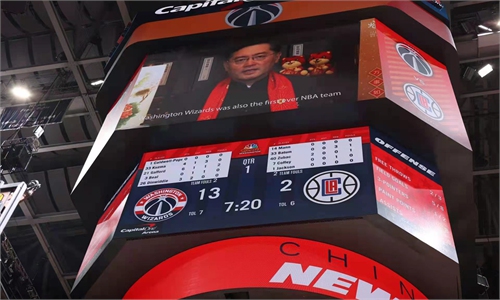
Qin also congratulated the Los Angeles Rams for winning the Super Bowl this year, noting that China-US relations should not be like the intensely confrontational American football match. "There should be no offensive team or defensive team, no touchdown, no quarterback sack."
The Shanghai Communique and the other two China-US Joint Communiques are the rules that both sides must follow. The one-China principle is the unshakable political foundation for China-US relations, and a red line that must not be crossed, according to Qin.
Global Times
RELATED ARTICLES