Illustration: Chen Xia/Global Times
Earlier this month, the US government named Joseph Yun, who served as US special envoy for North Korea under former US presidents Barack Obama and Donald Trump, to lead talks with three Pacific Island countries - the Republic of the Marshall Islands (RMI), the Federated States of Micronesia (FSM), and Palau. The appointment is considered an important move by the Biden administration to strengthen relations with Pacific island countries to curb "China's expansion."
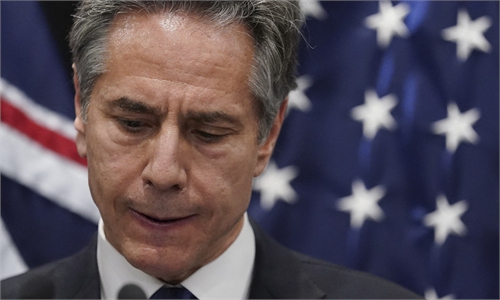
In a press statement on the same day, US Secretary of State Antony Blinken said, "The United States has a special and longstanding relationship" with the three countries - collectively known as the Freely Associated States (FAS). The Compacts of Free Association (COFA) with the FAS "reflect the close relationships between the United States and the FAS and are a critical source of regional security, stability, and prosperity. Through these negotiations, we will strengthen our enduring partnerships with our close Pacific Island partners and ensure a free and open and prosperous Indo-Pacific region," the statement continued.
The COFAs with RMI and FSM will be up for renewal in 2024 and the COFA with Palau in 2023. Renewal talks began during the Trump administration. The US provides economic assistance to the three countries. In exchange, they provide the US with sites for additional military installations. The US has always been very clear about its strategic appeal to the South Pacific region - using economic and social inducements, to bring these countries into the US global strategic framework. What the US values are the countries' geographic and strategic location.
In recent years, with China's rise in national power and global influence, as well as the competition between Beijing and Washington, the US strategic community has long lived under the shadow of "China's expansion" and "China's threat." They believe when the US did not pay sufficient attention, China took advantage of the situation by increasing its investment and seeking to set up military facilities to weaken US military power in the Pacific.
In February, the White House released a new Indo-Pacific Strategy. It clearly states that the Indo-Pacific region faces "mounting challenges, particularly from the PRC" and promises to strengthen partnerships with the Pacific Islands. In the same month, US Secretary of State Antony Blinken paid a visit to Fiji where he held a video meeting with 18 Pacific island leaders. Blinken's visit is also the first by a US secretary of state in four decades.
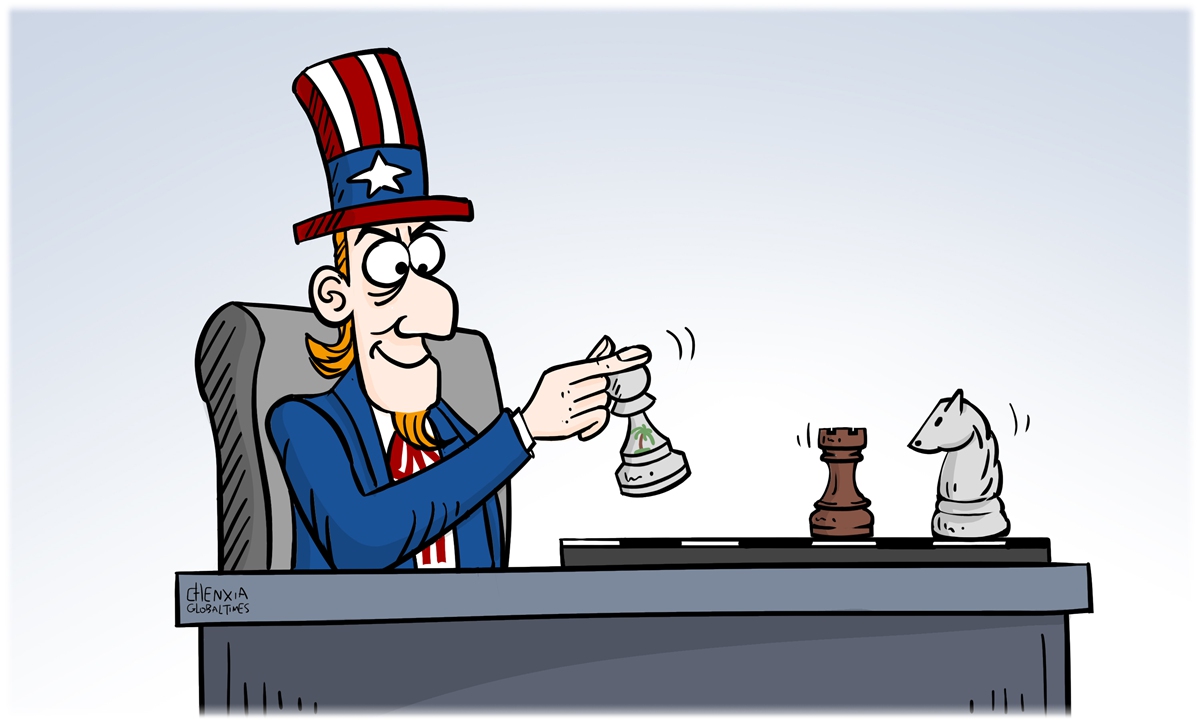
In the context of China-US competition, the Pacific Island countries have a special significance for the US. They are the US' chess pieces in its efforts to encircle China beyond the "first island chain."
These countries are playing a more important role in the US military's operational concepts, including multi-domain operations and distributed operations. The US military plans to expand military airfields in the Pacific Islands as backups to forward airfields in countries like Japan. It also considers deploying intermediate-range missiles in countries, such as Palau.
However, the so-called Chinese military threat and military expansion are sheer fiction. Unlike the US, which focuses way too much on strategies and military, China's relations with the Pacific Island countries are mainly about economic cooperation. In particular, after the proposal of the Belt and Road Initiative, China's economic cooperation with these countries has become increasingly close. Diplomatic ties have also been enhanced.
The PLA has also strengthened contacts and interactions with South Pacific countries to provide humanitarian assistance. Disasters have long been frequent in South Pacific. Whenever disasters occur, China always lends a helping hand. China acted promptly to deliver emergency assistance to Tonga after the volcanic eruption, supported the Solomon Islands in maintaining stability and stopping violence, and provided vaccines and medical equipment to South Pacific countries hit by COVID-19, demonstrating the spirit of a community with a shared future. The China-Pacific Island Countries Reserve of Emergency Supplies has been put to use, and a climate action cooperation center and a poverty reduction and development cooperation center will soon be completed.
China's diplomatic philosophy is mutual respect, and it mainly pursues the logic of development and cooperation, rather than the logic of power politics and military strategy. At a press conference on March 7, China's State Councilor and Foreign Minister Wang Yi said, China will continue to conduct mutual learning and win-win cooperation with South Pacific countries. "The two sides have carried out high-quality Belt and Road cooperation, and China continues to offer economic and technical assistance with no political strings attached," Wang noted.
So far, China has practiced the concept of a community with a shared future for mankind in the South Pacific region, promoting economic cooperation and providing humanitarian assistance. This is in stark contrast to the long-standing US practice of using South Pacific countries as strategic vassals, military strongholds and bridgeheads.
The author is director of the South China Sea Strategic Situation Probing Initiative (SCSPI). opinion@globaltimes.com.cn
RELATED ARTICLES