Illustration: Liu Rui/Global Times
While a stronger dollar helps keep a lid on inflation in the US, an inevitable side effect has spelled trouble and increased debt burdens in many emerging economies. US politicians tried to shift the blame by groundlessly criticizing China but their attempt to divert attention is futile and cannot fool the international community.US Treasury Secretary Janet Yellen said on Friday that a more effective debt restructuring process was needed to address debt problems, but, "the barrier to making greater progress is one important creditor country, namely China," according to Reuters. Yellen' s words are groundless, designed simply to malign China.
In the wake of the COVID-19 pandemic, global debt has surged. The UN has identified 54 developing economies with severe debt problems, but developing economies have mainly borrowed from commercial creditors and multilateral institutions, instead of China. According to the World Bank's International Debt Statistics, by the end of 2020, China accounted for only 10 percent for the public external debt of 82 low-income and lower middle-income countries. Commercial and multilateral creditors took up 40 percent and 34 percent, respectively, according to media reports.
Chinese officials have reiterated that the nation attaches great importance to global debt relief and is committed to implementation of the debt service suspension initiative from G20 countries. By contrast, Western commercial creditors and multilateral institutions have failed to make proportionate contributions to relieving the debt burden on developing countries.
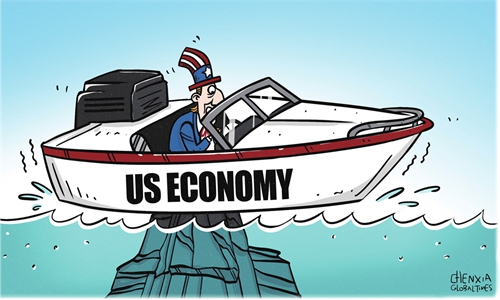
Even with the background that many developing economies are severely battered by the pandemic, the US policy makers chose to put the US' interest on the top and start a round of aggressive interest rate hikes this year. Since March, the Federal Reserve has raised interest rates by 300 basis points. To make things worse, the US central bank remains stubbornly aggressive and hawkish, indicating more rate hikes are likely before the end of this year.
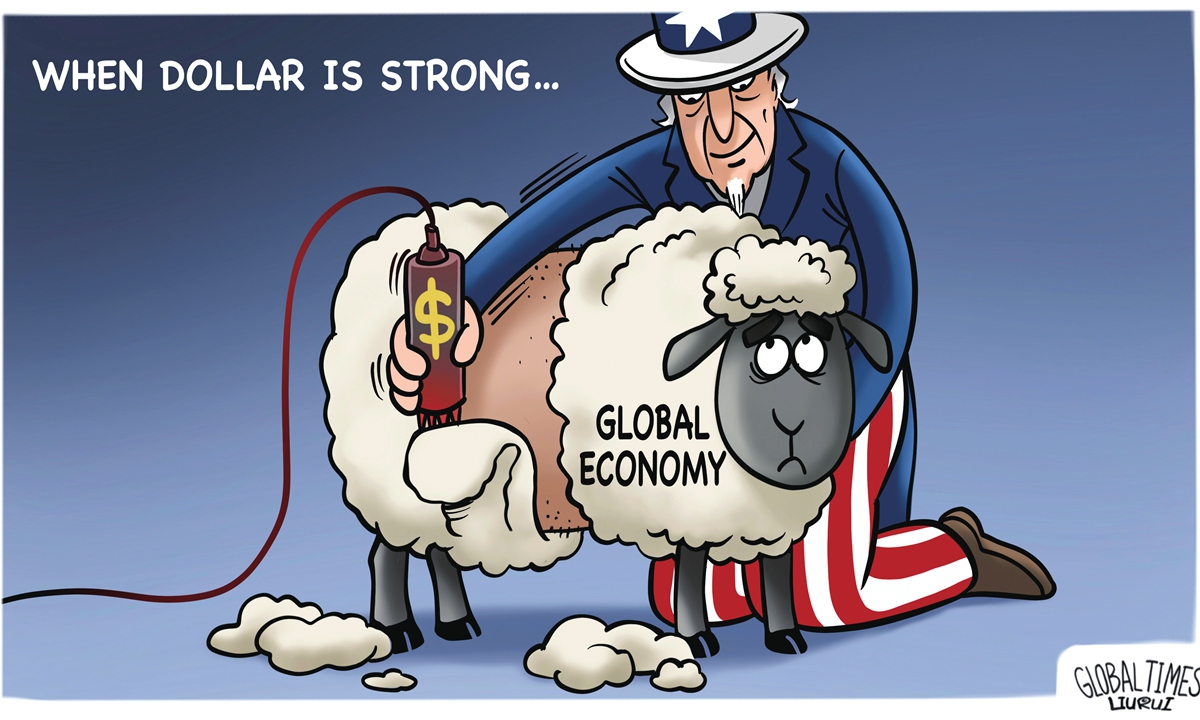
The US' stubborn hawkish monetary policy has sent shockwaves through the world, causing a worldwide economic earthquake. A strong US dollar has attracted international capital outflow from other economies, worsening their debt crisis to unbearable conditions.
US politicians seem to know well that the Fed's campaign to increase interest rates is a major source of problems. Yellen said on Friday that high inflation, tightening monetary policies, currency pressures and capital outflows were increasing debt burdens in many developing countries, and more progress was urgently needed, according to Reuters.
If US politicians admit that the tightening of monetary policies by the Fed has spelled trouble for developing countries, the one who should take responsibilities and help solve the problems will be the US. It is ridiculous to groundlessly blame China and say the barrier to solve the problems is China.
For the developing countries, rising interest rates in the US, and the appreciation of the US dollar are translating to rising costs of imports, higher inflationary pressures, rising debt servicing and borrowing costs and worsening fiscal and current account balances, undermining the prospects of their full economic recovery from the pandemic, the UN World Economic Situation and Prospects report said earlier this month.
A closer look into the debt crunch of some developing countries shows that the US' aggressive monetary policy and a strong dollar is the root cause of their predicament. The sharp dollar appreciation following the Fed's expansionary monetary policy has been triggering almost every round of debt crisis in developing countries in past decades. And the strong dollar is also behind of this round of debt woes in many economies across the world.
US irresponsible monetary policy has severely damaged the stability of the international monetary system. As the whole world economy is facing a common problem of high debt, if the US goes further on the wrong track, it may trigger the collapse of the debts and another global financial crisis.
The author is a reporter with the Global Times. bizopinion@globaltimes.com.cn
RELATED ARTICLES