Illustration: Chen Xia/Global Times
The US Federal Reserve raised the benchmark interest rate by a quarter of a percentage point on Wednesday - continuing its attempt to stamp out inflation.Following the ninth rise in borrowing costs in a time span of 12 months which now stands at 4.75-5 percent, the US central bank hinted there could be one more interest rate increase this year.
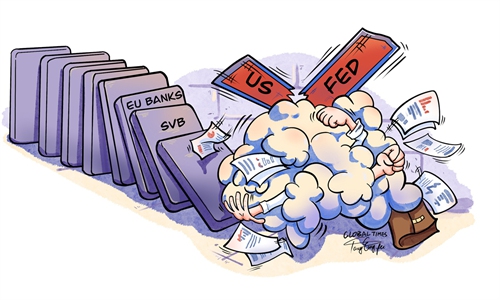
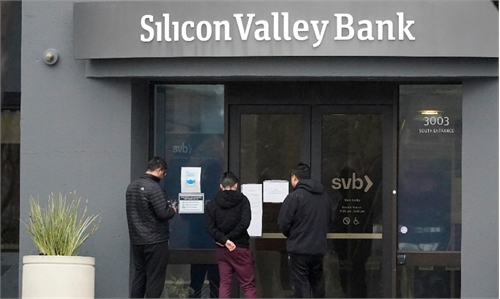
The raise on Wednesday is highly unusual in the backdrop of recent US banking system turmoil. Two midsize lenders - the Silicon Valley Bank (SVB) and the Signature Bank - suddenly failed under huge financial pressure directly caused by the Fed's high interest rate. Whether there will be more midsize lenders or even large American banks capsize in the face of deteriorating balance sheets remains unknown, as risk-taking at SVB et al is more endemic among many banks in the US.
The capital market is being gripped by this enormous uncertainty, fearing one more US bank collapsing in financial distress will trigger more panic among investors. Wall Street stocks witnessed big swings last week as traders and investors wrestled with the impact of the Fed's rapid rate increases on the country's increasingly fragile banking system. Wild market volatility is predicted to continue in the coming days on a global scale.
Officials from the Fed are finding their hands being tied together as to the next step in policymaking. They are bewildered by the stubbornly high inflation despite the rate has been raised rapidly and steeply in the past year. And, quite unexpectedly, new problems have popped up. The jump in rate pummeled the value of many midsize banks' investment portfolio, which kicked off a voracious run on deposits because the customers feared those banks could succumb, as did SVB and Signature Bank.
After all, the US banking system is woefully unprepared for the return of high inflation, even though the Fed has frequently warned in the past months that persistently high inflation remains a "dangerous prospect" for the economy.
At the current stage, it is very hard for the Fed policymakers to find a balance between controlling inflation and keeping US lenders above water and not going under. Global investors are unlikely to trust the ability of the US central bankers to treat inflation and financial system stability at the same time, so the best move for them is downsizing their portfolio, sitting on the fence, and watching whether there will be another SVB collapse under mounting stress.
Earlier this month, the European Central Bank raised interest rate by 0.5 percentage point, pushing the zone's rate up to 3.5 percent, the highest since 2008. And, last week, the Bank of England also increased interest rate for the 11th consecutive time, and the bank said that UK's banking system was able to withstand higher rate.
However, investors are skeptical and increasingly unnerved.
To funnel more loans to precarious lenders to reassure depositors and stave off bank runs, the Fed encouraged them to borrow more at the Fed's "discount window" program. In the past two weeks, media reports said the lenders borrowed a record amount from the US central bank. That elevated lending - another round of quantitative-easing by the Fed - underlines a troubling reality that US banks are so glaringly short of cash, meaning their problems might be very severe, and their financial stress will continue to churn the country's banking system.
The higher borrowing cost will dampen business activity and curb household consumption across the board, lead to economic downturns in the US and Europe at large. A broad economic slump across the Atlantic will likely beset investors, if not crater the stock market, causing widespread pains on the middle class and the poor.
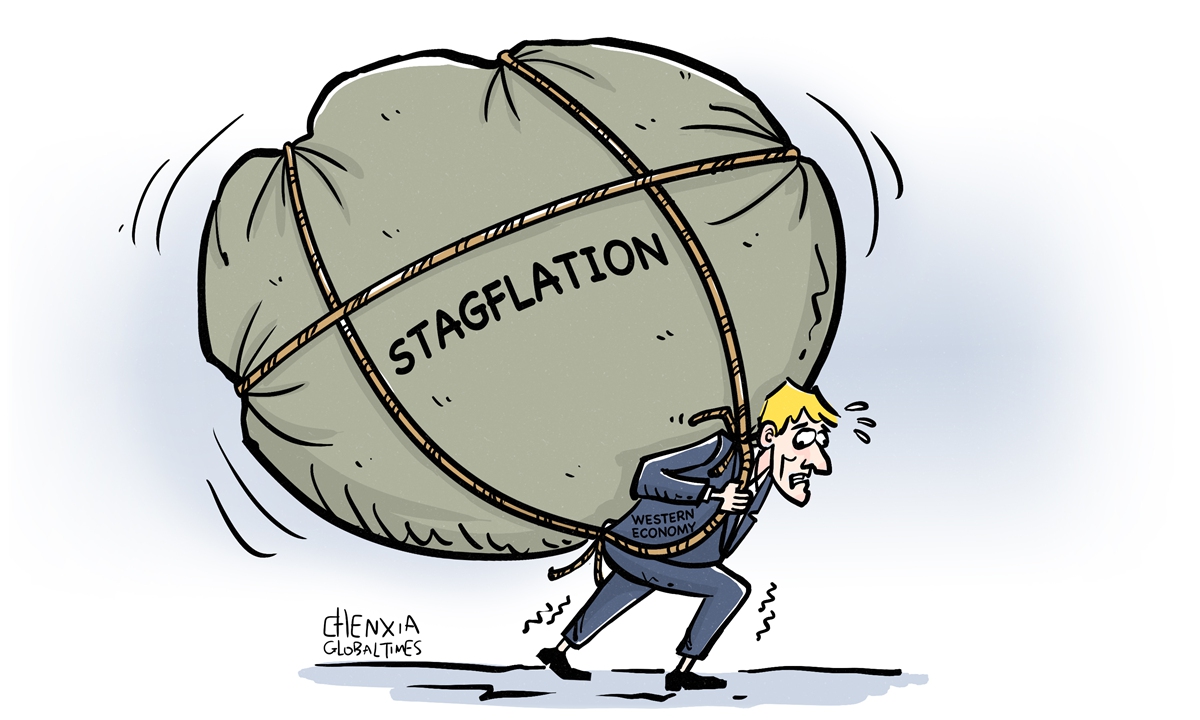
There are growing signs that the Western developed economies led by the US will fall into distressful stagflation in 2023. Central bankers there are increasingly perplexed by persistently high inflation despite year-long efforts to raise interest rate, and they don't know when to dial back on interest rate hikes which are withdrawing fuel to grow the economy. Economists know that it is difficult for an economy to walk out of stagflation as the central bank's interest rate maneuverability is lost.
And, more financial market tumult could come to haunt the US. After the breakout of the Russian-Ukraine conflict in February 2022, the US-led Western governments moved to impose sweeping sanctions on Moscow. The thought the US may move to grab anybody's assets who refuses to obey Washington's dictates, will induce or simply force more countries to dump US-dollar-denominated securities. Considering a swooned US economy and its mounting federal debt of $31.4 trillion, foreign governments' appetite to hold US Treasury bonds and other securities is plummeting. If the trend of sell-down does not stop or even gains pace in the following months this year, the US dollar's global reserve currency position will be shaken, which is definitely perilous for the country's future.
The author is an editor with the Global Times. bizopinion@globaltimes.com.cn
RELATED ARTICLES