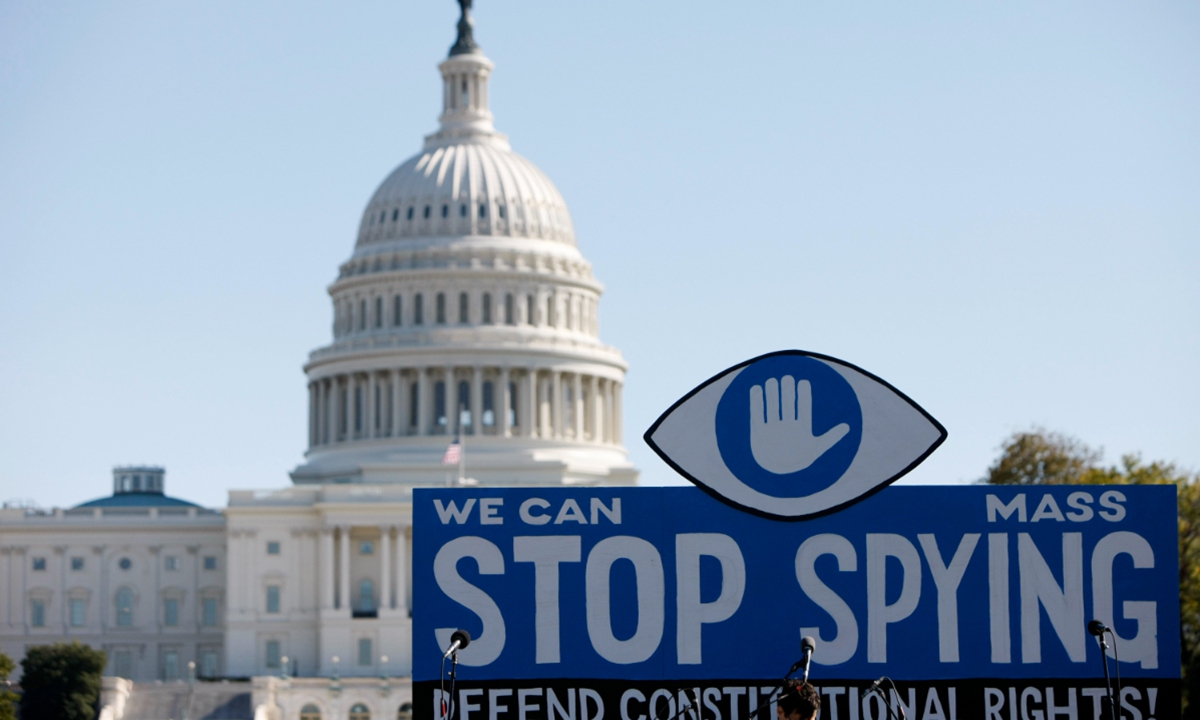
A huge slogan board stands in front of the US Capitol building during a protest against government surveillance in Washington DC, capital of the United Sates, on Oct 26, 2013. Photo:Xinhua
Editor's Note:Ten years after Edward Snowden revealed that US intelligence agencies abuse their authority to spy on people in the US and around the world, the surveillance community is still misusing its powers in the same way as Snowden exposed. "His whistle-blowing was absolutely critical," said John Kiriakou (Kiriakou), an ex-CIA officer-turned whistle-blower leaking US torture programs 15 years ago. In an interview with Global Times (GT) reporter Wang Wenwen in her I-Talk show, Kiriakou recalled his own whistle-blowing experience and his associations with Snowden.
GT: Can you tell me your experience as a whistle-blower?
Kiriakou: It's been a very difficult experience. This is actually something that I talk about a lot with other whistle-blowers or would-be whistle-blowers - people who are considering blowing the whistle. There are a couple of things that you just have to accept once you decide to blow the whistle, that is you're putting yourself on the opposite side of your previous organization and they take that all very seriously in that they will use all of the power and authority at their disposal to ruin you financially, personally and professionally.
What I tell people who are considering blowing the whistle is before they say anything, always have a lawyer sitting next to you and make sure that it's a lawyer who specializes in whistle-blower protections. Your friends are going to walk away from you. Many of your family members will also walk away from you, so you have to be prepared for the worst.
GT: When you blow the whistle, what was your consideration? And what happened to you next?
Kiriakou: In 2002, we captured Abu Zubaydah at a safe house in Faisalabad, Pakistan. We believed at the time that Abu Zubaydah was the third-ranking person in Al-Qaeda. That turned out to not be true. Although he was a bad man, he was not the terrorist mastermind that we thought he was. That was in March of 2002.
In August of 2002, the CIA began torturing him. I objected to it inside the CIA. I was told to mind my own business, that the decision had already been made, there was nothing anybody could do to stop it or to change it, and I should just move on. But I knew that there were other people inside the CIA who were making the same complaints that I was. I expected somebody to go public. That didn't happen. Then a year and a half later, I resigned from the CIA and went into the private sector. Again, I waited for somebody to come out and say something. And that just never happened.
Finally, in December of 2007, I got a call from quite a famous American journalist, who had questions about the torture of Abu Zubaydah. I decided that I was going to just tell the truth and go public. I probably naively did not expect the fallout that resulted. But the most important part of that is, when I blew the whistle in December of 2007, the Bush administration FBI began investigating me. They investigated me for a full year from December of 2007 to December of 2008. They eventually decided that I had not committed a crime and they closed the investigation.
Then Barack Obama became president three weeks later, and they secretly reopened the case against me. John Brennan, who was an old enemy of mine at the CIA, had become the deputy national security adviser, and he was furious that I had gone public. He asked them to reopen the case. They investigated me for three more years, and then finally arrested me in 2012.
GT: If you didn't blow the whistle, how would your life be different?
Kiriakou: I would be wealthy. I would probably still be married. I would be very comfortable. I would be unknown. Nobody would have ever heard of me. Nobody would care what I have to say about different issues. So it would have been a very different life.
All my life I have done very well under pressure. That's why I was a successful CIA officer. I'm very good under pressure. That helped a lot. What helped in equal amount is that the entire whistle-blower community came together and supported me. So I had those people to rely on as friends. Daniel Ellsberg and Edward Snowden and Daniel Hale and Thomas Drake, all these famous national security whistle-blowers all rallied to my defense.
In general, we were all just normal patriotic government employees going about our business, going to work every day and doing our jobs. And then we blew the whistle. In the eyes of some, we became outcasts; in the eyes of others, we became heroes, and we found ourselves in the middle having to negotiate all of this.
GT: You wrote a letter to Snowden 10 years ago after he made the revelation. You suggested him what to do and wished him best luck. Why did you do that? Did you get any feedback from him?
Kiriakou: As soon as he made his revelations, I realized how important he was. This was a huge story, and we wouldn't have known that the government was spying on us if Snowden hadn't told us. So I wanted to write him a letter because I knew from that very moment that he was going to go through exactly the same experience that I was going through. And I didn't want him to make the mistakes that I had made. So I wrote him actually two letters. I wrote him a letter that was public, and then I wrote him a private letter that a friend of ours delivered to him.
I told him to embrace support wherever he could find it, especially on Capitol Hill. I told him to not trust anybody, because everyone is a potential FBI source. I told him to hire the best lawyer's money could buy. In fact, I recommended that he hire my lawyers, which he did. In most aspects, it worked out well for him.
I've talked to him many times. He said something that was very interesting. He was willing to come back and face trial and go to prison. He told me he was willing to serve 20 years in prison.
This is what the lawyers were trying to negotiate with the Justice Department. He wanted to be able to stand up in court and explain why he did what he did. And the Justice Department said never, and he said that I won't come back. And so he didn't.
What he was suggesting was something called an affirmative defense. An affirmative defense is not permitted in the Espionage Act. That should be changed. Espionage should be spying for another country. It's revealing any information that is deemed to be classified. And that's really not what the meaning of espionage should be. And that's what he wanted to say. He was exposing crimes committed by the US government. And the Justice Department said absolutely not.
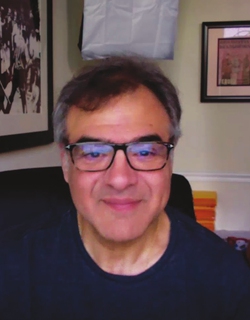
John Kiriakou. Photo: Courtesy of Kiriakou
GT: How do you think of his whistle blowing action? What commonalities do you have?Kiriakou: His whistle-blowing was absolutely critical. We had no idea that NSA was spying on us. We had no idea that the FBI was using that information without court orders or warrants to spy on us.
I think he's a bona fide hero. I think that the country owes him a great debt of thanks and gratitude for what he did. Even though Capitol Hill hasn't caught up in terms of writing legislation, we are getting there slowly. At least we're moving in the right direction.
An Israeli psychologist who studies whistle-blowers told me something that was very, very interesting. And this is not unique among Americans. This is whistle-blowers around the world. He said that whistle-blowers have an unusually clearly defined sense of right and wrong, much more clearly defined than the general public.
Also for whistle-blowers, there are very few issues that are gray. Most issues are black or white, right or wrong. And whistle-blowers just can't allow wrongdoing to continue without saying something. I think that is all correct.
GT: How do you and Snowden communicate with each other?
Kiriakou: He doesn't use email. The last time I talked to him, like through Skype, was three years ago, January. It was right before COVID started. And now it's through Twitter. That's how he does most of his communication - through Twitter direct messages. He's an intensely private person. He doesn't think he did anything that was particularly unusual. He's wrong about that, of course. But he wants to be just a normal man who is living his life with his wife and his children. That's really what he wants. Money is not important to him. And he just wants to get his truth out there.
Kiriakou: Whistle-blowers are patriots. I am speaking specifically about national security. It's those people who break the laws, in my view, who are the traitors. There's a legal definition of whistle-blowing. It's bringing to light any evidence of waste, fraud, abuse, illegality, or threats to the public health or public safety.
So if that's what a person is doing, he or she should be celebrated. I just reject the whole "traitor" issue. People throw that word around very, very easily. It's become meaningless.
GT: You constantly speak up with US media after you were released from prison. Have you faced any threats from authorities?
Kiriakou: Not direct threats, indirect threats, especially as it relates to my writing. The CIA will frequently reject my writing for clearance. For example, I was asked by the Washington Post, which is one of the most important newspapers in the world, to write a 1,200-word article about the CIA director at the time, Gina Haspel. I said that Gina Haspel was guilty of crimes against humanity. And that if we weren't Americans, she would be in the Hague looking at life in prison for what she's done. The CIA blacked all of that out. They said, you can't say this and I said, yes, actually, I can, because it's an opinion. I'm not using classified information.
So I published it anyway. And I thought if they want to arrest me again and fight about whether or not Gina Haspel committed crimes against humanity, I'm happy to have that fight. And they backed off.
For the first two years or so I was out of prison, the FBI followed me a lot. They followed me to meetings, they followed me to interviews, they followed me to restaurants for lunch. I know that they were doing it just to intimidate me. They stopped after a while, as it was just wasting their time and the taxpayer's money. It was a stupid thing for them to do. But in the end, they all gave up.
GT: 10 years on, what changes have Snowden's leaks brought in terms of US spying behavior?
Kiriakou: Around the world, they've intensified their behavior. We've had revelations now on multiple occasions. For example, the NSA was intercepting Angela Merkel cellphone. That was big news. She was one of our closest allies. When the information was first revealed, Hillary Clinton went to Germany and apologized. And then we did it again. The problem there is, if you look at American public opinion, most Americans want the CIA and the NSA to spy on foreign leaders, even our friends. At the very least, we can learn what they are intending to do in trade negotiations. At the very most, maybe it can disrupt some sort of an attack if it's an unfriendly country. So in terms of spying around the world, the American people love it and they want more of it.
In terms of spying domestically, that is very specifically illegal. These intelligence services are not allowed to spy on Americans and they do it anyway. So what the Snowden leaks have caused is really not enough. But what they've caused is Congress is now watching more closely and exercising better oversight.
Now every few years, we have a debate over the renewal of the authorities that allows NSA to spy on Americans. And it's a public debate. And every time we have one of these votes, fewer and fewer members of Congress vote yes. It's been 10 years, and 10 years is a long time, but I hope that eventually they'll come to their senses and say this is just wrong, and it has to stop. And again, we wouldn't know any of it without Ed Snowden.
RELATED ARTICLES