Aspartame usage could guarantee safety under nation's standards and regulations, says China's food risk assessment agency
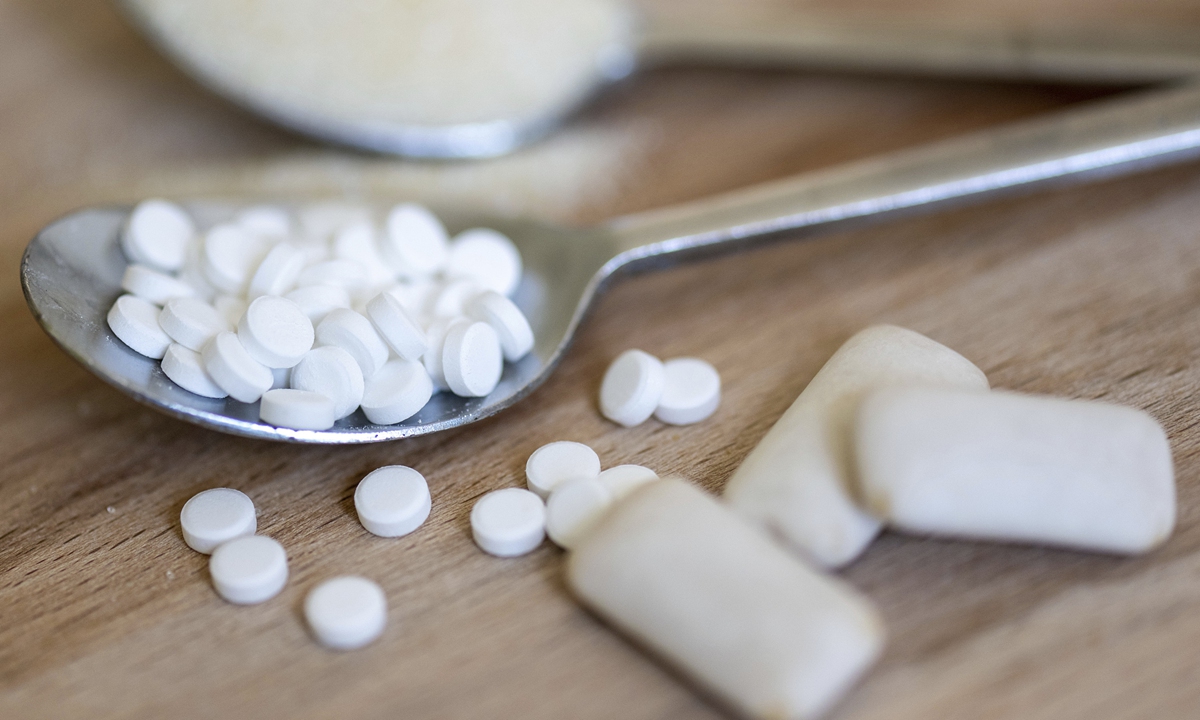
Photo: CFP
It is safe to use aspartame, one of the most commonly used artificial sweeteners, based on China's current standards and regulations, the China National Center for Food Safety Risk Assessment said on Friday.
The remarks came after the World Health Organization's cancer research arm on Friday labeled aspartame as a possible carcinogen, casting doubts on the non-sugar sweetener's safety.
In the hazard and risk assessment results, the organization's International Agency for Research on Cancer (IARC) classified aspartame as "possibly carcinogenic" to humans.
While another panel of experts - the Joint FAO/WHO Expert Committee on Food Additives (JECFA), concluded that the data evaluated indicated no sufficient reason to change the previously established acceptable daily intake (ADI) of 0-40 mg/kg body weight for aspartame. The committee therefore reaffirmed that it is safe for a person to consume within this limit per day.
The two bodies conducted independent but complementary reviews to assess the potential carcinogenic hazard and other health risks associated with aspartame consumption.
The IARC classifications reflect the strength of scientific evidence as to whether an agent can cause cancer in humans, but they do not reflect the risk of developing cancer at a given exposure level. JECFA's risk assessments determine the probability of a specific type of harm such as cancer to occur under certain conditions and levels of exposure.
"The assessments of aspartame have indicated that, while safety is not a major concern at the doses which are commonly used, potential effects have been described that need to be investigated by more and better studies," said Francesco Branca, director of the Department of Nutrition and Food Safety, WHO.
Aspartame has been widely used in various food and beverage products since the 1980s, including diet drinks, chewing gum, gelatin, ice cream, dairy products such as yogurt, breakfast cereal, toothpaste and medications such as cough drops and chewable vitamins.
China has been strictly regulating the scope and maximum usage of aspartame through national food safety standards, according to which, the safety of aspartame can be guaranteed," China National Center for Food Safety Risk Assessment said on its official website.
"We will continue monitoring the risk assessments published by IARC and JECFA as well as other countries' response and measures," it added, stressing the nation's resolve to maintain high standards for food safety.
Global Times
