Global South needs to work together to address challenges caused by US tariff hikes
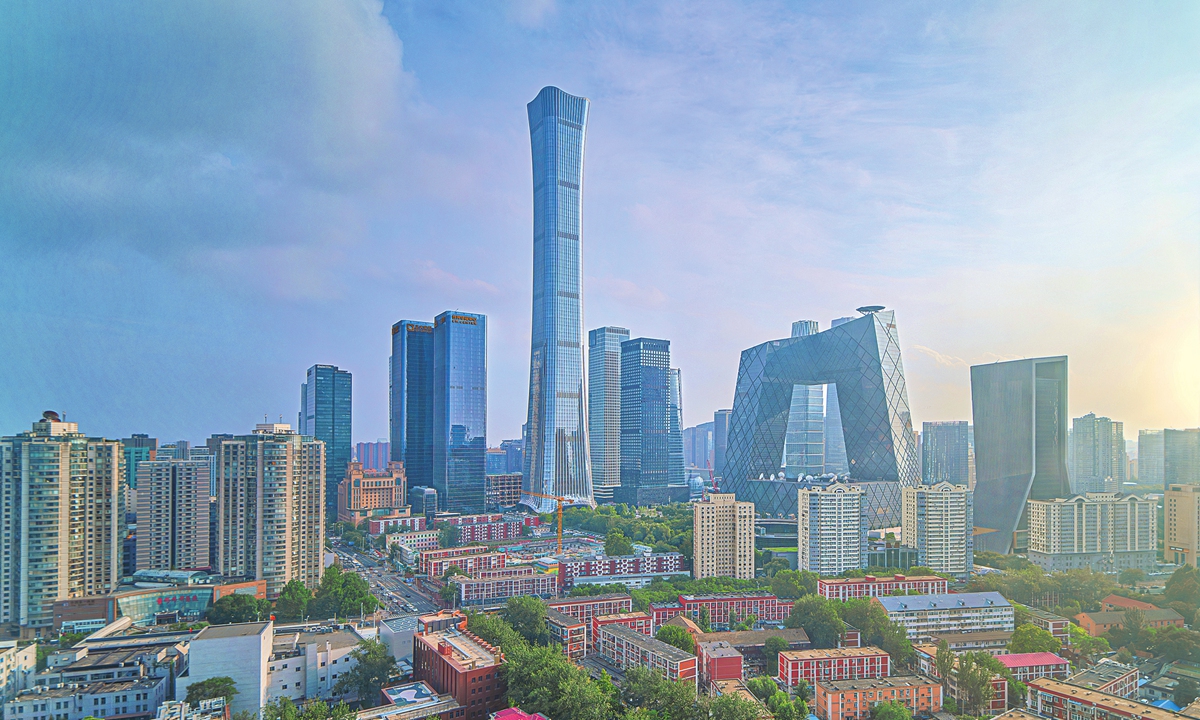
A view of Beijing's CBD area Photo: VCG
According to the so-called reciprocal tariff policy announced by the US government, once implemented, the tariffs will impact 86 countries. Although the US later announced a 90-day suspension of tariffs on some countries, this decision did not eliminate the impact and uncertainty it introduces to the global trade landscape.
The US' tariff policy means that preferential trade agreements between Africa and the US will be challenged, and many export products from African countries such as Ethiopia and Kenya will be affected.
In addition to the potential direct impact of tariffs, Global South countries may face some indirect repercussions. The imposition of tariffs by the US could create a domino effect. Some countries in the Global South are currently in an economic predicament characterized by high debt, high unemployment, high inflation, and low growth. If the impact of US tariffs is added to this situation, these issues are likely to worsen further.
Moreover, it is important to note that the US tariff measures could severely disrupt the global governance system, potentially amplifying the vulnerabilities of Global South countries in areas such as climate change, food security, energy transition, healthcare, environmental protection and sustainable development.
The US' tariff policy is going against the historical trend, weaponizing tariffs to pressing other countries to seek interests. This is a typical example of unilateralism, protectionism and economic bullying, which not only harms others but also hurts itself in turn. In today's world, where economies are closely interconnected, open and mutually beneficial cooperation is the historical trend.

Xu Feibiao
In the face of the US' tariff stick, some countries are attempting to solve the issue by engaging in bilateral negotiations. However, under the logic of "America First," unilateral concessions will only reinforce asymmetric dependence. Therefore, countries in the Global South need to take proactive measures, strengthen unity and work together to address this tariff challenge.
First, promote mutual assistance and expand South-South cooperation. The accelerating changes in the world over the past century have made the remarkable rise of the Global South the most distinctive feature of this era. In recent years, despite multiple challenges such as geopolitical conflicts, a once-in-a-century pandemic and economic difficulties, developing countries and emerging economies have still achieved collective rise amid the wave of globalization.
Today, the Global South accounts for over 40 percent of the world's total economic output and contributes 80 percent to global economic growth. Asia, Africa and Latin America possess resources, energy, manufacturing capabilities and vast markets, and technological innovation is also rapidly advancing. They are fully capable of breaking free from a position of dependence on the US and pursuing more independent development.
For example, in the global technological revolution, countries in the Global South are showing significant development potential in the fields of green low-carbon transformation and the digital economy. Since 2024, Southeast Asian countries such as Thailand, Malaysia and Indonesia have actively attracted investments in new-energy vehicles, aiming to build industrial ecosystems and integrate into the global supply chain. African countries are advancing projects in photovoltaic and battery storage, promoting clean, economical and reliable energy supply. Under the promotion of the Regional Comprehensive Economic Partnership, the digital economy and green economy in the ASEAN region are thriving. An increasing number of Central Asian and African countries are viewing the digital economy as a new engine for development.
Second, enhance unity and coordination to advance multilateral governance. It is essential for the Global South countries to unite and uphold the status of existing multilateral platforms such as the UN, the World Trade Organization and the G20. They should defend and reform the current multilateral trading system, reconstruct the foundations of the existing global governance system with the spirit of mutual respect, equality, mutual benefit and inclusiveness, and continuously enhance their representation and voice in global governance.
The pursuit of development and revitalization is a common aspiration of developing countries. Against the backdrop of rising anti-globalization sentiments and trade protectionism, the world needs to strengthen its confidence in economic globalization more than ever. Open cooperation is a historical trend; the world will not and should not revert to a state of mutual isolation and division. Mutual benefits and win-win outcomes are what all parties desire, and economic bullying that seeks to exploit other countries will ultimately backfire.
The author is director of the Center for BRICS and G20 Studies at the China Institutes of Contemporary International Relations. bizopinion@globaltimes.com.cn
RELATED ARTICLES