Cherry blossom seeds traveled in space start to sow in Southwest China’s Yunnan Province
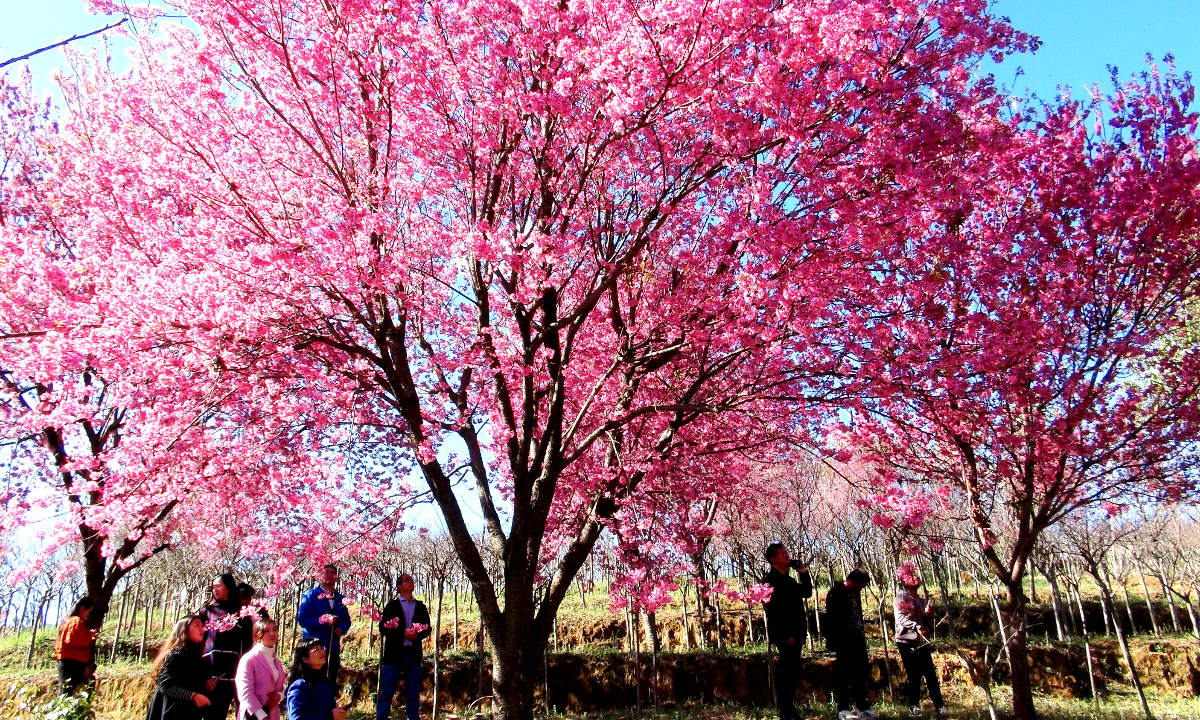
Yunnan winter cherry blossoms are in full bloom in Huaning county, Southwest China’s Yunnan Province. Photo: Courtesy of Wang Yunbin
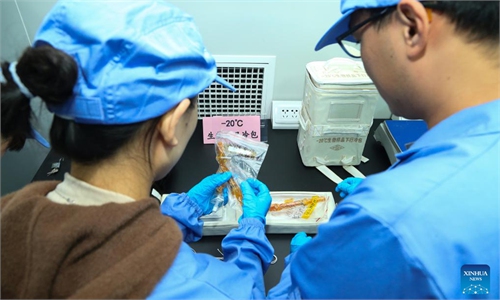
A packet of cherry blossom seeds that had traveled in space has begun to be planted in Huaning county in Yuxi city, Southwest China’s Yunnan Province, a key step in research on space-based breeding of cherry blossoms, the China News Service (CNS) reported on Monday.
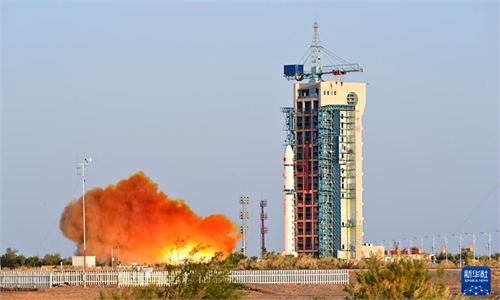
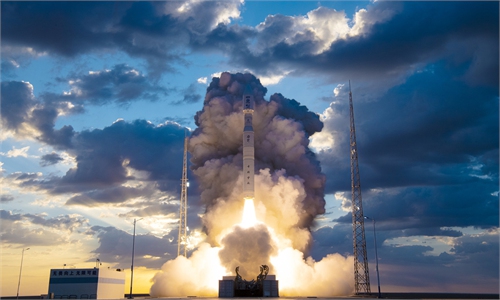
The 220-gram packet of 1,800 seeds was carried into space by China’s first reusable and returnable test satellite, Shijian-19, which was launched by a Long March 2D carrier rocket from the Jiuquan Satellite Launch Center in Northwest China on September 27, 2024. They returned to Earth as the satellite’s reentry capsule landed at the Dongfeng landing site in North China’s Inner Mongolia Autonomous Region on October 11, 2024.
The seeds of wild Himalayan cherry, also known as the Yunnan winter cherry blossoms, carefully selected and provided by Yunnan Wanjiahong Gardening Co, were handed over to Huaning county on April 11 this year.
According to Wang Yunbin, president of the gardening company, these seeds under scientific care are expected to sprout in about two weeks after being sown. Once the seedlings reach one meter high, they can be transplanted. The plants are expected to bloom in about three years.
The 1,800 seeds will first be planted on 0.06 hectare of land. Once the seedlings grow by December, they will be transplanted to over 6.67 hectares of land, Wang told the Global Times on Monday.
Garners will collaborate with project partners to conduct comprehensive monitoring and documentation of their growth process along with a series of rigorous scientific tests, including stability assessments and comparative evaluations, in a bid to identify and select new varieties with superior traits such as flower color, shape, blooming period and plant resistance, according to Wang.
It is expected that one or two new varieties of cherry blossom will be developed from these seeds, Wang said.
Guan Wenling, a professor at Yunnan Agricultural University and participant in the project, said the next step will involve in-depth research on the mutated plants using morphological, cytological, physiological, biochemical and molecular biology methods. This will help determine the suitable regions and environments for planting the species of cherry blossom and provide a scientific basis for large-scale grafting, propagation and cultivation promotion of the plant.
Space breeding is an innovative method that uses returnable spacecraft to send seeds into space and develop new varieties of the seeds by taking advantage of being exposure to extreme and unique environmental conditions. Due to the highly random and uncontrollable nature of space-induced mutations, ground-based selection and breeding are critically important, according to the CNS report.
Yunnan is one of the regions in China richest in wild cherry blossom resources, according to Wang. It is home to the wild Himalayan cherry, the only ornamental cherry blossom species in Yunnan that blooms in winter. With its high ornamental value, it has become an important flowering woody plant for the winter and early spring seasons.
This space breeding initiative involving Yunnan’s cherry blossoms is of great significance for innovating cherry blossom germplasm resources, enriching China’s cherry blossom varieties and promoting the localization of the domestic cherry blossom industry, according to the CNS report.
RELATED ARTICLES