China's USTC adds 100 admission slots for foundational disciplines and emerging engineering
By Published: May 27, 2025 05:01 PM

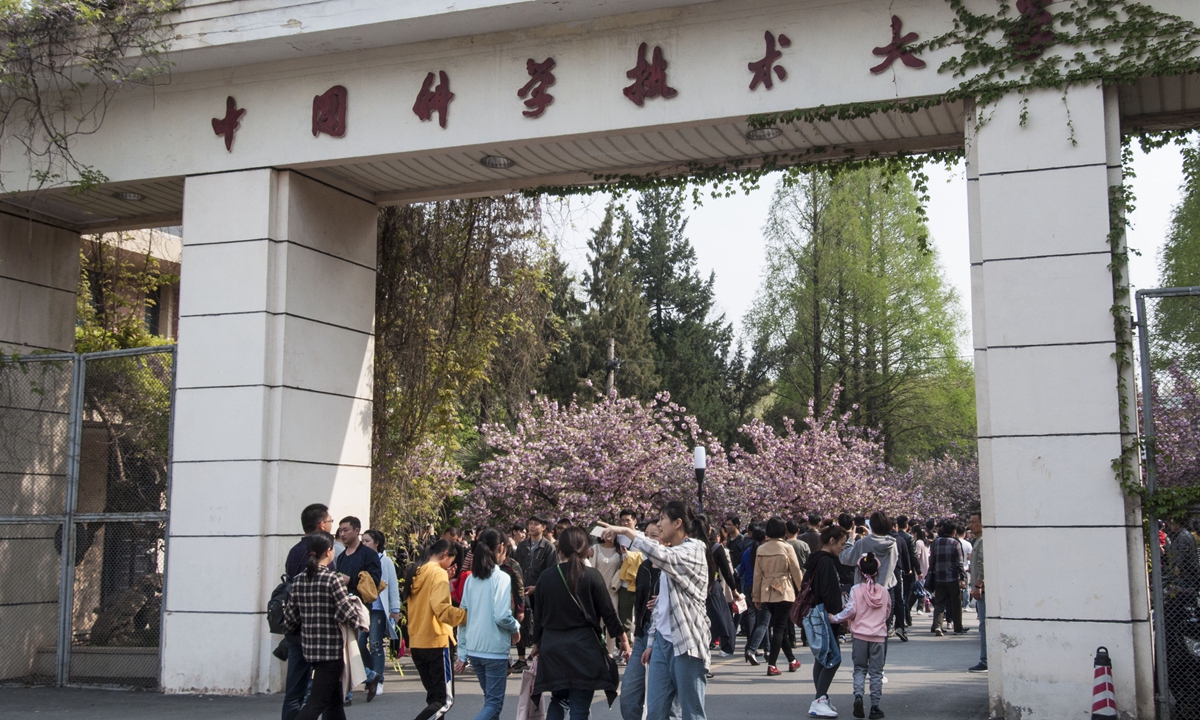
The University of Science and Technology of China (USTC) Photo: VCG
The University of Science and Technology of China (USTC) recently announced to add 100 undergraduate admission slots, with all the additional slots allocated to foundational disciplines and emerging engineering.
According to Wang Haobo, head of the university's recruitment office, the move aligns with the country's policy of enhancing undergraduate education and expanding enrollment.
The Chinese government's broader strategy to reform higher education this year has required enhancingthe quality of undergraduate programs and strive to add 20,000 slots in total, and accelerate the development of "Double First-Class" universities.
All of these additional slots of the USTC are allocated to foundational disciplines and emerging engineering with the aim to cultivate future pillars of society with "solid foundational knowledge, broad perspectives and high development potential," Wang was quoted as saying by The Paper.
Besides, the USTC has introduced several new "high-end, cutting-edge and in-demand" majors, focusing on disciplinary frontiers, major engineering technologies and human health issues, according to Wang.
For the first time, the USTC will separately enroll students for the quantum information science major through the national college entrance examination, also known as the Gaokao.
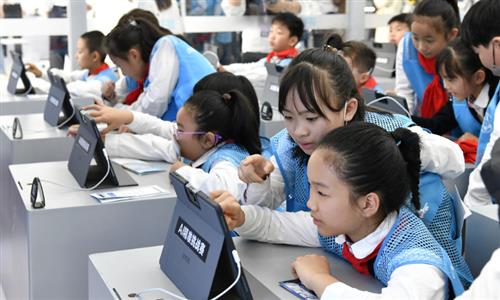
Additionally, the university will separately enroll students in the artificial intelligence (AI) and has established the school of AI and data science to cultivate innovative professionals tailored to the needs of academia and industry, Wang said.
This year's government work report reiterated the push for the "AI+" initiative, underscoring interdisciplinary studies and AI as key future priorities.
In March, prestigious universities, including Peking University, Tsinghua University had Renmin University of China, have taken similar steps.
Peking University announced it will increase its undergraduate enrollment by 150 spots in 2025, with the new admissions plan focusing on areas of national strategic importance, fundamental disciplines and emerging frontier fields.
Tsinghua University planned to increase its undergraduate enrollment by about 150 spots and establish a new general education college, with a focus on cultivating interdisciplinary talent in AI and other fields, according to the Xinhua News Agency.
The government has intensified efforts to foster high-end talent, aiming to boost industrial and economic growth. While China has the world's largest higher education system, gaps remain in cultivating top-tier innovators, with quantity and quality still lagging behind global standards, Wang Peng, an associate research fellow at the Beijing Academy of Social Sciences, told the Global Times.
With the acceleration of technological advancements, especially in the context of rapid advancements in AI, demand for talent development has become more stringent, Wang added.
RELATED ARTICLES