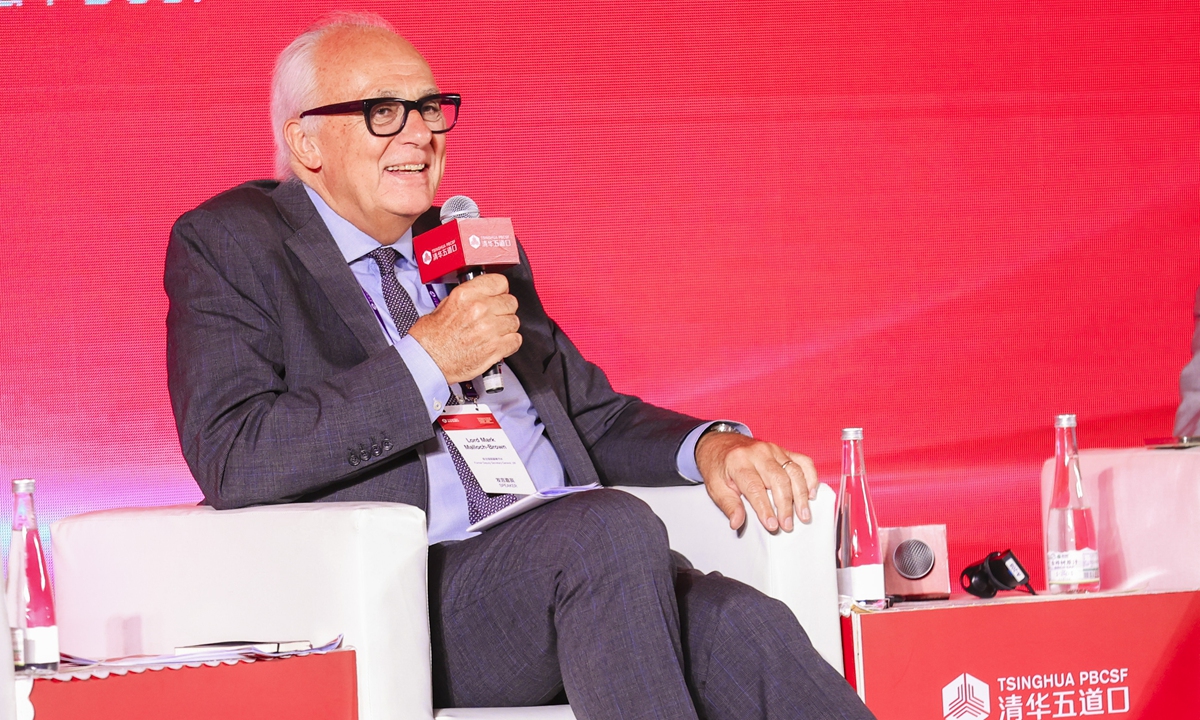
Mark Malloch-Brown Photo: Courtesy of Tsinghua PBCSF
This alternative, promoted by the new US administration, envisions a Cold War-style arrangement of spheres of influence led by major powers. It would almost certainly result in significantly lower global growth and development, increased political instability, and a failure to address critical global issues such as climate change, or to stand firm in defense of the multilateral system.
The challenge now falls to the rest of the world, including China, Europe, and the developing world as to whether to accept this new framework for global political and economic relations or to stand steadfast in defense of the multilateral system. In this context, it is crucial for China and Europe to remain resolute in upholding the multilateral framework.
For years, discussions at institutions like the World Bank, the IMF, and the UN have centered on the need to redistribute power away from excessive reliance on the US within these institutions. There has been debate about how this increased ownership should be distributed, including what roles China, other developing countries, and Europe should play to enable this shift.
While there was no agreement on the precise structure of a new ownership model, there was a prevailing view that the US would likely remain the dominant influence for some time. However, the health and legitimacy of these institutions demanded a rebalancing of power and a more decentralized ownership structure.
At the moment, the US administration has signaled its desire to lessen its role in multilateral institutions, though arriving earlier and in a more rushed and crisis-like manner than anticipated. Yet this presents an opportunity to reset the international system to better reflect today's distribution of economic and political power, with China poised to make more contributions in this reshaping process.
In recent years, China has played an increasingly prominent role in reinforcing and upholding the multilateral framework worldwide, earning strong support from the international community and aligning with its own interests. A strong multilateral system better serves the interests of both China and the international community, with evidence consistently demonstrating China's firm commitment to this objective.
One manifestation of this effort is that China is actively expanding connectivity and mutually beneficial cooperation with emerging markets. These partnerships with regions, such as Asia, Africa and Latin America, exemplify its growing role as a vital partner to many developing countries. Brazilian President Luiz Inácio Lula da Silva, together with other Latin American leaders, recently visited China, where both sides adopted the Beijing Declaration and a joint action plan to enhance cooperation in key areas, highlighting their deepening ties.
Chinese companies are also expanding their presence in these nations. For example, a company I visited in Beijing, which is a leading provider of telephone hardware and software to African and Asian markets, is now moving into Latin America. The company produces goods and services tailored to the specific needs of its clients, reflecting a whole new generation of Chinese innovation and trade partnerships. These efforts, often taking place within the framework of the Belt and Road Initiative, foster healthy trade relationships that benefit not only China and its partners but the global economy as a whole.
While US tariff policies pose certain challenges to the Chinese economy, it must be noted that the US market accounts for about 15 percent of China's exports - a significant market, but not the entirety of its trade. As long as other countries in the world continue to uphold fair and open trade practices and refrain from imposing third-party trade barriers, global trade system will not suffer fundamental harm.
In May, the world's two largest economies held trade negotiations and announced a temporary "ceasefire" in the trade war, with the most extreme tariffs rolled back. However, due to ongoing uncertainties, the world is hoping that both sides can reach a further agreement to substantially lower tariffs while addressing the underlying trade issues that sparked this tariff conflict.
The major challenges in the current global economy stem from imbalances in areas such as trade, investment and debt. Although increased competition in the global economic sphere is likely, the light at the end of the tunnel is clear: a multilateral, agreed-upon solution that addresses the core imbalances in the world economy - not just trade issues but also the high levels of debt in many countries and their lack of access to capital and development finance. Only a comprehensive multilateral solution will ensure a stable and equitable global economy.
The article was based on an exclusive interview conducted by the Global Times with Mark Malloch-Brown, former deputy secretary-general of the UN and former administrator of the UN Development Programme (UNDP), during the 2025 Tsinghua PBCSF Global Finance Forum.
RELATED ARTICLES