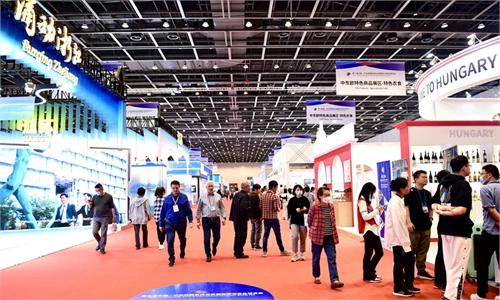
9th China-South Asia Expo to open on larger scale as foreign businesses show growing interest in Chinese market
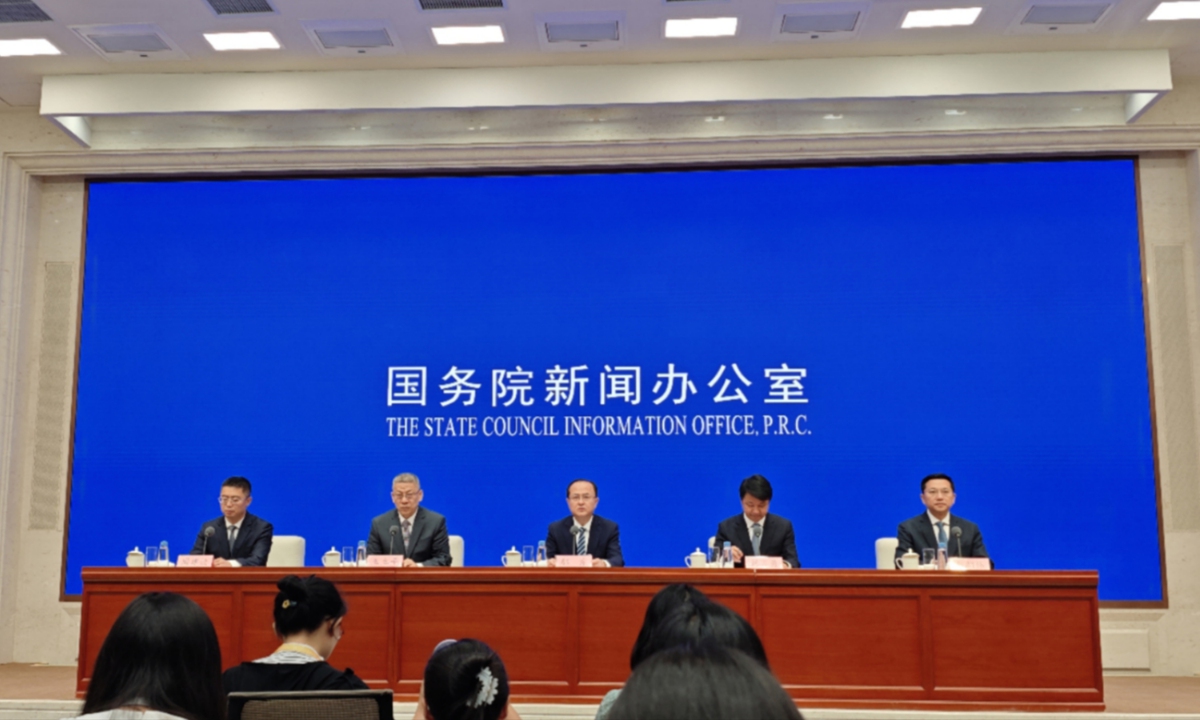
A press conference is held by the State Council Information Office in Beijing on June 6, 2025. Photo: Yin Yeping/GT
China is willing to strengthen its already broad ties with major business associations and trade and investment promotion institutions in South Asian countries, carry out trade and investment promotion activities, and continuously expand its circle of friends in the region, Vice Minister of Commerce Yan Dong said on Friday.
The remarks were made at a press conference held by the State Council Information Office on Friday to reveal details about the upcoming 9th China-South Asia Expo, which will take place in Kunming, Southwest China's Yunnan Province from June 19 to 24. Co-hosted by the Ministry of Commerce and the Yunnan provincial government, the expo will be one of the most important events for economic and trade exchanges between China and South Asian nations this year, Yan said.
Amid rising unilateralism and protectionism in global trade, China remains committed to sharing its market opportunities with businesses worldwide, with the upcoming China-South Asia Expo serving as a clear example of this approach and reflecting the joint efforts of China and regional countries to strengthen cooperation and uphold multilateralism, Liu Zongyi, director of the Center for South Asia Studies at the Shanghai Institutes for International Studies, told the Global Times on Friday.
Among the more than 1,400 domestic and international companies registered to participate, over 120 are well known enterprises including Fortune Global 500 firms, China's Top 500 companies, and leading industry players, marking a 36 percent increase compared to the previous expo, according to Yan.
This year's expo features Sri Lanka as the theme country, with Thailand, which is celebrating the 50th anniversary of diplomatic relations with China, invited as the special partner country, said Li Chaowei, director of the Yunnan Provincial Department of Commerce, at Friday's press conference.
The expo also provides a broad platform for showcasing products from South Asian countries, with two South Asia pavilions offering nearly 800 booths. India and Pakistan have the largest presence, with each having 140 booths, the official said.
In addition, Southeast Asia and international pavilions have been set up. So far, enterprises from 54 countries and regions have actively registered to participate, covering all South and Southeast Asian countries, said Li.
"This regional expo, now in its ninth edition this year, has seen a continuous increase in the number of participants and delegations. This fully reflects the growing recognition and enthusiasm of Asian countries for the event, as well as the importance of Chinese products and the market," Liu said.
Liu also noted that the event plays an important role in promoting economic and trade exchanges between China and South and Southeast Asian countries, and has become a key platform for advancing regional cooperation and deepening mutually beneficial partnerships.
China has deepened pragmatic cooperation with South Asian countries across various fields, maintaining strong momentum in economic and trade exchanges. In 2024, the trade volume between China and South Asian countries approached $200 billion, doubling over the past decade with an average annual growth rate of about 6.3 percent, according to Yan, who also gave examples of South Asian products like Nepalese cashmere, Afghan lapis lazuli, Indian jewelry, and Sri Lankan tea and spices, which are all highly appreciated by Chinese consumers.
Moreover, through mechanisms such as the Regional Comprehensive Economic Partnership (RCEP), China has implemented zero-tariff policies for various imported goods, sharing Chinese opportunities with the regional countries.
Regarding future plans to expand economic and trade cooperation between China and South Asian countries, Yan said efforts will be made to strengthen policy communication and exchanges.
This includes making full use of platforms like the China-South Asia Expo to build channels for mutual learning, innovative ideas, and consensus building among all parties. In addition, new areas of cooperation will be explored. For example, on the basis of consolidating traditional cooperation in agriculture, infrastructure and energy and minerals, efforts will be made to expand cooperation in emerging fields including energy transition, the digital economy, low-carbon development, and intelligent manufacturing, with a shared goal of maintaining stable production and supply chains, the vice commerce minister said.
Amid the lingering uncertainties and instabilities facing global trade, Yan called for strengthened regional cooperation to jointly uphold multilateralism.
"China is willing to actively broaden its independent opening-up and create more convenient conditions for South Asian countries to share China's vast market... At the same time, China and South Asian countries should practice true multilateralism, jointly oppose unilateralism and protectionism, and safeguard the multilateral trading system centered on the World Trade Organization," Yan said.
RELATED ARTICLES