Illustration: Xia Qing/GT
Editor's Note:
Monday marked the 50th anniversary of the establishment of diplomatic relations between China and the Philippines, a historically rich relationship that has, in recent years, faced growing tensions over the South China Sea issue due to provocations under the current Philippine administration. At this juncture, how should we reflect on and assess the trajectory of China-Philippines ties? And how should we envision the path ahead? The Global Times invited three experts to share their insights.
Bobby M. Tuazon, professor from the University of the Philippines and director for policy studies of the think tank Center for People Empowerment in Government
The Philippines' relations with China have been multi-faceted if not intricate accentuated by unresolved territorial disputes in the South China Sea. Both sides, however, agree that the maritime row is not the totality of their relations.
In 2016, China emphasized its initiative on the South China Sea maritime issue - "pursuing joint development while shelving disputes." China's foreign policy is guided by the Five Principles of Peaceful Coexistence, which emphasize mutual respect for territorial integrity and sovereignty, non-aggression, non-interference in each other's internal affairs, equality and mutual benefit, and peaceful co-existence. China also emphasizes its own security and development interests, while advocating for a peaceful international environment.
In contrast, the Philippines, by and large, lacks well-defined strategic goals - except in relation to the US, which is underpinned by the 1951 Mutual Defense Pact and the 1998 Visiting Forces Agreement, allowing US forces to operate within the country.
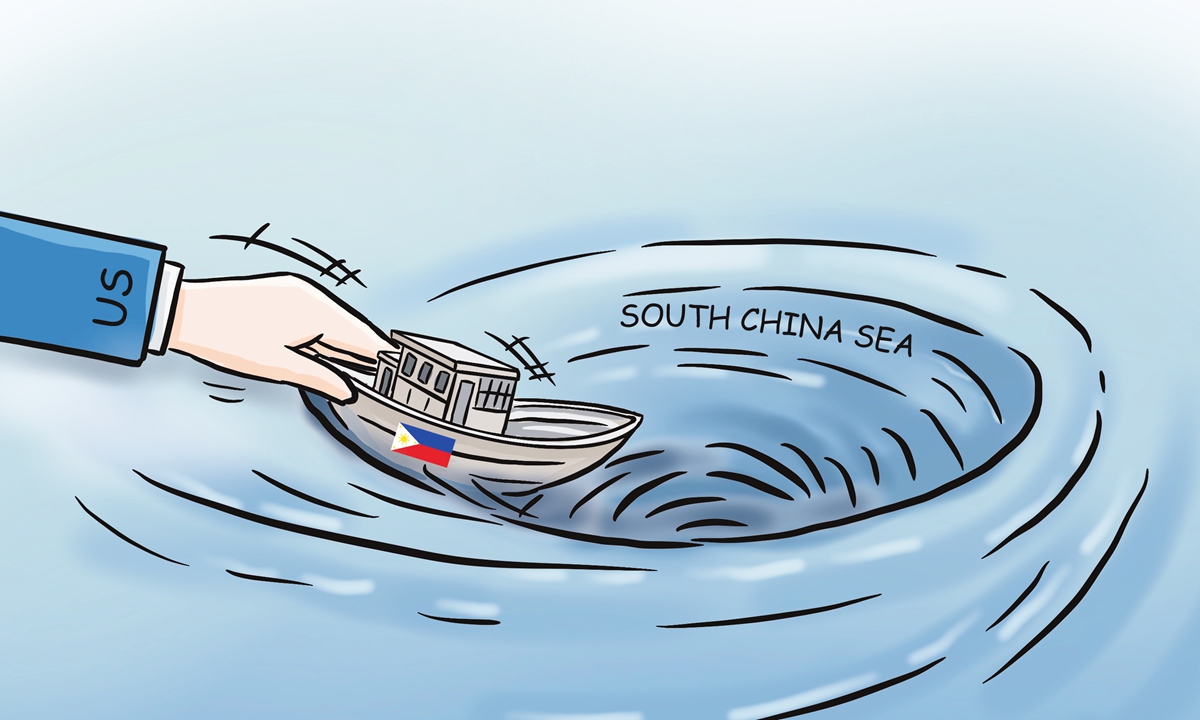
American imperial power has forced the Philippines to remain dependent primarily on security matters; through various defense alliances since 1950, it has served as a core factor for instability in the Southeast Asian region. The Marcos Jr. administration is oblivious to the fact that it has made the Philippines a satellite of the US in modern times by tightly embracing defense alliances against China, thus locking the country's national security interest to its colonial master.
This is a sad note as we mark the 50th anniversary of China-Philippine relations.
With war or instability, nobody wins. Instead of being tied to the US, the Philippines should use the existing bilateral mechanisms established by the two Asian countries to resolve common irritants. The country's foreign and defense policy team should, once and for all, disallow any form of foreign interference in the country's critical domestic matters.
Like any relationship, China-Philippine relations have their ups and downs, but like day and night, there are always bright prospects for making such ties brighter and better after a night of disquiet.
Ma Bo, an associate professor at the School of International Studies at Nanjing University
On Saturday, Philippine President Marcos Jr. reaffirmed the Philippines and China's enduring friendship and recognized the two nations' shared history, as he led the ceremonial lighting of the iconic Jones Bridge in Manila. Yet, against this backdrop, we cannot ignore the fact that in recent years, the South China Sea issue has become a major obstacle preventing further deepening of this relationship.
The results of the Philippines' recent midterm elections have ushered in a new political landscape featuring a tripartite balance among the camps of President Marcos Jr., the faction of former president Rodrigo Duterte, and the liberal opposition. While the coalition of Marcos Jr. retains a certain advantage, the political resurgence of the Duterte camp is evident, and the growing strength of the liberal opposition reflects Philippine society's strong demands for reform and policy adjustments. The current administration is in urgent need of deep reflection on both domestic and foreign policy - particularly its unconditional pro-US orientation, which neither serves the national interest nor supports the country's long-term development.
The South China Sea situation is becoming increasingly complex, and it is evident that the US government is attempting to position the Philippines as its strategic proxy in Southeast Asia. Such maneuvering poses a serious threat to regional peace and directly undermines the Philippines' strategic autonomy and national interest. It increases the risk of the Philippines being drawn into regional conflicts and undermines its long-term prospects for economic development and regional cooperation.
As permanent neighbors, China and the Philippines share a common interest in properly managing disputes and avoiding escalation due to miscalculation. China has always regarded good-neighborliness as a central pillar of its regional diplomacy. It remains committed to resolving disputes through peaceful consultation, promoting connectivity, trade and investment, and cultural exchanges, and advancing practical cooperation under the ASEAN framework to enhance the stability and sustainability of bilateral ties. At the same time, China will not tolerate malicious provocations from anti-China political forces and their proxies within the Philippines and will respond firmly and legitimately when necessary.
While challenges remain in the current state of China-Philippines ties, cherishing historical and cultural bonds helps lay the groundwork for practical cooperation and regional peace and prosperity. It is hoped that the Philippines will demonstrate strategic wisdom in navigating its complex political environment - avoiding emotional or confrontational stances - and work with China in a pragmatic and forward-looking manner to bring bilateral relations back onto the right track of mutually beneficial cooperation and jointly realize long-term peace, stability and development in the region.
Anna Malindog-Uy, director and vice president for external affairs of the Asian Century Philippines Strategic Studies Institute
Half a century ago, both nations took a bold step to establish formal ties, a decision rooted in a shared vision of regional cooperation, mutual development, and neighborly mutual trust and respect. Over the decades, the bilateral relationship has blossomed in many areas, including trade, tourism, infrastructure, education and people-to-people exchanges, a testament to the vast potential of synergy between the two nations.
But like many enduring relationships, the journey has not always been smooth. The last few years have witnessed increased tensions, especially surrounding the South China Sea. These maritime disputes have strained goodwill and challenged mutual trust, amplified by geopolitical rivalries and shifting regional alliances. Yet, these challenges must not define the entire trajectory of the relationship. To do so would be to overlook the decades of goodwill, shared heritage and cooperation that form the bedrock of China-Philippines ties.
This golden anniversary is not just a ceremonial marker. It is a moment of reflection and renewal. It calls on both nations to re-anchor their relations on principles of mutual trust and respect, peaceful coexistence, and dialogue. Strategic differences are real, but they must not overshadow the larger horizon of win-win cooperation. Neighbors do not always agree, but they must learn to live, grow, agree to disagree sometimes and prosper together.
Moreover, the Philippines stands to benefit from constructive engagement with China in trade, technology, agriculture, digital technology, renewable energy, infrastructure and tourism. Likewise, China benefits from a stable, cooperative and economically vibrant Philippines. This is the logic of interdependence and regional peace. The task now is to ensure that diplomacy prevails over discord and that disagreements are managed without undermining broader ties.
The next 50 years must be envisioned not as a repeat of past missteps but as an opportunity to build a more resilient, respectful and responsive relationship that contributes to peace in the Asia-Pacific and upholds the aspirations of both peoples.
On this golden anniversary, may both Manila and Beijing choose the path of wisdom over reaction, partnership over provocation, and long-term friendship over short-term friction.
RELATED ARTICLES