China-EU trade maintains growth momentum in Jan-May, up 2.9% y-o-y; experts say cooperation remains resilient despite headwinds
Bilateral cooperation resilient despite headwinds
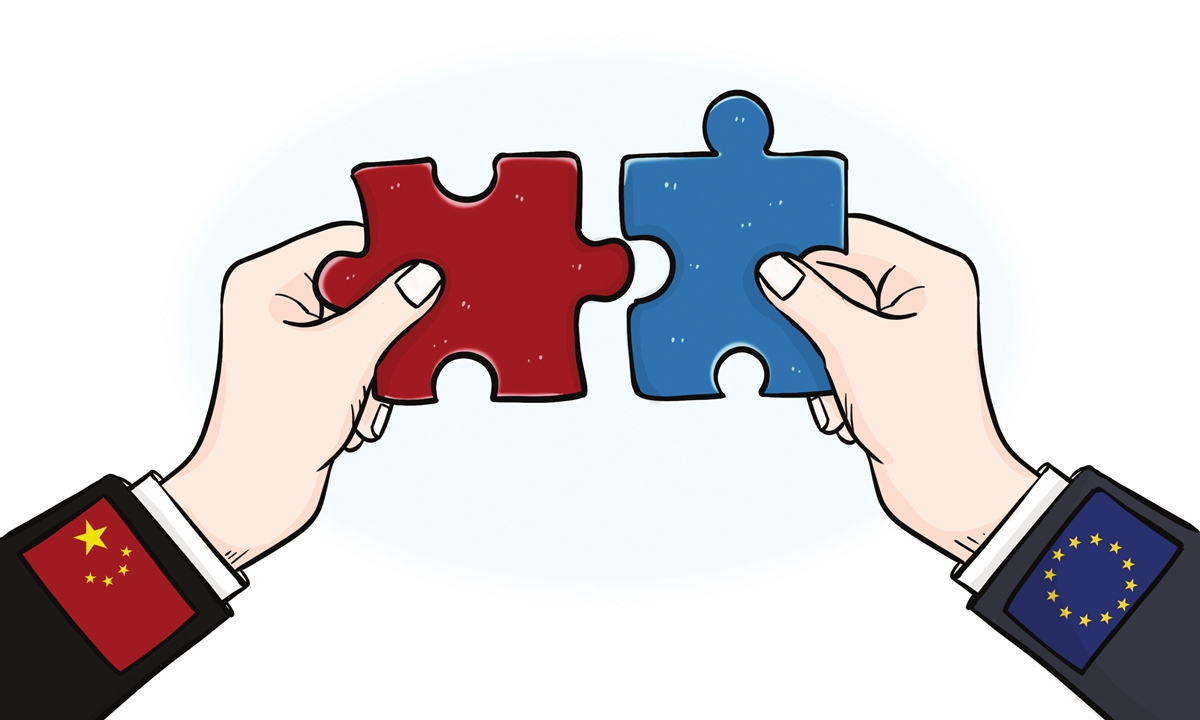
China EU relations
The EU remained China's second-largest trading partner in the first five months of 2025, with trade totaling 2.3 trillion yuan ($317 billion), up 2.9 percent year-on-year and accounting for 12.8 percent of China's total, according to data released by the General Administration of Customs on Monday.
Exports to the EU stood at 1.57 trillion yuan, a 7.7-percent increase, while imports stood at 728.33 billion yuan, down 6.1 percent year-on-year.
Despite some headwinds, experts said that the figures reflect the strong resilience of China-EU economic relations, as the two sides share a high degree of complementarity and have developed a deeply symbiotic relationship over the years. They said that China-EU economic and trade relations have become an important source of stability for both sides at a time of rising uncertainty in the global economy and international trade.
Cui Hongjian, director of the Department of European Studies at the China Institute of International Studies, told the Global Times on Monday that despite some difficulties in China-EU relations in recent years, the latest customs data reflects strong resilience in bilateral economic ties. "These challenges must also be understood in the broader context of a sluggish global trade environment, which has been weighed down by geopolitical tensions and economic uncertainty," he noted.
"Both China and the EU are likely to place even greater emphasis on bilateral economic ties, particularly the EU, which increasingly recognizes the significance of its economic relationship with China for its own development," Zhang Jian, a vice president of the China Institutes of Contemporary International Relations, told the Global Times on Monday.
Speaking on business cooperation, Cui noted that European businesses - driven by market demand and economic pragmatism - continue to pursue more cooperation opportunities with their Chinese counterparts, as many Chinese and European enterprises are part of the same industrial chains.
On Saturday, China's Ministry of Commerce said in a statement that the Chinese side and the EU held focused, candid, and in-depth discussions on urgent and important issues during Chinese Commerce Minister Wang Wentao's meeting with EU Commissioner for Trade and Economic Security Maros Sefcovic in France on June 3.
The issues included the EU's anti-subsidy probe into Chinese electric vehicles (EVs), China's anti-dumping probe into EU brandy, and export controls. Both sides called on their working teams to intensify efforts in preparing for this year's major China-EU economic and trade agenda.
Regarding EVs, the price commitment negotiations between China and the EU have entered the final stage, though further efforts are still required from both parties, according to the statement.
As for the brandy case, the statement noted that French companies and associations have submitted a price undertaking application to China and reached an agreement on core terms with the Chinese investigation authority. The Chinese side is reviewing the full text and plans to issue a final ruling, including the price undertaking, by July 5 if approved.
Cui highlighted the potential for both sides to focus on upgrading traditional areas of cooperation - particularly in manufacturing - while expanding into strategic emerging sectors such as smart manufacturing, green transition, the digital economy, and artificial intelligence. "The two sides share highly aligned policy goals and complementary industrial strengths. The key lies in managing competition constructively and transforming it into a catalyst for deeper cooperation," he said.
When meeting with French Minister Delegate for Foreign Trade Laurent Saint-Martin on the sidelines of the WTO ministerial meeting in Paris, Wang noted that China is willing to work with France and the EU to address global uncertainties with the stability of China-EU cooperation, and set a benchmark for other countries.
"Through closer coordination, China and the EU can reinforce multilateralism and more effectively counter unilateral actions such as US tariff hikes," Cui said. "In the long run, the most effective way to avoid repeated disruptions stemming from Washington's policy shifts is to build a stable, rules-based, and sustainable framework for cooperation."
RELATED ARTICLES