Illustration: Chen Xia/GT
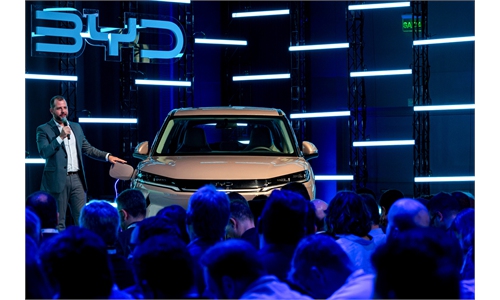
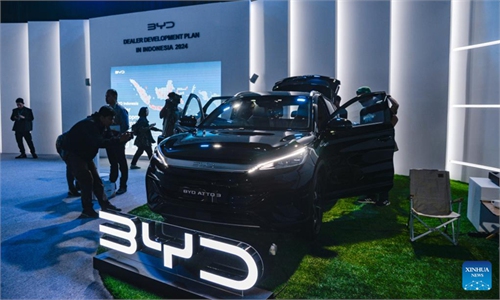
Chinese electric vehicle (EV) manufacturer BYD is set to launch its "Dolphin Surf" in the UK this week, with a projected starting price of just 18,000 pounds (about $23,000). In reporting this news, a BBC article initially acknowledges the fact that "China's electric cars are becoming slicker and cheaper," only to pivot back to the old tune of hyping up "hacking concerns." Classic BBC.The BBC and some other media outlets are rolling out a predictable set of suspicions: Will Chinese EVs leak data back to Beijing? Will Europe's industry be crushed by cheap imports? To some in the West, the rise of Chinese EVs is no longer seen as a mark of progress, but as a kind of "invasion." Beneath this shift lies a psychological unease - the discomfort of falling behind as a technological frontrunner, and an unwillingness to face the new reality of global competition.
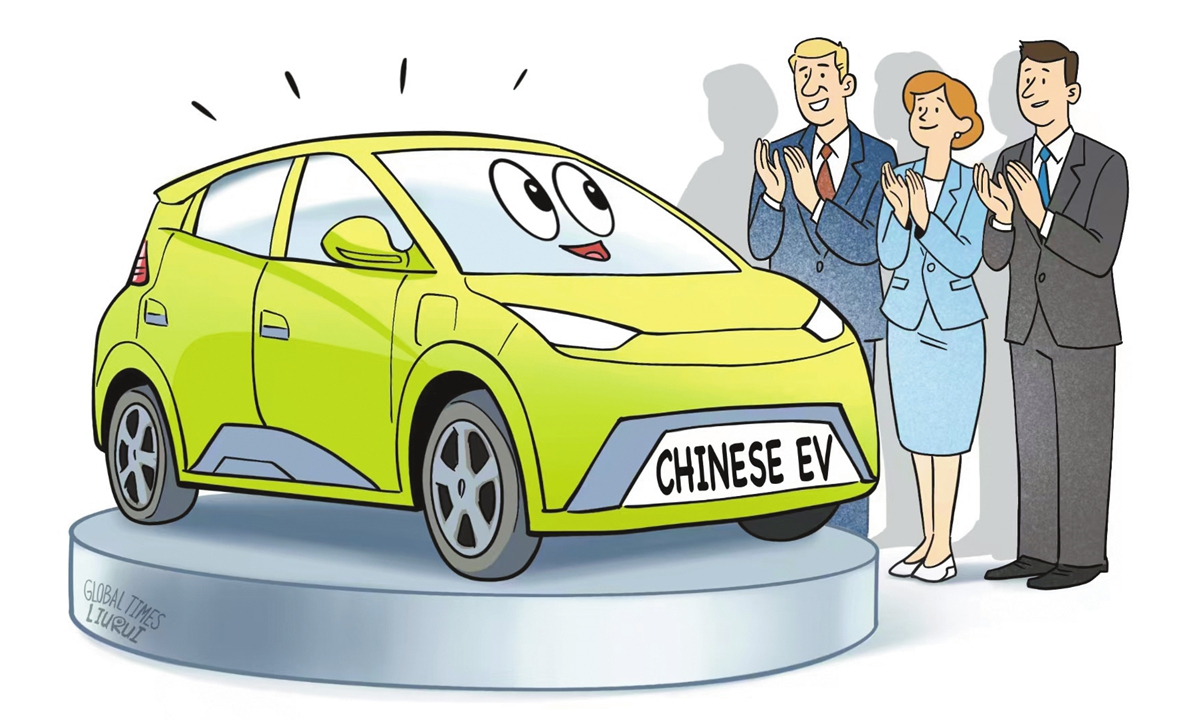
The development of Chinese EVs should be a boon for the global green transition. Yet not only the BBC, but many Western media outlets have framed it as a "security threat," "economic threat," or even a "political tool." They persistently cast doubt and spread pessimism - but the results speak for themselves: their warnings have proven to be hollow. Even the BBC had to concede in its own reporting: "For consumers, it should be good news."
Apparently, if a technological breakthrough doesn't come from the West, it's not seen as progress. If a green innovation originates in China, it's rebranded as "infiltration." This is geopolitics in disguise.
Jason RB Smith, host of YouTube channel The Bridge to China, did not hold back on social media. He directly called out a recent CNBC article titled "China's EV Race to the Bottom Leaves a Few Possible Winners." He wrote on X that "Does CNBC train its 'journalists' to smear China, or do they just exclusively hire China-haters. China is the reason solar energy and EVs are finally affordable."
What is more eye-catching is that Smith's words attracted support from netizens on X. One wrote, "Obviously, this lot have their conclusions written first, then work their way back up to the reasoning, every single time." This reflects growing public awareness and criticism of the Cold War-style ideological narratives pushed by Western media.
So, what exactly are these media outlets doing?
"There is no doubt that Chinese efforts in building modern, affordable, high-quality EVs have been represented in a negative way by Western media," Smith told the Global Times.
"It is deplorable," he added. Given the overwhelmingly positive response to Western companies, like TESLA, which had received ovations from the media before China's entrance into the market, suddenly, writers and journalists went from praising anything EV to asking, "but is there a deeper cost?" Smith contrasted the West's double standards in its approach.
This shift in tone is revealing. The "cost" is nothing more than the discomfort of an old system resisting the rules of a new game. What truly worries them isn't "cybersecurity," but the erosion of their dominance over the global market narrative.
The rise of Chinese EVs didn't happen overnight. It is the result of long-term policy guidance and relentless R&D by companies like BYD. The company has invested billions over the years, achieving breakthroughs in battery technology, smart manufacturing and energy efficiency. BYD had already amassed over 35,000 R&D employees by 2020, with over 32,000 global patent filings recorded by April 2021. What Western media describe as "dumping" is in fact the natural outcome of relentless innovation, not reckless subsidies or artificial price wars.
In essence, the reason China can offer high-quality EVs at affordable prices is because of genuine technological progress. These are the fruits of green development. If even this kind of progress must be viewed through a lens of suspicion, how are we supposed to tackle climate change together? If geopolitical thinking continues to override global cooperation, how can the green transition ever truly succeed?
As Smith said, "Humanity owes China a debt of gratitude for saving the Earth." At the end of his interview, he said, "China's new model is the most dynamic for building the future for which we all have hoped."
Chinese EVs will continue to enter more international markets. Their popularity, especially in the Global South, is the clearest and strongest rebuttal to the Western smear campaign.
RELATED ARTICLES