Paul Keating is right, US AUKUS review might very well ‘save Australia from itself’
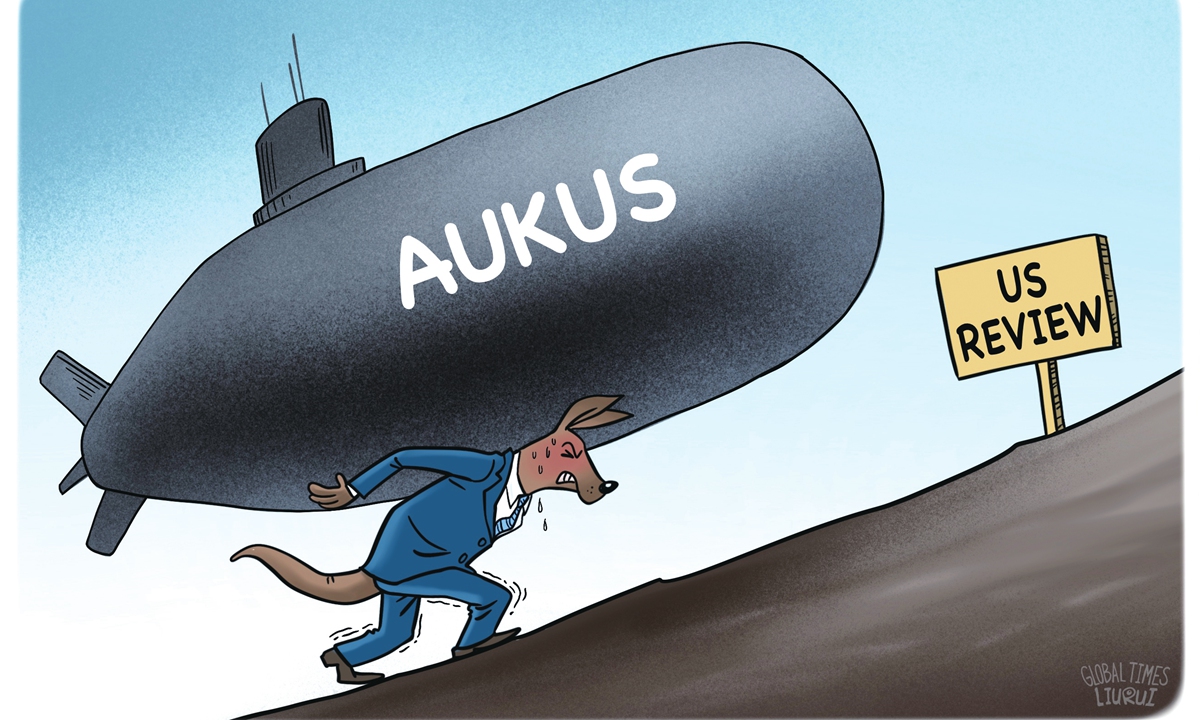
Illustration: Liu Rui/GT
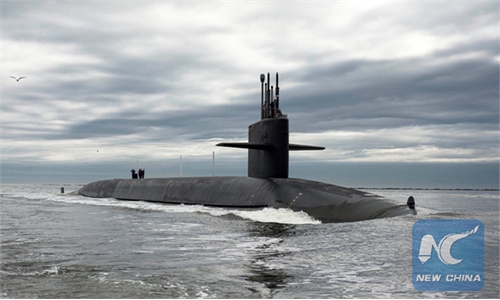
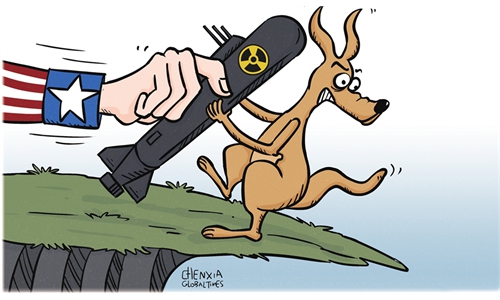
The Financial Times cited six sources on Wednesday reporting that US Under Secretary of Defense for Policy Elbridge Colby is leading a review of the AUKUS nuclear submarine deal with the UK and Australia to determine whether the US should scrap the project. The report noted that this move has triggered anxiety in Canberra.Some Australian media outlets were quick to respond with headlines like "not to worry" and "not a harbinger of collapse." The eagerness to defend the project instead made the anxiety quite obvious. However, other voices emerging from Australia have proven more compelling and harder to ignore.
Australian former prime minister Paul Keating issued a statement on Thursday, saying that "the review makes clear that America keeps its national interests uppermost. But the concomitant question is: why has Australia failed to do the same?" Another former prime minister Malcolm Turnbull said Australia should "wake up" and review the agreement itself. "The UK is conducting a review of AUKUS. The US department of defence is conducting a review of AUKUS. But Australia, which has the most at stake, has no review," he wrote on X on Thursday.
Such perspectives were echoed by some Australian netizens, one stated, "Let's hope the US DOES walk away from it," while another noted, "It would have been better if Australia terminate AUKUS as it demonstrates our sovereignty."
Perhaps some organizations and individuals may express disappointment or even shock over the US review, but clear-headed Australians have likely breathed a quiet sigh of relief. For those anxious about the US review, this may also be an opportunity to confront the reality that Australia has always been the party paying the highest price with little gain in this deal.
If the US abandons AUKUS, Australia's chances of obtaining submarines will remain unchanged - they were very unlikely to receive any anyway. In recent years, Australian observers have made it clear: Australia won't own AUKUS submarines but will instead host a US naval base with American-controlled submarines. This hollowing of Australia's autonomy is turning the country into a forward operating garrison for US global operations and future conflicts - offering no real security, only greater risk.
If the US does not walk away from AUKUS, the situation won't be any better. The core reason behind this review is that the US can no longer conceal a harsh reality: It's questionable whether its industrial capacity can produce enough submarines to sustain the project. Colby cautioned last year that submarines are a scare, critical commodity and the US industry couldn't produce enough to meet domestic demand. A Pentagon spokesperson also said the department was reviewing AUKUS to ensure that this initiative is aligned with "America First" agenda.
Some observers suggest following this review, the US is likely to demand more from Australia in the AUKUS project. Warwick Powell, an Australian scholar, told the Global Times, "Australian subimperial fealty is being tested. In an America First frame, the US is likely to demand more from Australia without providing any further guarantees."
He further stated that it's conceivable the US will first increase demands on financial contributions from Australia, and second, at best offer access to submarines captained by the US navy and based out of Australian ports. For critics of AUKUS, this would confirm Australia's abandonment of any pretense of national security autonomy and sovereignty.
Chen Hong, a professor and director of the Australian Studies Centre at East China Normal University, told the Global Times that Australia, as an island nation surrounded by ocean, enjoys a natural layer of security. In this context, advancing the AUKUS project amounts to planting the seeds of future military conflict - bringing risks not only to Australia itself but also to regional peace and stability. Moreover, given the current state of Australia's economy, it is hardly in a position to shoulder the enormous costs required to sustain such a project.
China certainly is not a fan of AUKUS, as it undermines peace and stability in the region. However, China is far from alone; many countries across the region have also voiced concerns or outright opposition to the pact.
After the Pentagon launched a review of the AUKUS nuclear submarine deal, Western media rushed to quote American politicians speculating that it would "be met with cheers in Beijing." Ultimately, some American politicians appear overly fixated on how China might react with a zero-sum mentality - while overlooking a more urgent question: How much credibility does the US still have as an ally and partner?
RELATED ARTICLES