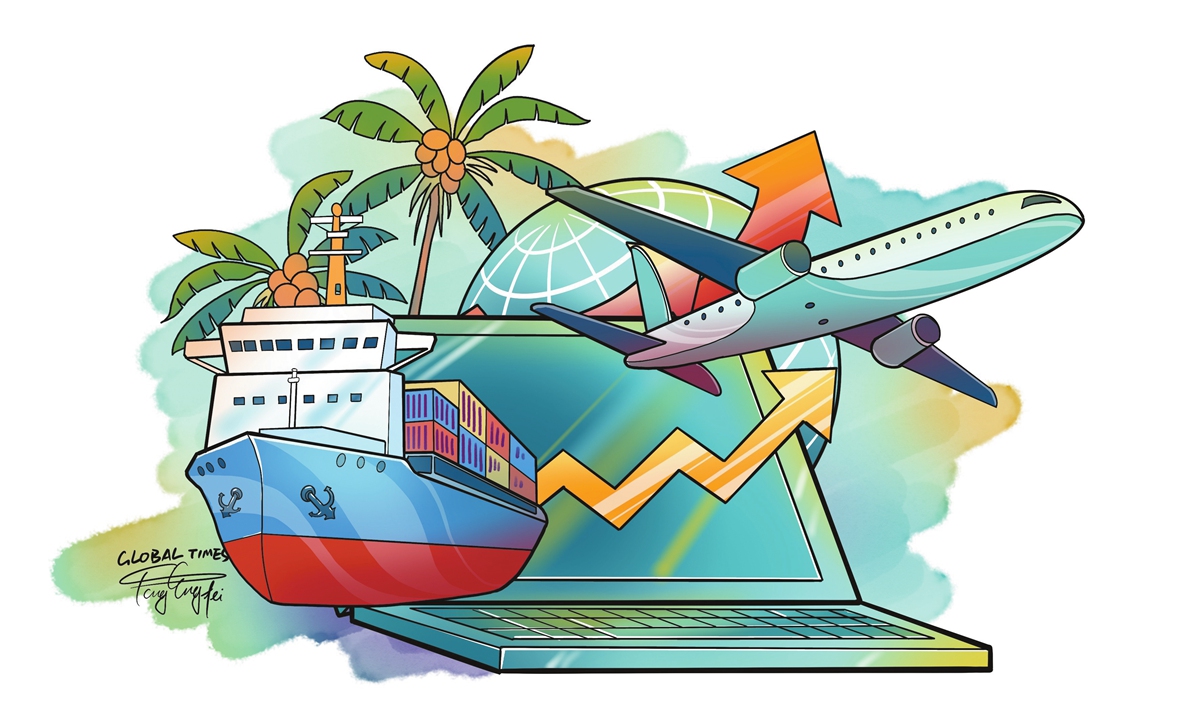
Illustration: Tang Tengfei/GT
South China's Guangxi Zhuang Autonomous Region has announced new measures aimed at promoting high-quality, innovative development in both services trade and digital trade, including initiatives such as building a China-ASEAN cross-border e-commerce livestreaming base.Guangxi's efforts to enhance digital trade cooperation with ASEAN come at a time when two major trends are converging: China's rapid digital trade expansion and the deepening of economic and trade ties with ASEAN. These developments reflect broader shifts in China's trade development, emphasizing digital transformation and high-standard opening-up despite rising protectionism in the global trade landscape.
As China advances its digital economy and expands new trade formats such as cross-border e-commerce, livestreaming commerce, digital payment systems, and logistics innovation, Guangxi - a key gateway to ASEAN - is leveraging its geographic and policy advantages to better integrate into regional supply chains and trade frameworks.
This region-specific push aligns with China's national agenda to modernize trade mechanisms and create a more inclusive digital economy. It also opens new avenues for ASEAN countries to tap into China's vast consumer market and digital infrastructure, reinforcing regional economic connectivity and collaboration.
One of Guangxi's key initiatives is the development of a China-ASEAN cross-border e-commerce livestreaming base. By introducing new models like "e-commerce + livestreaming," Guangxi aims to help ASEAN businesses better showcase and sell their products in the Chinese market, thereby enhancing their brand visibility and increasing export revenues.
Another example involves pilot programs for cross-border digital yuan payments. These initiatives are designed to provide a more secure, efficient, and cost-effective payment system, improving liquidity and reducing transaction risks - benefits that will help ASEAN businesses expand their exports to China.
The broader context of China-ASEAN trade cooperation adds weight to Guangxi's local efforts. China-ASEAN economic and trade cooperation is steadily gaining momentum despite global trade uncertainty. In the first five months of the year, ASEAN remained China's largest trading partner. Total bilateral trade reached 3.02 trillion yuan ($420 billion), up 9.1 percent year-on-year, accounting for 16.8 percent of China's total foreign trade, according to the People's Daily.
Digital trade is increasingly contributing to this mutually beneficial trade relationship, with vast potential ahead as the ASEAN digital economy continues to show strong growth momentum. The value of Southeast Asia's digital economy is set to soar from 240 billion pounds ($323 billion) today to a staggering 800 billion pounds by 2030, according to Startups Magazine based in London.
China's foreign trade is experiencing a clear digitalization trend, and this shift offers significant opportunities for both China and its trading partners, especially regional partners like ASEAN. The mutual effort to expand and deepen trade cooperation is expected to further unlock the vast potential of their economic and trade cooperation.
ASEAN stands to benefit enormously from deeper digital trade integration with China. The expansion of livestreaming commerce, online sales platforms, and logistics hubs in regions like Guangxi allows ASEAN products to enter the Chinese market more efficiently. Moreover, China's investment and expertise in digital infrastructure development can help ASEAN countries strengthen their own digital ecosystems.
Small and medium-sized enterprises, the backbone of many ASEAN economies, can particularly benefit from this trend. Cross-border digital platforms and improved payment systems enable them to engage in international trade with greater competitiveness and fewer barriers.
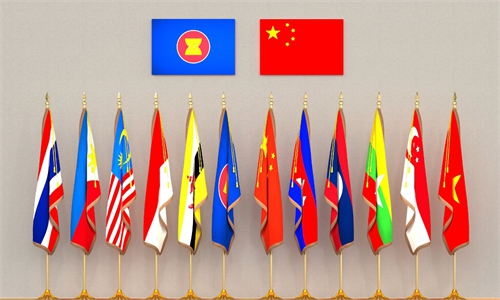
China and the 10 ASEAN countries have fully completed negotiations for the China-ASEAN Free Trade Area 3.0 - which includes cooperation in the digital economy, the green economy, and supply chain connectivity - to expand collaboration in future-facing digital and green sectors.
As China and ASEAN embrace digital transformation, Guangxi's initiatives serve as models of how local innovation can drive regional integration. With supportive policies, evolving trade infrastructure, and deepening economic ties, the China-ASEAN digital economy partnership is poised to unlock new levels of growth, inclusion, and shared prosperity in the years ahead.
The author is a reporter with the Global Times. bizopinion@globaltimes.com.cn
RELATED ARTICLES