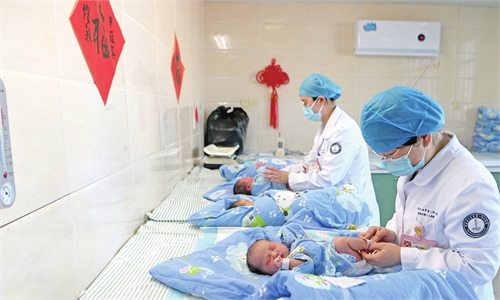
Premature infant born at weight of an apple survives after 100 days of hospitalization
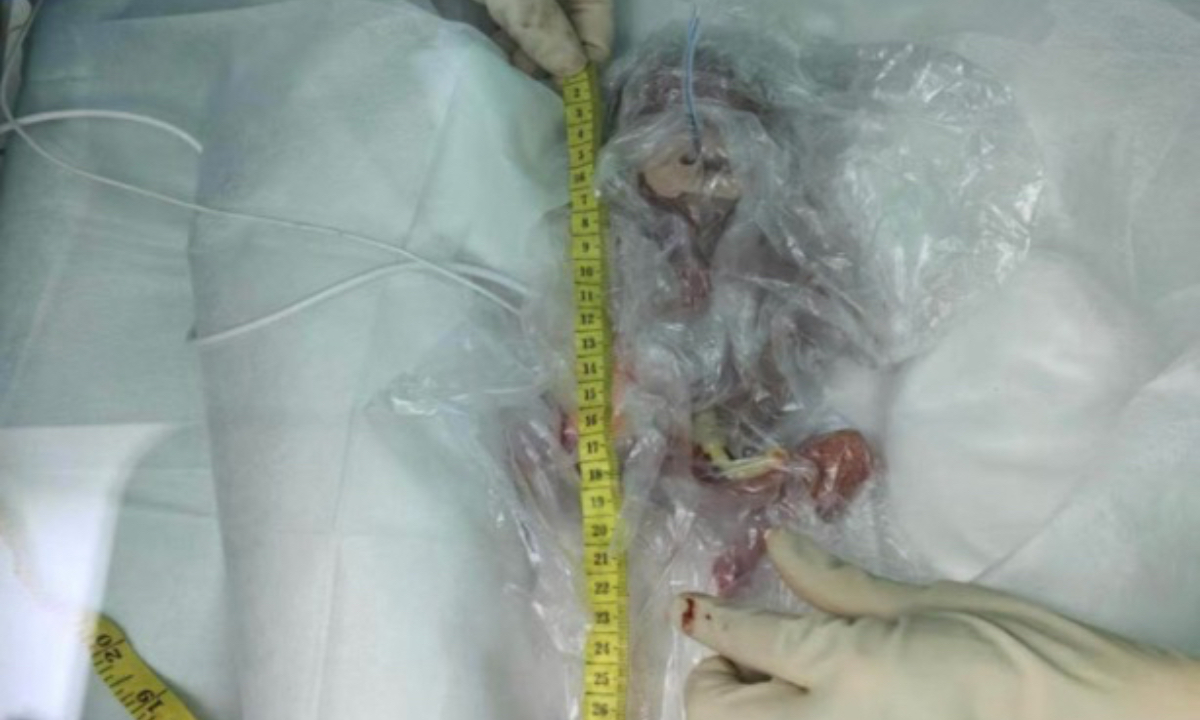
Newborn Ruirui measured only 20 cm at birth. Photo: Screenshot from media report
During a prenatal checkup at 26 weeks of pregnancy, doctors discovered that Ruirui’s mother had central placenta previa, severe intrauterine growth restriction (IUGR), and hyperechoic fetal bowel. The baby's size was equivalent to that of a 21 to 22 week gestation, the Southern Metropolis Daily reported.
After treatment showed no significant improvement, Ruirui's mother was hospitalized for further diagnosis and treatment. After thorough evaluation, doctors recommended early termination of the pregnancy due to the high risk of intrauterine fetal death.
On March 13, 2025, Ruirui was born at a gestational age of just 29 weeks, weighing a mere 380 grams – roughly the weight of an apple, the report said.
Medically classified as an Extremely Low Birth Weight (ELBW) infant, Ruirui’s organ systems were highly underdeveloped. To address this, doctors formed a dedicated medical team and made comprehensive preparations in advance.
As Ruirui's stratum corneum was undeveloped, leading to rapid heat evaporation, the medical team immediately started cling film wrapping combined with a multifunctional incubator to create an artificial uterine environment upon his birth. They also customized the delivery room temperature to prevent hypothermia.
The team closely monitored Ruirui's vital signs, blood glucose levels, infection indicators, and conducted imaging surveillance to avoid systemic infection.
The medical team also administered intravenous nutritional support including amino acids, lipid emulsion, glucose, as well as various vitamins and electrolytes. As a result, Ruirui’s weight increased from 380 grams at birth to 2.06 kilograms by the time of discharge.
Before discharge, Ruirui's cranial magnetic resonance imaging (MRI) and brain function monitoring showed no significant abnormalities. Ophthalmic screening for retinopathy of prematurity (ROP) also was normal.
Long-term follow-up is required after discharge to continue monitoring Ruirui’s growth and development, vision, hearing, neurobehavior, and other aspects.
Global Times
RELATED ARTICLES