China’s economic growth is boosted by strong tech innovations, offering resilience for multinational companies: KPMG
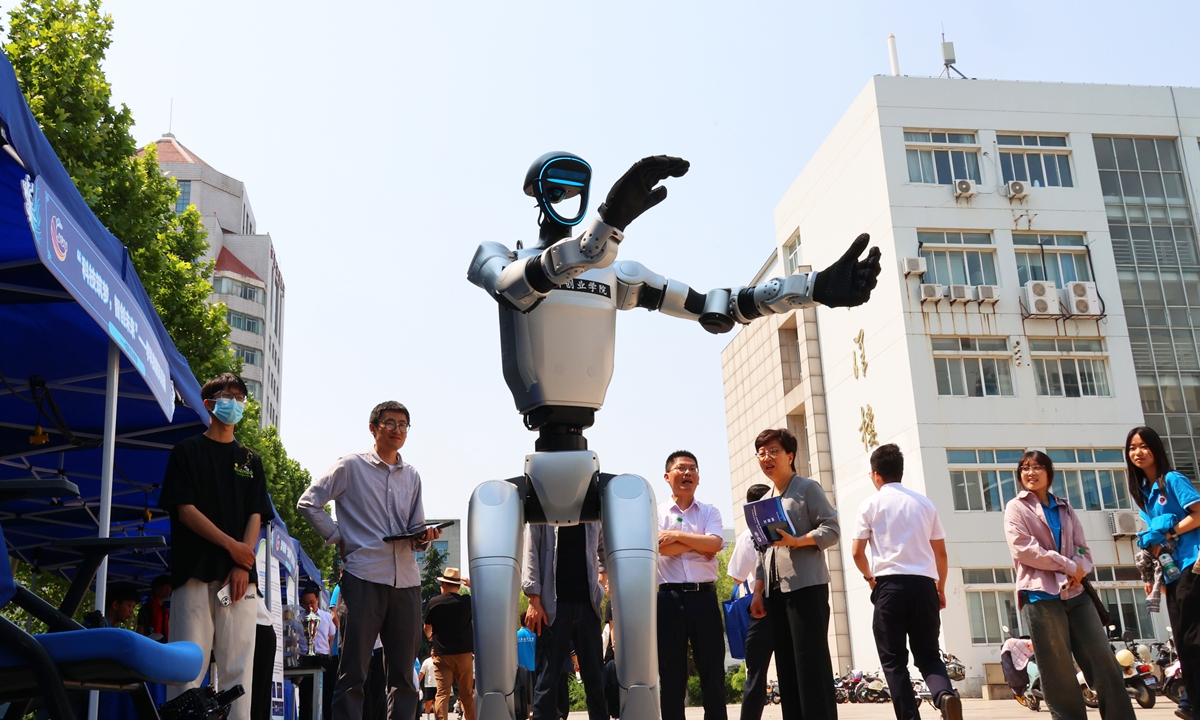
A humanoid robot performs at a carnival held at Jiangsu Ocean University in Lianyungang, East China's Jiangsu Province on May 28, 2025. Photo: VCG
China's ability to scale emerging technologies such as artificial intelligence (AI) positions it to drive strong and sustainable economic growth despite external geopolitical tensions, and the country's stable manufacturing supply chain offers resilience for multinational companies to do business, Norbert Meyring, head of Automotive and Industrial Manufacturing, ASPAC Region of KPMG, told the Global Times on the sidelines of the ongoing World Economic Forum (WEF) held in Tianjin on Tuesday.
"Attending this year's WEF underscores how innovation is reshaping China's economic resilience. Against global volatility, China's leadership in AI - which is evidenced, for example, by the fact that over half of global AI patents originate from China - signals a strategic pivot toward technology-led growth," Meyring said.
Driven by the country's strong policy support in technological innovation, and manufacturing sector advancement, China has made significant progress in the field of AI. Regarding technologies such as speech recognition, image processing, intelligent manufacturing, and autonomous driving, China is already at the cutting edge, Meyring said.
The country's economic fundamentals and primacy in industrial scale, infrastructure, and policy agility position it to harness AI and smart manufacturing as the transformative growth engine. For example, over 4 million 5G basic stations, crucial infrastructure that empowers AI, have been rolled out in China in 2024 alone, and the development of intelligent chips will also promote the flourishing development of more emerging industries. While global geopolitical volatility persists, China's advancements in industrial digitization and AI innovation fuels sustainable long-term expansion, according to Meyring.
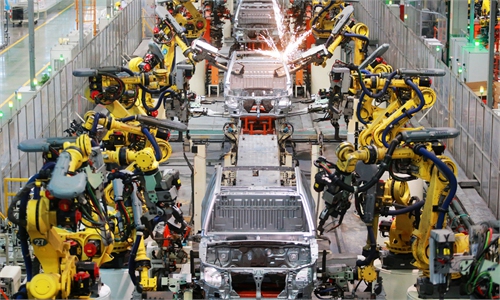
Some of the key growth levels include the modern manufacturing sector, which has seen the rise of smart factories which boost productivity in electronics, electric vehicles, and robotics; the green technology sector, disrupted by AI-optimized renewable energy systems and battery production; and the automotive sector, which is undergoing scale-driven cost reductions in autonomous vehicles and smart logistics, he said.
China's rapid advancement in these areas are poised to fundamentally reshape the global industrial landscape. By accelerating smart manufacturing and green energy adoption, China will drive down costs, set new efficiency benchmarks, and redirect supply chains toward tech-integrated production. Its scale in deploying AI-driven factories and renewable tech could establish de facto global standards.
To harness these shifts constructively, countries could prioritize three areas of cooperation. Firstly, countries could work on joint research and development frameworks which would allow for shared projects in quantum/AI ethics to prevent fragmentation, he said.
Secondly, countries could enable and facilitate talent circulation, which can be facilitated through Visa pathways for researchers and cross-border tech apprenticeships. Thirdly, countries could develop small and medium-sized enterprise (SME) bridges which would further enable funding joint ventures for green tech and AI startups, especially in emerging markets, Meyring said.
China's stable manufacturing supply chain offers critical resilience amid external volatilities. Against escalating trade tensions, logistical challenges related to global supply chain disruptions, and other factors, China's advanced infrastructure, skilled work force, and economic scale provide some levels of predictability. This reliability anchors global production networks when alternatives face higher costs or instability, he said.
For multinational companies, China's full-fledged industrial ecosystem enables continuity for essential goods such as electronics and green tech components, he added.
RELATED ARTICLES