People-centered rural governance
Exploring China's beautiful, harmonious countryside along Xi's footsteps
Editor's Note:
China Rural Revitalization magazine has published a series of articles on the rapid development and transformation of rural China. The articles reflect the arduous efforts of rural revitalization across the country, which is an important and genuine solution to China's rural economic development. In the future, articles selected from this series will be published.
Grassroots governance is the cornerstone of national governance.
President Xi Jinping has delivered a series of important expositions on grassroots governance. These provide essential guidance and a scientific blueprint for promoting the modernization of grassroots governance in the new era.
In some rural areas of Jiangjin District, Tongliang District and Yubei District of Southwest China's Chongqing Municipality, the spirit of Xi's important instructions on grassroots governance is being thoroughly studied and implemented. These areas have actively promoted the modernization of grassroots governance systems and capabilities, unleashing fresh momentum.
A whole new world
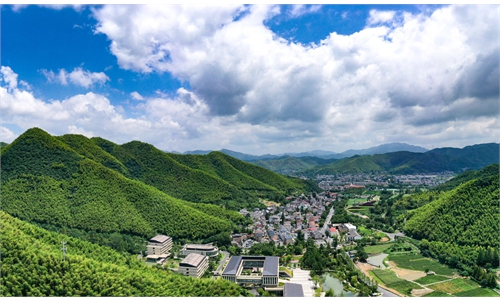
Tianxiandong village, located in Dasheng Town, Chongqing's Yubei District, is a remote mountain hamlet. In the past, young villagers left for cities and seldom returned. In recent years, however, an increasing number of urban visitors have flocked to Tianxiandong village for tourism, some even chose to rent homes for extended stays. In 2024, the village welcomed over 300,000 tourists.
How did Tianxiandong village achieve this remarkable turnaround? "Effective governance was crucial to this transformation," said Gu Xiaowei, Party chief of the village.
Nestled between Mount Yungui, Tianxiandong village boasts steep cliffs, unique rock formations, lush forests, and breathtaking scenery - spring brings endless cherry blossoms across thousands of acres, while autumn paints the hills red with maple trees. Yet despite its natural charm, earlier attempts to develop rural tourism were hampered by issues such as sewage-filled roads, widespread animal waste, frequent neighbor disputes, and dilapidated, unkempt homes that deterred visitors from staying.
To transform Tianxiandong village into a unique destination, local authorities undertook meticulous governance efforts. Guided by Yubei District and Dasheng Town, the village introduced a "point system" in 2019. Villagers accumulate points by participating in rural governance, with each point worth 1 yuan ($0.14), which can be redeemed at participating supermarkets.
The innovative "point system" has been a key strategy in effective village governance. Alongside this, Tianxiandong village has implemented other creative and ingenious measures to enhance its appeal and management.
"When the rural living environment improvement work began in 2019, numerous requirements were put forward. However, villagers' long-standing lifestyles had become deeply ingrained, and many were unsure how to change. They didn't know what a tidy home should look like or how to properly stack firewood," said Gu.
To address this, town and village officials not only explained policies and requirements but also taught practical methods. Through hands-on guidance and the creation of model households, an increasing number of villagers gradually break bad habits, according to Gu.
Effective rural governance demands practical tools, clear methods, and an indispensable focus on legal frameworks. Dasheng town, in collaboration with the local police stations, established a new security patrol model. This has gradually evolved into a comprehensive, round-the-clock, three-dimensional patrol system, further enhancing the effectiveness of rural governance.
Village shines in governance
In recent years, Jiangjin District in Chongqing has leveraged its status as a national pilot for rural governance to pioneer the "courtyard system" of governance with rural development. Focusing on merging rural governance and construction, Jiangjin has built 124 distinctive courtyards, reorganizing administrative villages into compact courtyard units to create a robust network for governance and development.
According to a guidance document published by Chongqing's Yubei District, the "courtyard system" governance model establishes courtyards based on natural villages to create a dense grassroots management network. It emphasizes top-down guidance, grassroots participation, and self-governance services, focusing on joint construction, joint management, and shared benefits, in order to refine grassroots self-governance units.
"The courtyard model achieves mechanism integration, elevating courtyards into governance units. It also achieves functional integration, turning courtyards into distinctive community spaces," said Diao Yong, an official from Jiangjin's agriculture and rural affairs department.
Each courtyard serves as a micro-political unit, embedding moral governance through designated platforms. Additional carriers enhance community engagement, while cultural activities under the "Nostalgia Hall" subtly guide residents' behavior, embedding good governance into daily habits, according to Diao.
The village's "Nostalgia Hall" showcases the history of Jiangjin's Baoping village, notable figures, and customs, reinforcing community pride.
In Baoping, 79-year-old retired teacher Li Yuan, a local, has created over 50 works, including poems and performances, to promote policies in an engaging way, which was among the village's cultural activities.
These efforts have helped make Baoping a leading example of rural governance through cultural and moral initiatives, contributing to a culturally rich and socially harmonious countryside.
Villages foster unity
"Tongxin" (meaning united hearts) reflects the vision of villagers in Chongqing's Tongliang District working together. By 2024, Tongliang had established 325 "tongxin courtyards," achieving a 100 percent dispute resolution rate. These courtyards promote self-governance, policy dissemination, and community unity. Over 1,500 "courtyard classes" have been held to share policies. The "courtyard whistle-blowing" mechanism ensures rapid response from township and village cadres. This governance "circle of unity" consolidates public services, fostering cohesive, heartfelt governance across Tongliang's rural communities.
In recent years, Tongliang District has integrated the development of "tongxin courtyards" with multiple rural development initiatives by integrating the resources of civil affairs, housing, cultural tourism, and other sectors. This has supported the construction of mutual-aid elder care hubs, cultural and sports facilities, alongside services like health checkups and book donations.
Tongliang has established platforms such as "courtyard theaters" and "tongxin kitchens," hosting over 1,000 community activities like square dances, dumpling-making, and cooking competitions. These initiatives enrich rural cultural life and enhance community cohesion.
Tongliang's Lüfeng Town has integrated environmental clean-up, rural industry development, and villager-led governance through the "bayue farm" pilot project. Here, governance and development advance together, creating a vibrant picture of distinctive local industries and expanded employment opportunities for residents.
People are the basics of the country and people consolidate the peace of the country. The most solid support for the Communist Party of China (CPC) lies at the grassroots level. Strengthening and innovating grassroots social governance is vital for the CPC's long-term governance, national stability, and the protection of people's interests. Reflecting on the CPC's history of leading rural governance, "putting the people at the center" has consistently guided its approach.
Chongqing's model of effective and sustainable rural governance vividly illustrates a commitment to President Xi's earnest directives, painting a warm and profound picture. Across Chongqing, regions have resolutely embraced the people-centered development philosophy, continuously refining social governance systems, deepening grassroots mechanisms, and innovating governance methods. These efforts have reinforced the grassroots foundation, ensuring that the people are the primary beneficiaries of social governance. This reflects the CPC's unwavering mission to seek happiness for the people and rejuvenation for the nation, shining with the truth that the people's interests come first.
Wang Wanliang and Hou Yingzhe are reporters for China Rural Revitalization magazine.
China Rural Revitalization magazine has published a series of articles on the rapid development and transformation of rural China. The articles reflect the arduous efforts of rural revitalization across the country, which is an important and genuine solution to China's rural economic development. In the future, articles selected from this series will be published.
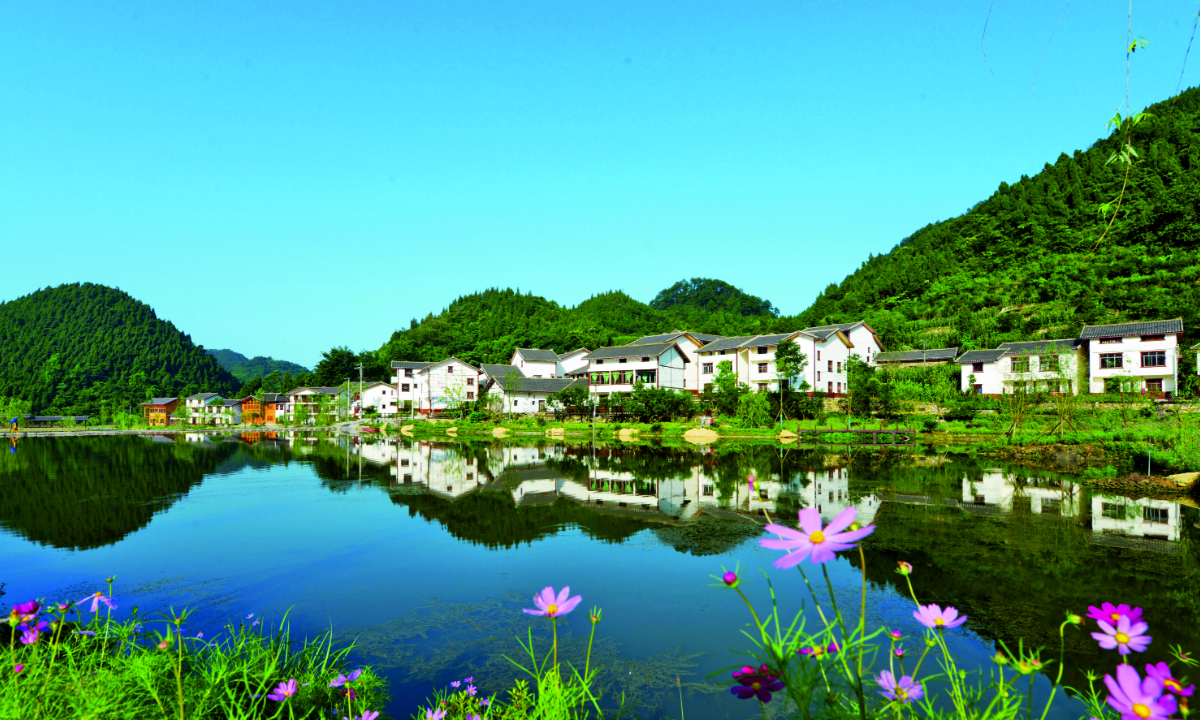
A view of Tianxiandong village, Yubei District, Southwest China's Chongqing Municipality Photo: Courtesy of China Rural Revitalization magazine
Grassroots governance is the cornerstone of national governance.
President Xi Jinping has delivered a series of important expositions on grassroots governance. These provide essential guidance and a scientific blueprint for promoting the modernization of grassroots governance in the new era.
In some rural areas of Jiangjin District, Tongliang District and Yubei District of Southwest China's Chongqing Municipality, the spirit of Xi's important instructions on grassroots governance is being thoroughly studied and implemented. These areas have actively promoted the modernization of grassroots governance systems and capabilities, unleashing fresh momentum.
A whole new world
Tianxiandong village, located in Dasheng Town, Chongqing's Yubei District, is a remote mountain hamlet. In the past, young villagers left for cities and seldom returned. In recent years, however, an increasing number of urban visitors have flocked to Tianxiandong village for tourism, some even chose to rent homes for extended stays. In 2024, the village welcomed over 300,000 tourists.
How did Tianxiandong village achieve this remarkable turnaround? "Effective governance was crucial to this transformation," said Gu Xiaowei, Party chief of the village.
Nestled between Mount Yungui, Tianxiandong village boasts steep cliffs, unique rock formations, lush forests, and breathtaking scenery - spring brings endless cherry blossoms across thousands of acres, while autumn paints the hills red with maple trees. Yet despite its natural charm, earlier attempts to develop rural tourism were hampered by issues such as sewage-filled roads, widespread animal waste, frequent neighbor disputes, and dilapidated, unkempt homes that deterred visitors from staying.
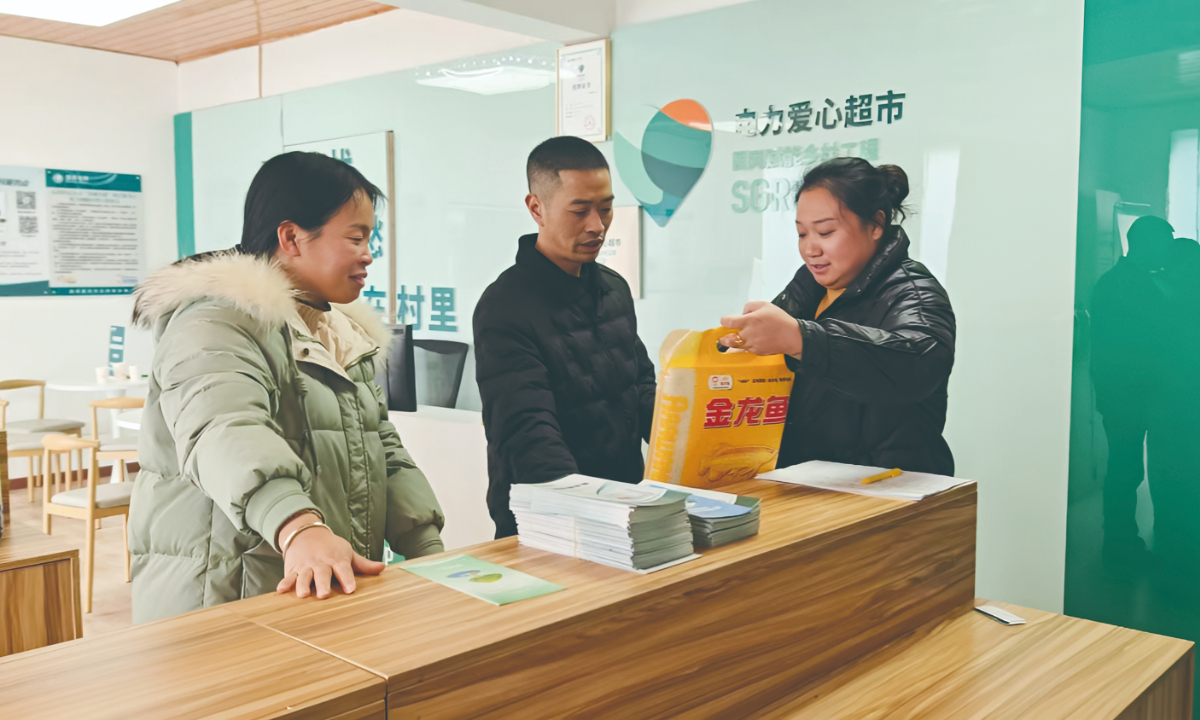
To transform Tianxiandong village into a unique destination, local authorities undertook meticulous governance efforts. Guided by Yubei District and Dasheng Town, the village introduced a "point system" in 2019. Villagers accumulate points by participating in rural governance, with each point worth 1 yuan ($0.14), which can be redeemed at participating supermarkets.
The innovative "point system" has been a key strategy in effective village governance. Alongside this, Tianxiandong village has implemented other creative and ingenious measures to enhance its appeal and management.
"When the rural living environment improvement work began in 2019, numerous requirements were put forward. However, villagers' long-standing lifestyles had become deeply ingrained, and many were unsure how to change. They didn't know what a tidy home should look like or how to properly stack firewood," said Gu.
To address this, town and village officials not only explained policies and requirements but also taught practical methods. Through hands-on guidance and the creation of model households, an increasing number of villagers gradually break bad habits, according to Gu.
Effective rural governance demands practical tools, clear methods, and an indispensable focus on legal frameworks. Dasheng town, in collaboration with the local police stations, established a new security patrol model. This has gradually evolved into a comprehensive, round-the-clock, three-dimensional patrol system, further enhancing the effectiveness of rural governance.
Villagers redeem points that they accumulate by participating in rural governance at a supermarket in Tianxiandong village, Southwest China's Chongqing Municipality. Photo: Courtesy of China Rural Revitalization magazine
Village shines in governance
In recent years, Jiangjin District in Chongqing has leveraged its status as a national pilot for rural governance to pioneer the "courtyard system" of governance with rural development. Focusing on merging rural governance and construction, Jiangjin has built 124 distinctive courtyards, reorganizing administrative villages into compact courtyard units to create a robust network for governance and development.
According to a guidance document published by Chongqing's Yubei District, the "courtyard system" governance model establishes courtyards based on natural villages to create a dense grassroots management network. It emphasizes top-down guidance, grassroots participation, and self-governance services, focusing on joint construction, joint management, and shared benefits, in order to refine grassroots self-governance units.
"The courtyard model achieves mechanism integration, elevating courtyards into governance units. It also achieves functional integration, turning courtyards into distinctive community spaces," said Diao Yong, an official from Jiangjin's agriculture and rural affairs department.
Each courtyard serves as a micro-political unit, embedding moral governance through designated platforms. Additional carriers enhance community engagement, while cultural activities under the "Nostalgia Hall" subtly guide residents' behavior, embedding good governance into daily habits, according to Diao.
The village's "Nostalgia Hall" showcases the history of Jiangjin's Baoping village, notable figures, and customs, reinforcing community pride.
In Baoping, 79-year-old retired teacher Li Yuan, a local, has created over 50 works, including poems and performances, to promote policies in an engaging way, which was among the village's cultural activities.
These efforts have helped make Baoping a leading example of rural governance through cultural and moral initiatives, contributing to a culturally rich and socially harmonious countryside.
Villages foster unity
"Tongxin" (meaning united hearts) reflects the vision of villagers in Chongqing's Tongliang District working together. By 2024, Tongliang had established 325 "tongxin courtyards," achieving a 100 percent dispute resolution rate. These courtyards promote self-governance, policy dissemination, and community unity. Over 1,500 "courtyard classes" have been held to share policies. The "courtyard whistle-blowing" mechanism ensures rapid response from township and village cadres. This governance "circle of unity" consolidates public services, fostering cohesive, heartfelt governance across Tongliang's rural communities.
In recent years, Tongliang District has integrated the development of "tongxin courtyards" with multiple rural development initiatives by integrating the resources of civil affairs, housing, cultural tourism, and other sectors. This has supported the construction of mutual-aid elder care hubs, cultural and sports facilities, alongside services like health checkups and book donations.
Tongliang has established platforms such as "courtyard theaters" and "tongxin kitchens," hosting over 1,000 community activities like square dances, dumpling-making, and cooking competitions. These initiatives enrich rural cultural life and enhance community cohesion.
Tongliang's Lüfeng Town has integrated environmental clean-up, rural industry development, and villager-led governance through the "bayue farm" pilot project. Here, governance and development advance together, creating a vibrant picture of distinctive local industries and expanded employment opportunities for residents.
People are the basics of the country and people consolidate the peace of the country. The most solid support for the Communist Party of China (CPC) lies at the grassroots level. Strengthening and innovating grassroots social governance is vital for the CPC's long-term governance, national stability, and the protection of people's interests. Reflecting on the CPC's history of leading rural governance, "putting the people at the center" has consistently guided its approach.
Chongqing's model of effective and sustainable rural governance vividly illustrates a commitment to President Xi's earnest directives, painting a warm and profound picture. Across Chongqing, regions have resolutely embraced the people-centered development philosophy, continuously refining social governance systems, deepening grassroots mechanisms, and innovating governance methods. These efforts have reinforced the grassroots foundation, ensuring that the people are the primary beneficiaries of social governance. This reflects the CPC's unwavering mission to seek happiness for the people and rejuvenation for the nation, shining with the truth that the people's interests come first.
Wang Wanliang and Hou Yingzhe are reporters for China Rural Revitalization magazine.
RELATED ARTICLES