Global economic, trade friction index in April rises further due to US tariffs, multiple restrictive measures: CCPIT
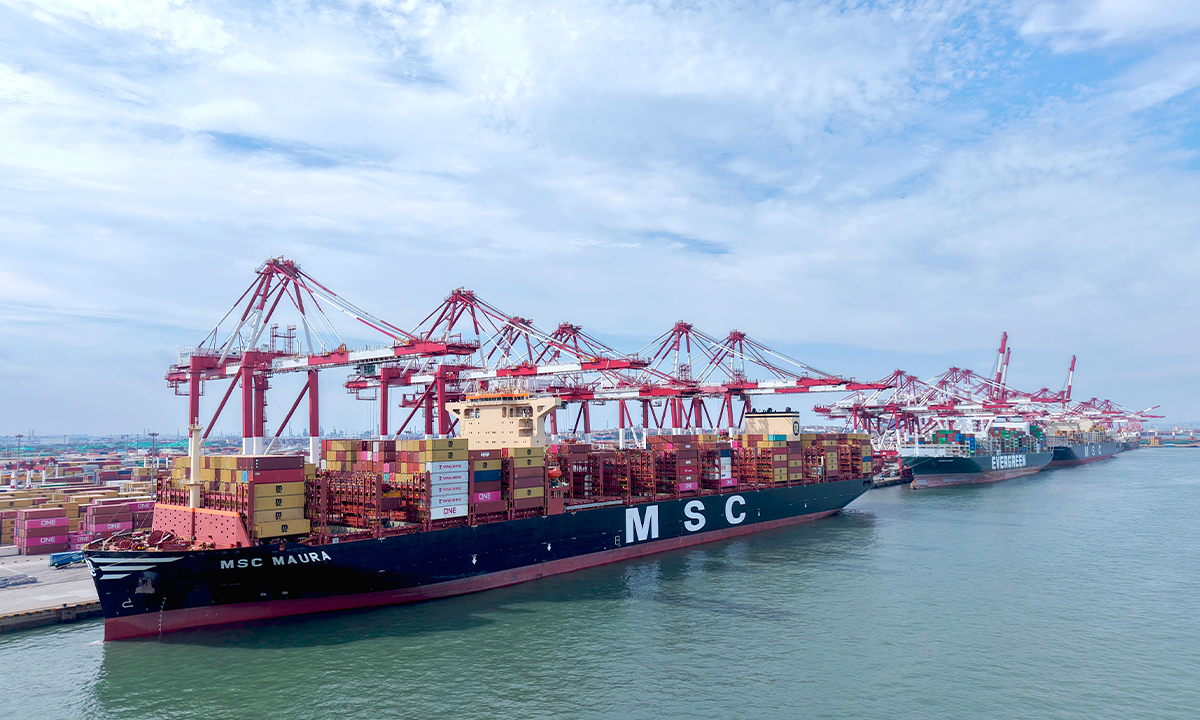
Cargo ships handle foreign trade containers at Qingdao Port in East China's Shandong Province on June 20, 2025. Photo: VCG
The global economic and trade friction index in April stood at 131, continuing to rise, Wang Linjie, spokesperson for the China Council for the Promotion of International Trade (CCPIT), told a press conference on Friday, noting that US’ “reciprocal tariffs” and multiple restrictive measures introduced were the main reasons for the continued increase of the index.
Wang noted that in April, the total value involved in global trade friction measures surged by 37.6 percent year-on-year and rose by 16 percent month-on-month. Among them, the global import and export tariff measures index increased by 89 points year-on-year.
On April 2, the US government implemented “reciprocal tariffs” citing issues such as trade deficits and non-tariff barriers, along with multiple restrictive measures introduced that month, which were the main reasons for the continued rise in the global trade friction index in April, Wang noted.
Among the 20 monitored countries and regions, the US, Japan and India ranked in the top three for the global trade friction index. The US had the highest amount involved in global trade friction measures, leading for 10 consecutive months, the spokesperson said.
Among the 13 major industries monitored, trade friction measures were concentrated in electronics, transportation equipment, light industry, chemicals, mechanical equipment, pharmaceuticals, non-ferrous metals, and agriculture, with the electronics industry having the highest trade friction index, said Wang.
Global Times
RELATED ARTICLES