Xi meets Ecuadorian president, Senegalese PM in Beijing
High-level exchanges deepen ties with Global South
By Published: Jun 28, 2025 12:24 AM


Top news
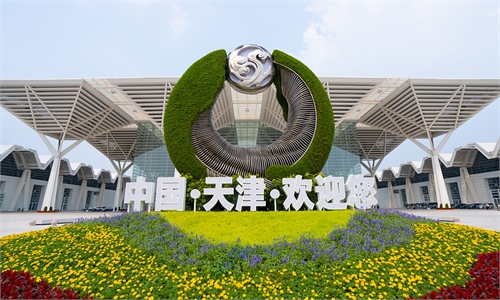
Chinese President Xi Jinping met with Ecuadorian President Daniel Noboa and Senegalese Prime Minister Ousmane Sonko in Beijing on Friday. The two foreign leaders had just concluded their participation in the 2025 Summer Davos forum in Tianjin, and some Chinese experts regard this round of high-level exchanges before and after the forum as a new milestone in summer diplomacy, highlighting China's commitment to sharing development opportunities with the international community, especially the Global South, and bringing stability amid rising global uncertainties.
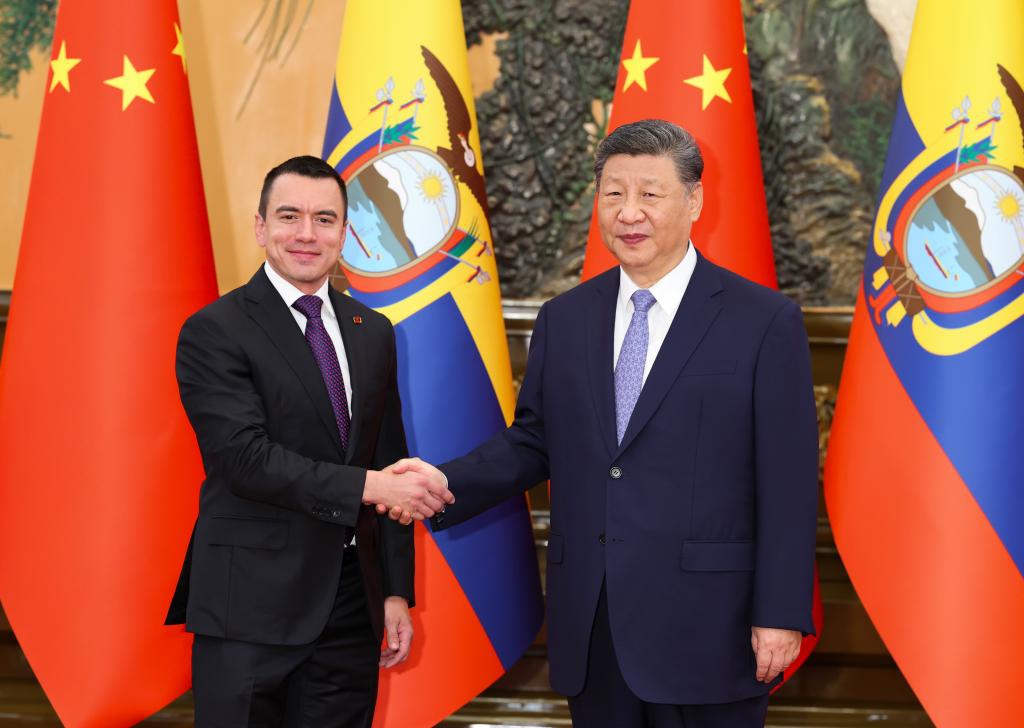
Chinese President Xi Jinping meets with Ecuadorian President Daniel Noboa, who is in China for the 2025 Summer Davos, at the Great Hall of the People in Beijing, capital of China, June 27, 2025. (Xinhua/Huang Jingwen)
While meeting with Ecuadorian President Daniel Noboa, President Xi said that this year marks the 45th anniversary of the establishment of diplomatic ties and bilateral relations have maintained a good momentum, according to the Xinhua News Agency."Ecuador has joined the big family of the Belt and Road Initiative (BRI), and China and Ecuador have signed a free trade agreement, carrying out fruitful cooperation in areas such as energy, mining, power and infrastructure construction," Xi said.
China has always viewed and developed relations with Ecuador from a strategic and long-term perspective, and is willing to work with Ecuador to advance the comprehensive strategic partnership, Xi added.
Xi encouraged both sides to carry out key cooperation projects effectively, boost bilateral trade, enhance exchanges in education, culture, media and youth, and implement the outcomes of the fourth ministerial meeting of the China-CELAC (the Community of Latin American and Caribbean States) Forum.
Noboa, who came to China for the 2025 Summer Davos forum in North China's Tianjin Municipality, said he admires China's development that impresses the world and that his country will always remember China's great support and assistance for its social and economic development.
Ecuador looks forward to deepening relations with China and increasing cooperation in trade, science and technology, culture, education and youth, Noboa added.
After their meeting, the two leaders witnessed the signing of a cooperation plan for promoting the BRI.
This meeting between President Xi and Noboa and the signing of a cooperation plan for promoting the BRI will help elevate bilateral cooperation from project-level to alignment of national strategies, setting a clear direction for future collaboration and strengthening mutual trust, Pan Deng, director of the Latin American and Caribbean Region Law Center at the China University of Political Science and Law, told the Global Times on Friday.
Pan believes that the cooperation plan will make China-Ecuador cooperation more systematic and targeted, focusing on infrastructure connectivity — transport, energy, and communications — alongside trade, investment, and industrial capacity, with a clear list of actionable projects. "This will provide Ecuador with vital development opportunities and greater economic resilience, while offering Chinese companies broader markets and investment prospects, achieving mutual benefits," said the expert.
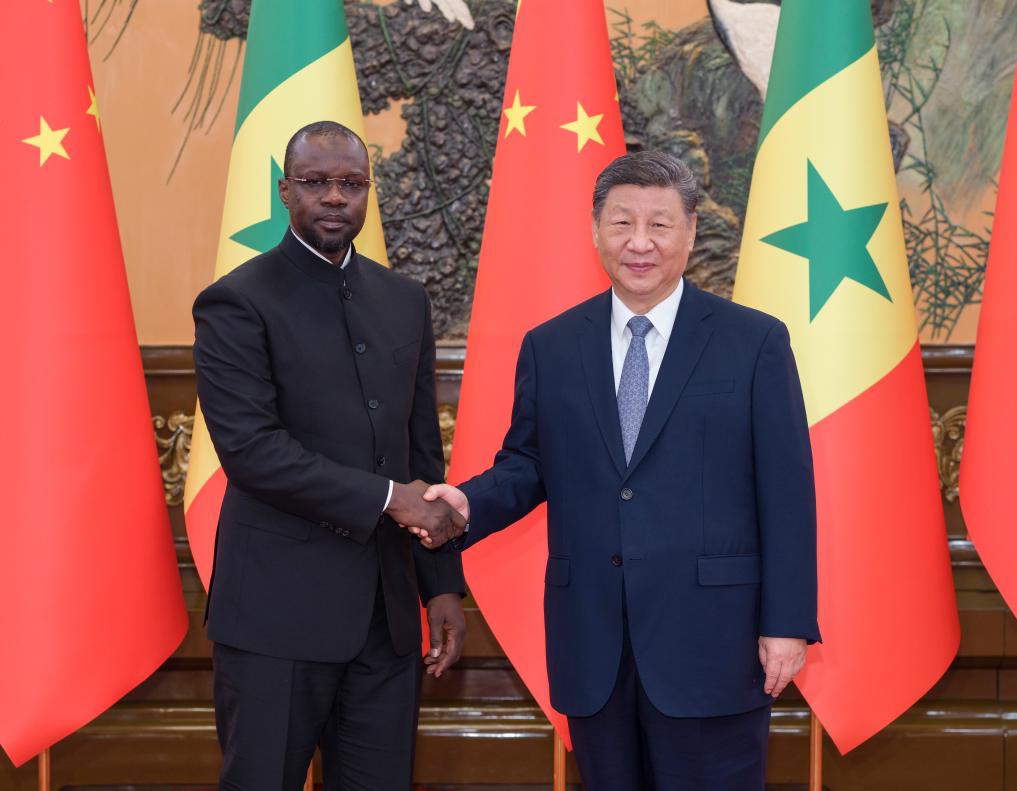
Chinese President Xi Jinping meets with Prime Minister of Senegal Ousmane Sonko, who is in China for the 2025 Summer Davos, at the Great Hall of the People in Beijing, capital of China, June 27, 2025. (Xinhua/Ding Lin)
Also on Friday, President Xi met with Prime Minister of Senegal Ousmane Sonko in Beijing. Xi said that last September, he co-chaired the 2024 Summit of the Forum on China-Africa Cooperation in Beijing with President Bassirou Diomaye Faye, leading China-Africa relations into a new phase of jointly building an all-weather China-Africa community with a shared future for the new era.Noting that China and Senegal are companions on the path to development and revitalization as well as good brothers, Xi said China is willing to work with Senegal to strengthen solidarity and cooperation, deepen their comprehensive strategic cooperative partnership, bring more benefits to the two peoples, and inject fresh impetus into China-Africa friendship and Global South cooperation, according to Xinhua.
Sonko conveyed President Faye's sincere greetings to Xi. He said China is a reliable partner for Senegal, and the bilateral ties have featured mutual respect, mutual support, resilience and stability, with sound progress made in various fields of cooperation.
Senegal firmly adheres to the one-China principle and looks forward to deepening the comprehensive strategic cooperative partnership with China, promoting the Belt and Road cooperation, and enhancing cooperation in trade, investment, energy and other areas to support Senegal's economic development, Sonko added, according to Xinhua.
Senegal attaches great importance to its ties with China and emphasizes building an all-weather China-Africa community with a shared future for the new era to advance Senegal's independent development through capital, momentum, and new opportunities, which demonstrates Africa's determination to achieve self-driven growth, said Song Wei, a professor at the School of International Relations and Diplomacy at Beijing Foreign Studies University.
Global development is currently facing multiple challenges, including geopolitical conflicts, financial instability, and a growing resource and debt gap in Africa. However, developed nations, led by the US, are not only failing to take on greater development responsibilities but are also reducing their provision of global public goods. The rise of protectionism and unilateralism further undermines development prospects for the Global South, said Song.
As a result, many developing countries, especially in Africa, are placing greater hopes on China and on global development initiatives rooted in South-South cooperation, said the expert.
Seeking stability
President Xi's meetings with foreign leaders on Friday came amid a series of high-level interactions between Chinese officials and foreign guests before and after the Summer Davos forum, held in Tianjin, North China, from June 24 to 26. Analysts said the intensive exchanges underscore these countries' aim of deepening engagement with China in governance and development, seeking new paths for global growth and the advancement of the Global South.
The Summer Davos brought together over 1,700 leading figures from more than 90 countries and regions to explore how entrepreneurship and emerging technologies can unlock more dynamic and resilient economies, according to Xinhua.
The high-level interactions and the Summer Davos Forum, with the latter serving as a key platform for cooperation with Global South countries while also attracting broad participation from developed nations, mark a highlight of China's summer diplomacy and underscore China's commitment to sharing development opportunities, Wang Youming, director of the Institute of Developing Countries at the China Institute of International Studies in Beijing, told the Global Times.
Amid global uncertainties, more countries, especially the Global South nations, see China's economic resilience as a source of confidence and hope to explore new models, attract investment, and find solutions to common challenges. "China's stable growth and proactive diplomacy offer much-needed positive momentum in today's uncertain world," said the expert.
Song also noted that the Senegalese prime minister and other African officials' participation in the Summer Davos Forum also underscores African countries' commitment to development and their proactive stance on sharing China's development experience and strengthening Global South cooperation. Such collaboration is not only vital for Africa's progress but also contributes to revitalizing the global economy, Song said.
Currently, rising protectionism and unilateralism—especially the indiscriminate tariffs imposed by the US — are shrinking Africa's development space. These actions have undermined confidence in both African development prospects and global investment, Song said. She noted that African countries also seek to strengthen South-South cooperation to build consensus, enhance collective strength, and create more opportunities for economic growth and modernization.
Pan said that the Ecuadorian president's attendance at China's Summer Davos forum highlights his confidence in China's economic prospects and strong commitment to deepening cooperation.
"Amid global uncertainties, China's economic resilience is highly attractive to Global South countries," said Pan, noting that the interactions with Chinese leaders and businesses will strengthen mutual trust, consolidate existing cooperation, and open new areas for collaboration, elevating China-Latin America relations in the political, economic, and cultural spheres.
The expert noted that the recent interactions among Global South nations also showed their commitment to multilateralism and open cooperation. Global South countries want their voices heard on multilateral platforms, so as to take part in setting global rules, and to push for a fairer international economic order.
The large number of representatives from Global South nations coming to China for the Summer Davos highlights their shared aspirations. By learning from each other, sharing experiences, and leveraging complementary strengths, they aim to achieve collective progress, said Pan.
RELATED ARTICLES