Popularity of ‘Chinese brands’ an inevitable outcome of high-quality devt, FM comments on Mixue and Chagee
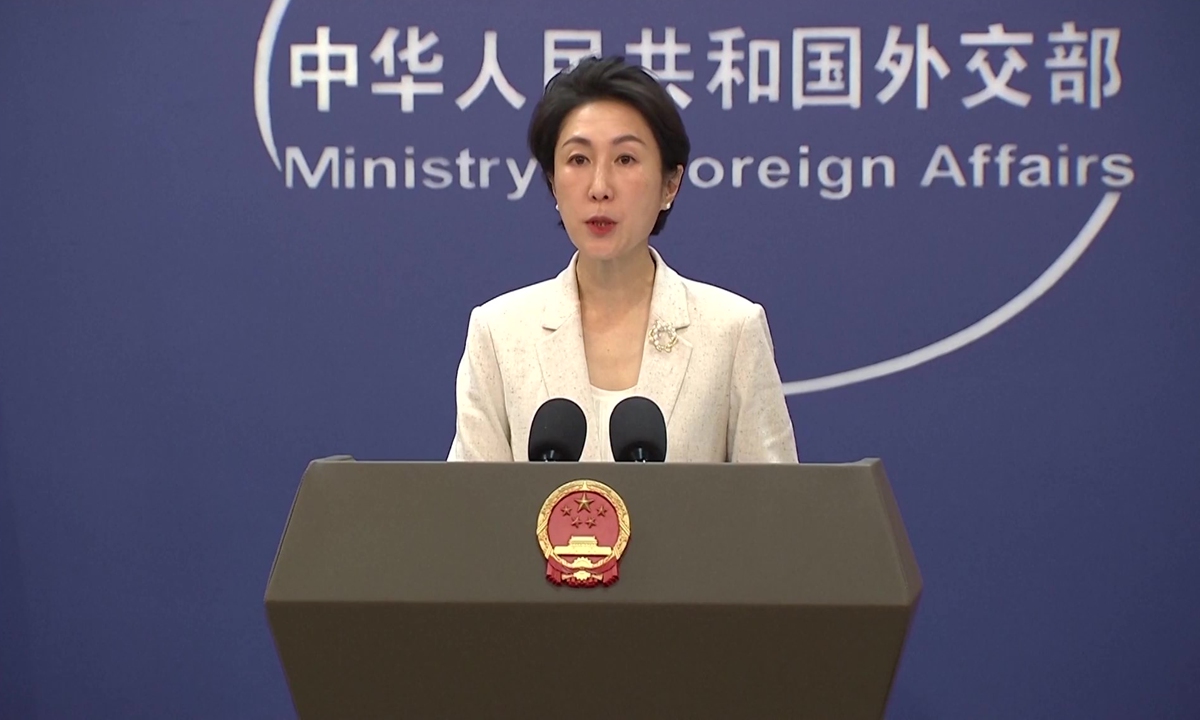
Chinese Foreign Ministry spokesperson Mao Ning Photo: VCG
From "Made-in-China" to "Chinese brands," this process is a natural result of China's high-quality development, and it's enabled by China's complete industrial system, fair and open market environment and sustained investment in innovation, Chinese Foreign Ministry spokesperson Mao Ning said on Wednesday.
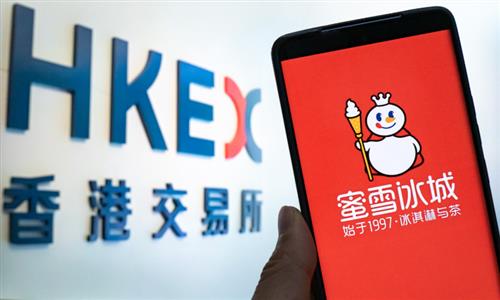
Mao made the remarks at a press conference regarding that Chinese beverage brands such as Mixue Bingcheng and Chagee recently filed for overseas listings, which drew a lot of attention. Many Chinese brands have expanded business and gained popularity overseas, and foreign media outlets have noted that gone are the days when Chinese products had to copy Western brands.
Many Chinese brands appeal to foreign consumers thanks to their advanced technology, aesthetics, design, and emotional resonance, Mao said.
She noted that Chinese brands, by going global, offer more choices to worldwide consumers. We also welcome more quality foreign brands to enter the Chinese market to thrive together and bring the benefits of economic globalization to people of all countries, she said.
Speaking on the specific advantages, Wang Peng, an associate research fellow at the Beijing Academy of Social Sciences, said that China boasts the world's most comprehensive industrial system, covering major categories with a complete supply chain from raw materials to finished products, ensuring cost control, stable quality, and rapid market adaptability.
In addition, industrial innovation also drives upgrading. Technological spillover from fields like new energy and 5G drives product iteration, while design integrates global trends, Wang told the Global Times on Wednesday.
On April 17, Chagee was listed on the Nasdaq in the US. The stock opened at $33.75, a more than 20 percent increase from its issue price of $28, and surged nearly 50 percent intraday, reaching a high of $41.8, before closing with a gain of nearly 16 percent, according to financial news portal stcn.com.
On March 3, Mixue was officially listed on the Hong Kong Stock Exchange. The issue price was HK$202.5 ($25.8) per share, raising net proceeds of HK$3.291 billion. On its listing day, the stock opened at HK$262 per share, a 29.38 percent increase from the issue price, and closed with a 43.21 percent gain, with a total market capitalization of HK$109.35 billion, according to media reports.
In addition to Chinese beverage brands, the global shopping frenzy for Chinese products such as toys and intellectual property (IP) represented by Pop Mart's Labubu has continued its momentum.
Fueled by robust demand for the doll, Pop Mart's revenue soared by 165-170 percent year-on-year in the first quarter of 2025, the Xinhua News Agency reported on Tuesday. In June, a mint-color Labubu doll with a height of 131 centimeters, created by Hong Kong-born artist Kasing Lung, was sold for 1.08 million yuan ($150,727) at an auction in Beijing through Yongle Auction.
Wang highlighted firm policy support as a crucial role for backing Chinese firms expanding overseas. Trade facilitation measures, such as free trade zone development and streamlined customs processes, shorten export cycles and boost operational efficiency. Financial and legal support, including policy loans and IP protection, provides enterprises with safeguards for international growth, he said.
Global Times
RELATED ARTICLES