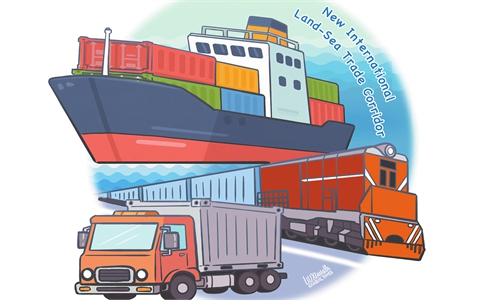
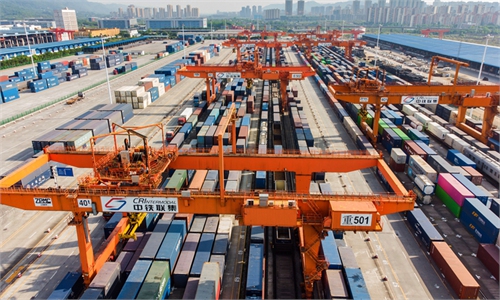
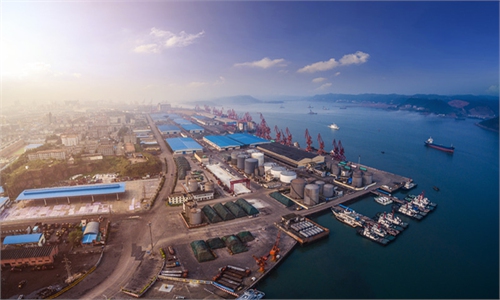
Middle Corridor gains increasing traction as Eurasian countries seek more connectivity amid turbulence, uncertainty
By in Tianjin Published: Jul 02, 2025 11:18 PM

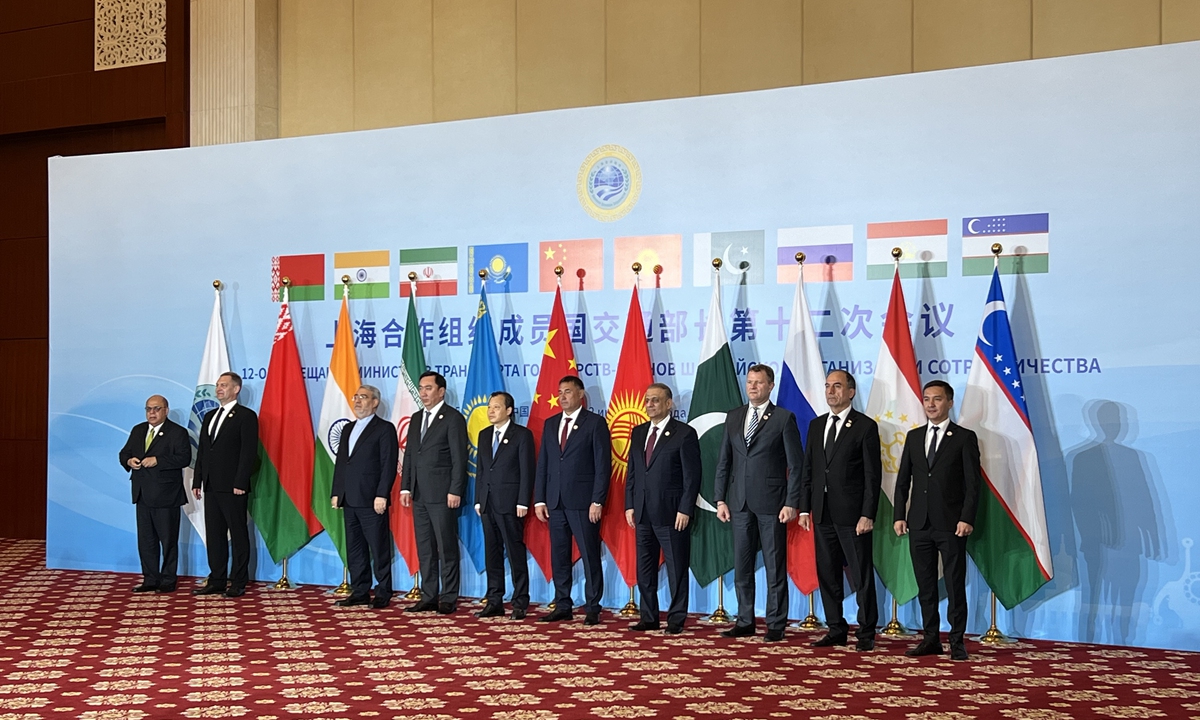
The meeting of the Shanghai Cooperation Organisation (SCO) Ministers of Transport takes place on July 2, 2025 in North China's Tianjin Municipality. Photo: Chu Daye/GT
Extending new trade routes, especially those across Central Asia and the Caspian Sea, became a recurring theme at a meeting of transport ministers of the member states of the Shanghai Cooperation Organisation (SCO).
Against the backdrop of a fragmented global logistics chain amid turbulence and uncertainty, top transport officials attending the meeting of the Shanghai Cooperation Organisation (SCO) Ministers of Transport, held on Wednesday in North China's Tianjin Municipality, emphasized the importance of the further development of regional transport architecture, with the role of SCO countries becoming dominant as a natural bridge linking Asia, Europe and the Middle East.
Mamanbiy Omarov, first deputy transport minister of Uzbekistan, told the Global Times on Wednesday that there has been rapid development of ports, dry ports and road transportation in the Central Asian region in recent years, as well as more collaboration to facilitate trade along the Middle Corridor.
Although the construction of the China-Kyrgyzstan-Uzbekistan (CKU) Railway just started, the trade and investment landscape has already changed in a positive direction along the trade route through Central Asia, with a surge in demand for cargo transportation, according to the deputy minister.
"For the Middle Corridor, a part of which went through China, Kyrgyzstan and Uzbekistan, the cargo volume increased by 30 times. This is a very important change and the base for the construction of this railway project," Omarov said on the sidelines of the meeting, adding that the stable growth in trade of goods with higher added value such as minerals, fertilizers, textiles, and machinery is taking place.
The importance of the Middle Corridor is acknowledged by a growing number of countries in the region. Addressing participants to the Global Transport Connectivity Forum in Istanbul at-end June, Turkish President Recep Tayyip Erdogan underscored efforts to align the Middle Corridor with the China-proposed Belt and Road Initiative, describing it as a transformative project to connect Europe and Asia more securely and efficiently, according to the Xinhua News Agency.
Erdogan noted that while shipments through the Suez Canal typically take about 35 days and those via the Cape of Good Hope about 45 days, the Middle Corridor is projected to reduce transit times to under 15 days once planned investments are complete, Xinhua reported.
Erdogan projected that the ongoing and future Middle Corridor projects would generate a total economic output of $114 billion, according to Xinhua.
"Lots of changes are already happening. All the countries along the Middle Corridor are improving their infrastructure in terms of railways, roads, ports and so on. Countries including China, Kazakhstan, Azerbaijan, Turkiye, Georgia... They are improving the region's transport infrastructure," Fariz Aliyev, head of the Transport Policy Department with the Ministry of Digital Development and Transport of Azerbaijan, told the Global Times. Azerbaijan is an SCO dialogue partner.
"Also, operational efficiency is being improved. This involves areas such as information sharing, and how to arrange operations more effectively and efficiently. There are also more areas of cooperation and collaboration with the establishment of different platforms," said Aliyev.
The positive prospects have come along solid progress made in forging the Middle Corridor.
The CKU Railway, a key transportation artery winding through Central Asia, saw construction begin last year, and work began on three key tunnels of the railway in April, according to a Xinhua report.
On June 30, Beijing launched the first China-Europe freight train from the Beijing International Land Port in Fangshan district to Baku of Azerbaijan, the capital city's first such service. Using "rail-sea-rail" multimodal transport, the cargo would get across the Caspian Sea by ship, and arrive in Baku in 15 days.
Beijing is just one of the Chinese cities launching logistics services across the Caspian Sea. As of June, the number of containers carried by the China-Europe Railway Express across the Caspian Sea had exceeded 100,000.
In addition to cooperation on hard connections, delegates to the meeting also stressed collaboration on the soft aspects of connection.
"Digitalization is a particularly important endeavor, as countries are carrying out digital policies in order to make sure that their systems of transport operations are more integrated with each other," Aliyev noted.
RELATED ARTICLES