Horgos assumes increasingly important role of China’s Xinjiang in trade connectivity

Illustration: Liu Rui/GT
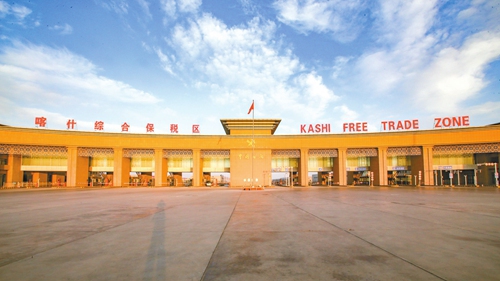
In the dynamic trade routes that connect China, Central Asia, and Europe, the small border city of Horgos has emerged as an increasingly important hub, underscoring Xinjiang's active contribution to fostering trade that benefits all parties involved. This year, the volume of China-Europe (Central Asia) freight trains traversing the Horgos port has surpassed 5,000, reaching this milestone 42 days earlier than last year, CCTV.com reported on Thursday. This achievement reflects the evolving landscape of global commerce and highlights Xinjiang's significance as a land bridge facilitating trade among China, Central Asia, and Europe.The Horgos Port, located in Northwest China's Xinjiang Uygur Autonomous Region, is one of China's closest ports to Central Asia and Europe in terms of land transport. Capitalizing on its unique position, Horgos has effectively utilized platforms such as the pilot free trade zone and the comprehensive bonded zone to foster growth in the trade, finance, manufacturing, and tourism sectors, among others.
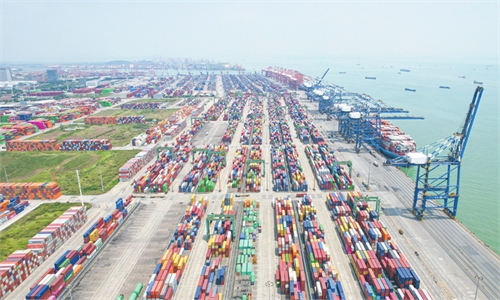
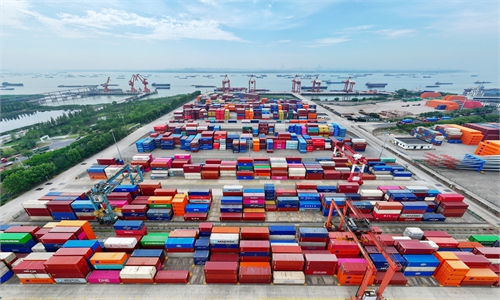
These efforts are focused on invigorating the local economy by enhancing trade routes. Furthermore, the development of the local economy, increased efficiency in customs clearance, and advancements in supporting industries such as logistics and e-commerce have made valuable contributions to the construction of international trade corridors. In 2024, Horgos reported total foreign trade of 101.458 billion yuan ($14.2 billion), up 43.5 percent from the previous year.
Behind the macro-level trade data lie the detailed stories of individual endeavors. For example, the development of the cross-border e-commerce sector in Horgos has enhanced cross-border trade. According to media reports, in the past, a small item selling for 15 yuan in China would require a 56 yuan international logistics fee to reach Almaty, Kazakhstan, from Horgos, with an additional delivery charge of 15 yuan to get the product into the hands of an international customer.
This high cost was a substantial barrier. However, through the diligent efforts of those in the cross-border e-commerce sector, including the establishment of overseas warehouses, these associated costs have been progressively reduced. This has, to a great extent, facilitated the growth of cross-border trade.
Through concerted efforts in Horgos, bilateral trade between China and countries in Central Asia and Europe is undergoing further enhancement. These efforts include the implementation of more open policies, an increase in the frequency of China-Europe (Central Asia) freight trains, and the development of diverse sectors within Horgos, leading to the further prosperity of the local economy. These robust endeavors are fostering tighter trade connections between China and countries in Central Asia and Europe.
The ongoing development of Horgos is an embodiment of Xinjiang's economic growth, its continuous expansion of openness to the outside world, and its active role in promoting the construction of international trade corridors. According to media reports, Xinjiang is home to 19 ports officially approved by the State Council. Based on these ports, along with a broad range of other efforts, Xinjiang is steadily increasing its openness to the outside world. This not only injects sustained momentum into the economic development of Xinjiang but also makes a positive contribution to fostering economic exchanges between Asia and Europe.
In 2024, despite the complex and volatile international trade environment, Xinjiang's total trade achieved rapid growth, reaching 435.11 billion yuan, a year-on-year increase of 21.8 percent. According to the Xinjiang Daily, from 2022 to 2024, Xinjiang's total trade successively surpassed 200 billion yuan, 300 billion yuan, and 400 billion yuan.
Xinjiang's trade has extended beyond traditional border trade, which focused on agricultural products and daily necessities, to actively contributing to trade that connects China with Central Asia and Europe. This is evident in the ongoing development of high-value industries such as new-energy vehicles and emerging sectors like cross-border e-commerce, coupled with sustained efforts to open up further to the outside world. These developments have bolstered Xinjiang's role as an important hub for trade exchanges.
In recent years, some Western politicians have targeted Xinjiang with unfounded accusations, attempting to create challenges for its exports and further integration into the global supply chain. However, through persistent efforts, including the continuous expansion of its openness and the development of new industries, Xinjiang's economy remains dynamic. It is making increasingly significant contributions to international trade and the construction of trade corridors.
The author is a reporter with the Global Times. bizopinion@globaltimes.com.cn
RELATED ARTICLES