Trump threatens 50% copper, 200% drug tariffs; Chinese experts warn of higher costs, domestic fallout
tariff
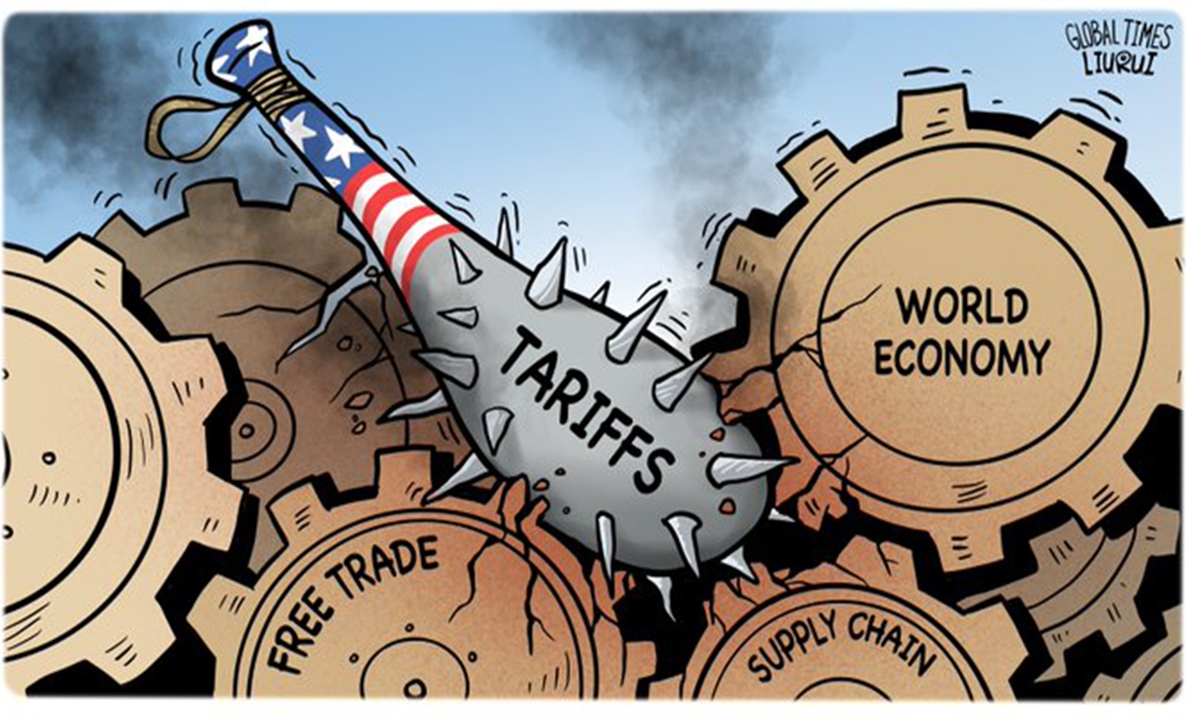
US President Donald Trump said he would impose a 50 percent tariff on imported copper on Tuesday local time, in a move aimed at boosting domestic output of the critical metal used in electric vehicles, defense systems, power infrastructure and consumer goods, Reuters reported.Chinese experts warned that the steep tariff signals a rising wave of protectionism that could disrupt global supply chains, add to inflationary pressure, and ultimately weigh on the US' manufacturing sector and green transition efforts.
Trump told reporters at a White House cabinet meeting that he planned to make the copper tariff announcement later in the day but he did not say when the tariff would take effect, according to Reuters.
After Trump spoke, US Commerce Secretary Howard Lutnick said in an interview on CNBC that the copper tariffs would likely be put in place by the end of July or August 1.
The National Mining Association declined to comment, saying it preferred to wait until details were released. The American Critical Minerals Association did not immediately respond to requests for comment, Reuters said.
Ma Wei, Assistant Research Fellow at the Institute of American Studies, Chinese Academy of Social Sciences, told the Global Times that copper is a key strategic resource, and the Trump administration hopes to use tariffs to protect domestic industries. Politically, the move is closely tied to stalled "reciprocal tariffs" talks, as the Trump administration needs such measures to support his broader tariff agenda.
Zhou Mi, a senior researcher at the Chinese Academy of International Trade and Economic Cooperation, told the Global Times on Wednesday that the Trump administration's push to impose the so-called Section 232 tariffs on copper had been building for some time. As a critical industrial material widely used in both machinery and power transmission, copper plays an especially vital role in the US' ongoing national grid upgrade.
Ma said the new tariffs are based on the Section 232 investigation, which the Trump administration accelerated far beyond the usual 270-day timeline. With the pause on "reciprocal tariffs" nearing expiration and little progress in trade talks, the White House is using the copper tariffs to maintain its tough trade posture. He noted that while China is one of the world's largest refined copper producer, the bulk of raw copper supply comes from South America, meaning the immediate impact on China's exports would be limited but still noticeable.
Zhou noted that steep tariffs would be difficult to offset with domestic production and would inevitably drive up the cost of infrastructure and manufacturing.
The move from a 25 percent duty to the now-proposed 50 percent signals a deepening protectionist trend, Zhou said. If this pattern extends to other raw materials, it could trigger ripple effects across global supply chains, intensify inflationary pressure, and ultimately hurt the US' own manufacturing sector and green transition goals.
About 35 percent of US copper imports come from Chile and another 26 percent from Canada, with additional volumes sourced from Mexico (7 percent), Peru (7 percent), China (2 percent) and other suppliers, according to a February report by Politico.
Rosario Navarro, president of Chile's industrial business lobby, warned tariffs as high as 50 percent could cause a "substantial worsening" in the country's trade conditions, according to Financial Times.
Pierre Gratton, president of the Mining Association of Canada, said the US did not have enough copper refining capacity or smelters and relied on Canadian imports of the metal, adding such high tariff rates would "hurt US manufacturing", per the report.
Zhou warned that the escalating uncertainty may prompt major exporters to reconsider their cooperation with US partners. Tariffs not only raise export costs but also erode business confidence, dealing a blow to the trust underpinning China-US trade relations and global supply chain stability.
Meanwhile, on the same day, Trump threatened to impose tariffs of up to 200 percent on pharmaceuticals imported into the US "very soon," during the cabinet meeting, according to CNBC.
However, he indicated the tariffs would not take effect immediately, suggesting a grace period of up to a year and a half for pharmaceutical companies to shift production back to the US, CNBC reported.
The planned tariffs would deal a major blow to pharmaceutical companies, which warn the move could raise costs, deter US investment, disrupt supply chains, and put patients at risk. The industry is already grappling with the fallout from Trump's drug pricing policies, which they say undermine profits and innovation, according to CNBC.
The tariffs seem excessively high and would significantly raise costs for the US, which relies heavily on imported drugs and active pharmaceutical ingredients (APIs) from China, one of the world's largest producer, Zhou said.
While the move aims to boost domestic production, technical and environmental barriers make it difficult to build a strong local supply chain, he noted, adding that the actual impact of the tariffs may be limited.
China and India are the two main producers of APIs in the global drug supply chain, with APIs accounting for about 80 percent of China's Western medicine exports. Exports to the US, China's second-largest market, rose 12 percent to $4.52 billion in 2024, as China's total API exports reached $42.98 billion, up 5.1 percent year-on-year, according to data from the China Chamber of Commerce for Import and Export of Medicines and Health Products.
Cong Yi, a professor at the Tianjin School of Administration, told the Global Times that this is not the first time the Trump administration has suddenly announced new tariffs on some specific industry, and China is now better prepared to respond. Whether Beijing will retaliate depends on the progress of China-US trade negotiations, with the next round expected around early August.
Ma stressed that unilateralism and protectionism are not the global trend, and China should continue expanding opening-up and working with other countries to jointly resist US trade protectionism—protecting both its own interests and the stability of the global trade system.
RELATED ARTICLES