Illustration: Chen Xia/GT
In a world experiencing profound transformation marked by rising unilateralism and protectionism, the significance of regional cooperation has become increasingly prominent as a vital means to counter global economic uncertainty and foster stable economic development. Hong Kong, as an important bridge between the Chinese mainland and the world, is showcasing its unique value in regional cooperation.Hong Kong Financial Secretary Paul Chan Mo-po stated in an online post on Sunday that he made a three-day visit to Seoul last week, where he focused on introducing the latest developments and opportunities in Hong Kong to the local financial, trade, business and innovation sectors. Emphasizing the growing importance of regional cooperation amid current international changes, he said that forging new partnerships, opening new markets, attracting fresh capital, and pursuing mutually beneficial development will enhance the economic resilience and competitiveness of both sides.
In the first five months of this year, securities trading by South Korean-licensed institutions in Hong Kong surged to HK$1.5 trillion ($240 billion), a staggering 2.8 times the total for all of last year, according to Chan's post. Such figures reflect Hong Kong's appeal as an international financial center to South Korean capital. More importantly, they underscore Hong Kong's role as a "superconnector" linking the Chinese mainland with Asia and the wider world amid geopolitical tensions.
The world is undergoing changes unseen in a century, with a complex and volatile international situation. Geopolitical tensions are intensifying; unilateralism, protectionism, and power politics are on the rise; and development gaps and security dilemmas are intertwined. All these make regional cooperation in Asia more critical than ever.
Economies like those of South Korea and Southeast Asian nations, deeply intertwined with China's industrial chains, urgently require stable, efficient, and trustworthy financial and trade hubs. This presents Hong Kong with a historic opportunity to leverage its unique advantages, reinforce its status as an international financial center, and facilitate mutual prosperity across the region.
Given the recent performance of Hong Kong's financial market, the city's distinct strengths have been highlighted by the firm support of the central government and the continuous enhancement of its own advantages. China's 14th Five-Year Plan (2021-25) clearly supports Hong Kong in consolidating and elevating its status as an international financial, shipping, and trade center, while also supporting Hong Kong's construction of an international innovation and technology center. This policy framework provides Hong Kong with a solid foundation and broad development space.
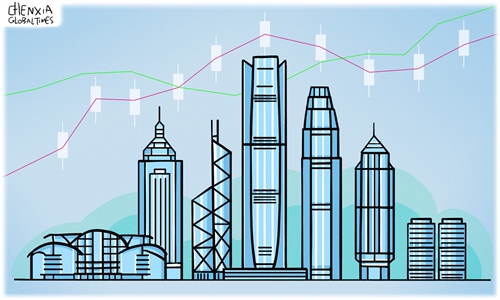
As the premier gateway for global capital into the mainland capital market, Hong Kong has seen its Stock Connect, Bond Connect, and other trading mechanisms continuously optimized, making it the preferred platform for international investors to tap into the mainland's growth. The influx of high-growth mainland companies, particularly in artificial intelligence, semiconductors, and biotech, has turned Hong Kong's stock market into a dynamic channel for innovation capital.
Meanwhile, many Chinese mainland tech firms have accelerated their global expansion by raising funds through Hong Kong listings. In the first half of the year, HK$107 billion was raised through 42 IPOs, putting the city's exchange in first place for funds raised globally, according to the South China Morning Post.
Moreover, amid global supply chain restructuring, Hong Kong's role extends beyond finance into industrial innovation by leveraging the vibrant innovation ecosystem and advanced manufacturing clusters of the Guangdong-Hong Kong-Macao Greater Bay Area. With its world-class professional services in finance, law, accounting, and consulting, Hong Kong complements the manufacturing strengths of the Greater Bay Area, creating a synergistic "hard-soft" integration that reduces costs, enhances resource allocation efficiency, and boosts the international competitiveness of regional supply chains.
Hong Kong's role will become increasingly pivotal as the world navigates uncertainty. By strengthening connectivity, fostering innovation, and upholding open markets, Hong Kong will continue to enhance its contributions to regional cooperation, shaping a more resilient and interconnected Asia.
RELATED ARTICLES