China's foreign trade gains pace in H1 2025, demonstrating strong resilience despite external headwinds
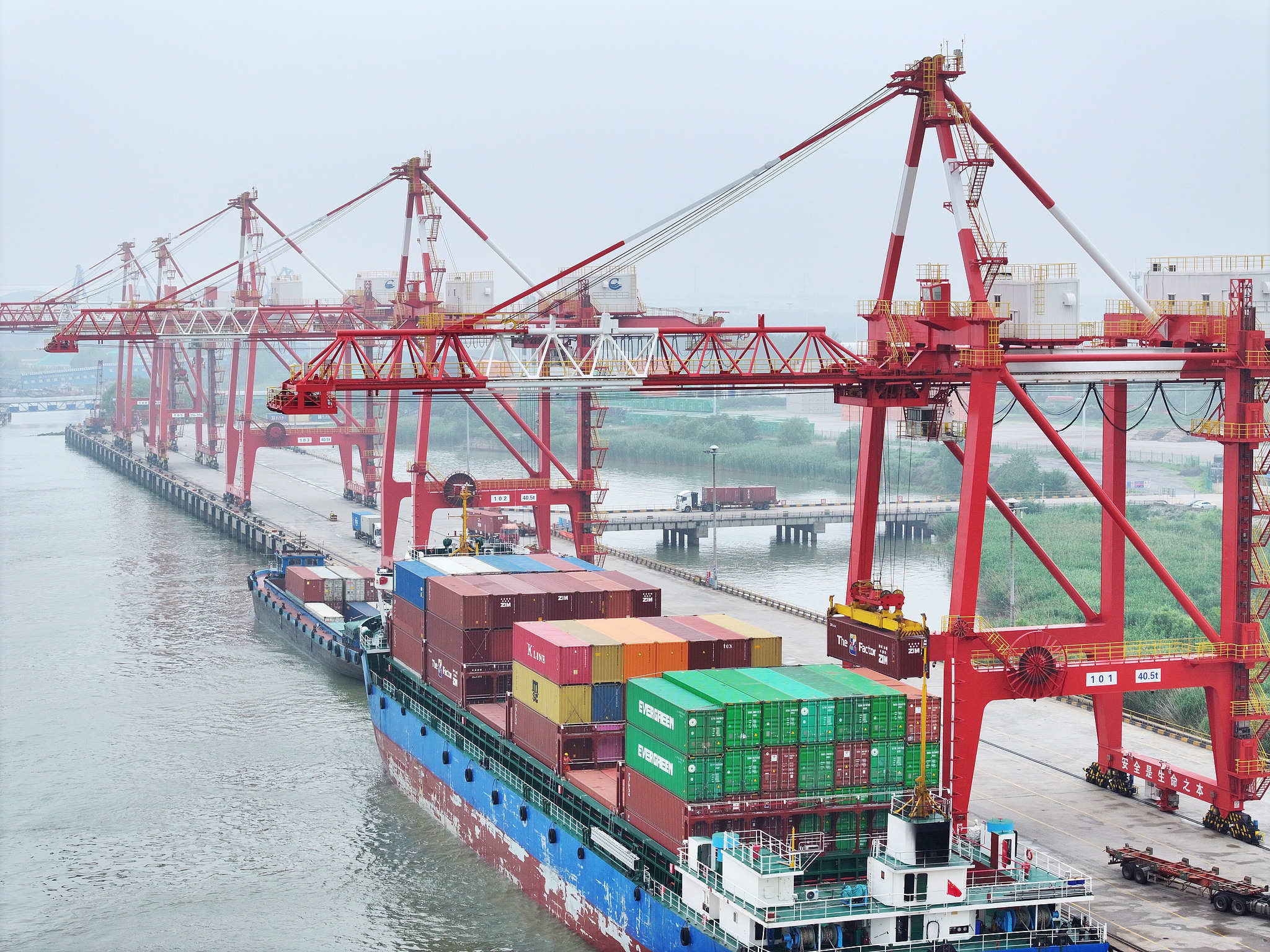
Photo: CFP
China's imports and exports of goods rose 2.9 percent year-on-year in the first half of 2025 to reach $3.04 trillion, driven by the country's strenuous efforts to optimize foreign trade structure and stabilize economic growth.
Foreign trade growth in the second quarter rose significantly by 4.5 percent year-on-year, 3.2 percentage points higher than the figure seen in the first quarter, which marks the 9th quarter in which quarterly foreign trade exceeding 10 trillion yuan.
The growth rate marked an increase of 0.4 percentage points from the rate recorded during the first five months of 2025. The total value of imports and exports in yuan-denominated terms stood at 21.79 trillion yuan ($3.04 trillion) in the January-June period, according to the data released by the General Administration of Customs (GAC) on Monday.
During the first six months of 2025, China's exports rose 7.2 percent year-on-year to reach 13 trillion yuan, while imports fell 2.7 percent to reach 8.79 trillion yuan, the data showed.
The foreign trade data for the first half of the year are generally in line with market expectations and it clearly manifests the resilience of China's foreign trade, Cong Yi, a professor at the Tianjin School of Administration, told the Global Times on Monday.
It shows that the impact of the short-term factors such as the US tariffs is fading, and with the dual support of Chinese government's effective policies and China's strong industrial fundamentals, foreign trade has shown a positive trend of recovery, Cong said.
In the second quarter of 2025, China's total goods imports and exports in yuan-denominated terms rose by 4.5 percent year-on-year, 3.2 percentage points higher than the figure seen in the first quarter.
With the second quarter included, China's foreign trade value has exceeded 10 trillion yuan for nine consecutive quarters.
During the period, China's export growth drivers strengthened and gained new momentum, according to the GAC. In the first half, exports of electro-mechanical products increased by 9.5 percent year-on-year, taking up 60 percent of the country's total exports.
Also, foreign trade enterprises have been further invigorated. During the first half year, China has about 628,000 foreign trade enterprises with export and imports, surpassing 600,000 for the first time. The number went up by some 43,000 firms compared with the same period of last year.
Resilience despite headwinds
Currently, certain countries violate international trade norms by imposing unreasonable tariffs, causing severe challenges to global economic development. However, an increasingly diversified foreign trade market, innovative and high-quality products manufactured in China, and the adaptive foreign trade entities give China the confidence and ability to cope with global challenges, Wang Lingjun, deputy director of the General Administration of Customs, said at press conference on Monday.
During the January-June period, China's foreign trade with over 190 countries and regions has increased, and trade with 61 trading partners exceeded 50 billion yuan, five more than the same period last year, according to Wang.
In the first six months, China's trading partners became more diverse, Wang said.
Trade with Belt and Road Initiative (BRI) partner countries rose 4.7 percent to reach 11.29 trillion yuan, with its proportion in China's total foreign trade rising by 0.9 percentage points to 51.8 percent.
In terms of the trading partners, trade with ASEAN rose up by 9.6 percent to reach 3.67 trillion.
Over the same period, China's trade with the EU, South Korea, and Japan witnessed positive growth respectively.
"The resilience of China's foreign trade stems from multiple dimensions. On one hand, China has persisted in expanding opening-up and responded proactively to changes in the external environment. On the other hand, as the world's largest manufacturing country, China's production capacity and product competitiveness lead globally, providing a solid basis for export resilience," Cong said.
Meanwhile, as the world's second largest consumer market, China boasts huge market scale, immense potential and an improving demand structure, which continuously drive import growth.
According to GAC's Wang, with the continuous supportive policies including the equipment upgrade and consumer trade-in programs, China's imports turned to positive growth in the second quarter.
In the first half, China's import growth of petrochemical, textile and other machinery and equipment reached double digits, while key parts such as electronic components grew rapidly, and imports of vital raw materials such as crude oil and metal ore increased in volume, Wang said.
In the second half of the year, it is expected that exports will likely maintain growth, driven by broader opening-up policies, improved corporate competitiveness, and expanded market diversification. Imports will benefit from domestic demand expansion policies, Cong said.
Global Times
RELATED ARTICLES